Mobile’s Airbus Plant Braces for a Third Round in the Air Force Tanker Wars
Airbus and Lockheed Martin are teaming up for another run at an Air Force tanker contract that could add a new production line at Mobile's Brookley plant, reviving a rivalry with Boeing that has simmered since 2008.
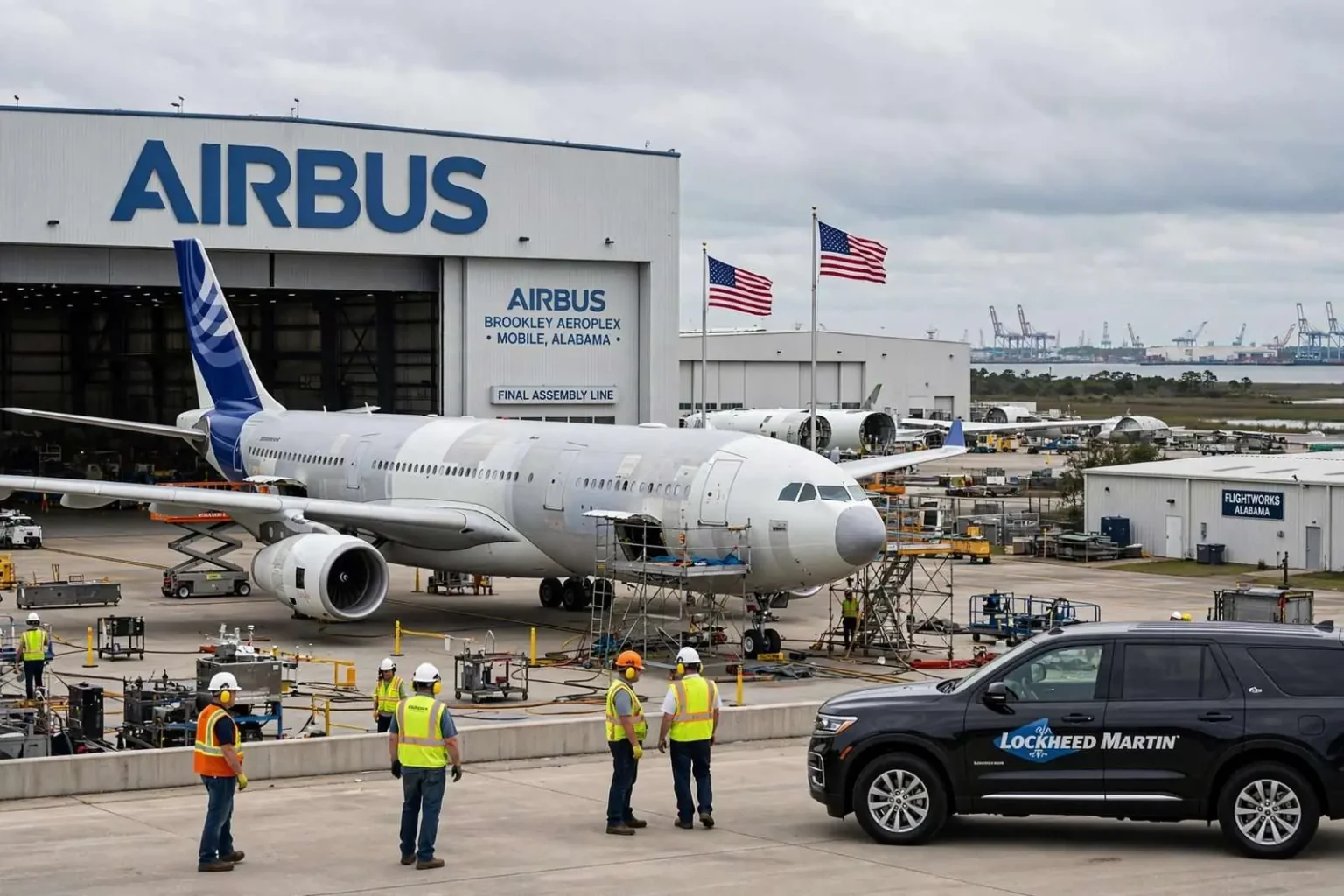
Mobile is bracing for a third round in one of the longest-running fights in modern defense contracting history, as Airbus and Lockheed Martin prepare to team up on a new bid to build refueling tankers for the U.S. Air Force. If the partnership wins the competition, it would add another production line to Airbus' assembly plant at Brookley, with A330 airliners built in Mobile shipped to a Lockheed Martin facility in Georgia for conversion into military tankers. The renewed competition revives a rivalry with Boeing that has shaped Mobile's aerospace ambitions for more than a decade.
Mobile and its European-owned rival first squared off over a tanker contract in 2008, when a Northrop Grumman-EADS team, which included Airbus, won a $35 billion deal to replace the Air Force's aging refueling fleet. Boeing challenged the award, and the Government Accountability Office ultimately agreed to reopen the competition. Boeing won the second round and has held the contract, known as the KC-46, ever since. That victory has come at a steep cost. Boeing's KC-46 program has been plagued by production delays and quality problems, including well-documented issues with the aircraft's remote vision system, the camera-and-display setup boom operators use to guide fuel lines into receiving aircraft. Industry estimates put Boeing's losses on the program at roughly $5 billion, and delivery timelines have repeatedly slipped.
Those struggles have fueled speculation in Washington that the Pentagon may want a second supplier back in the mix for the next phase of tanker procurement. For Mobile, the stakes go well beyond aviation history. Airbus has operated a final assembly line for A320-family jetliners at Brookley since 2015 and later added a second line for A220 aircraft, employing hundreds of workers and anchoring a broader aerospace cluster that includes suppliers and maintenance operations along the Gulf Coast. A tanker contract would mean an additional production line, more skilled manufacturing jobs and a further boost to the region's standing as a genuine center of aircraft assembly rather than just a stop on the supply chain.
The earlier fights over the tanker contract were also marked by pointed political rhetoric. In 2008, U.S. Sen. Patty Murray of Washington, defending Boeing's home-state workforce in Everett, said she would challenge anyone to show her a worker in Alabama who had built an airplane. The comment drew a sharp response from Mobile-area officials and residents at the time, and it has remained a sore point for years afterward. Backers of the Mobile bid argue that line no longer holds up, given that Airbus workers in Mobile have spent nearly a decade building and delivering commercial jetliners.
The earlier tanker war was also colored by scandal. The original contract that first went to Boeing was scrapped after federal investigators uncovered a bribery scheme involving Boeing's then-chief financial officer and a top Air Force procurement official, who accepted a lucrative job offer in exchange for favorable treatment on the deal. The official went to prison, the contract was voided, and the competition that eventually produced the 2008 Northrop Grumman-EADS win, and the later reversal in Boeing's favor, followed from that fallout.
Neither Airbus nor Lockheed Martin has formally submitted a bid in the new competition, and the Air Force has not announced a timeline for a decision.
The partnership was formally unveiled during a press event at FlightWorks Alabama, a hangar facility at the Brookley Aeroplex, where Airbus Americas CEO C. Jeffrey Knittel told reporters the current push differs meaningfully from the company's unsuccessful 2012 tanker bid. "What we were looking at in 2012 is what we were going to do," Knittel said. "Now look at where we are. This isn't about what we're going to do anymore; it's about what we are doing."
Knittel declined to detail the full scope of investment a winning bid would bring, saying only that it would run into the hundreds of millions of dollars.
He said a successful proposal would result in a third final assembly line at Brookley, capable of producing between 140 and 160 aircraft and employing 300 to 400 workers. Requests for proposals on the tanker contract are expected to go out next year, Knittel said, and Monday's announcement remains contingent on Airbus and Lockheed Martin actually winning the award, though he said the company intends to begin some hiring in advance to prepare. Under the arrangement outlined at the event, the Mobile-built FAL would produce commercial-ready A330 airframes that would then be shipped to a Lockheed Martin facility in Marietta, Georgia, for conversion into LMXT Strategic Tankers, Lockheed Martin CEO Jim Taiclet said.
Alabama's federal delegation used the announcement to needle Boeing over its own tanker troubles. Retiring U.S. Sen. Richard Shelby pointed to the KC-46's ongoing problems, telling reporters, "A lot of Boeing stuff is under fire right now."
In remarks to the crowd, Shelby said reliable tankers are indispensable to military operations. "To help protect our forces around the world, you've got to have a tanker," he said. "You have to have a perfect tanker and I'm confident this partnership will build it."
U.S. Sen. Tommy Tuberville was more colorful in his assessment, calling tankers "gas stations in the sky" and describing the Air Force's current fleet as "antiquated, old" aircraft that "leak gas."
Tuberville argued that modern tankers are essential to projecting strength abroad. "We need to show Iran, Russia and China that we're here to stay," he said. "Otherwise, we'll be playing a home game. You don't want to play home games when it comes to war; you want to play away games."
Gov. Kay Ivey, asked how much the state was offering in incentives to land the project, deferred questions to state Commerce Secretary Greg Canfield, who could not be reached for comment. Ivey said the announcement continues a long history of state investment in aerospace and defense, and that companies like Airbus and Lockheed Martin help draw students toward science, technology, engineering and math coursework. "Innovation is in our DNA," she said. U.S. Rep. Jerry Carl, R-Mobile, drew a lighthearted connection between the new announcement and Airbus' original decision to build in Mobile, noting he had just won a seat on the Mobile County Commission when that first deal was celebrated and has since gone on to Congress. "I'm so excited to bring this contract back home," Carl told the crowd. "We can build it and we are going to build it. It takes a team to win and we've got a team here."
Mobile Mayor Sandy Stimpson praised Airbus as "a steadfast employer and a great corporate citizen of Mobile," saying a winning bid in the years ahead would let him retire a familiar line about the city's young people being its top export.
"Many young people will be able to find jobs to satisfy their future and the future of their families," he said, pledging continued investment in workforce training and Aeroplex infrastructure to support the company's growth.
Mobile County Commission President Merceria Ludgood noted that while Lockheed Martin has operated in Alabama for years, the tanker partnership would introduce the defense contractor to a new part of the state. "Now, you get a chance to get to know Lower Alabama," she said.
What Happened Next
The competition Airbus and Lockheed Martin were preparing for was the Air Force’s planned “bridge tanker” buy, sometimes called KC-Y. The Air Force later dropped that competition. In July 2025 it said it would buy up to 75 more KC-46s from Boeing without a competition, which meant the Mobile-built LMXT never got a chance to bid for that round.