Mobile’s New 21-and-Up Bar Rule Takes Effect This Week, but Will It Curb Underage Drinking?
Mobile's new ordinance limiting bar entry to those 21 and older takes effect this week, and while local prevention advocates call it a positive step, they warn enforcement data shows underage drinking remains a persistent, community-wide challenge.
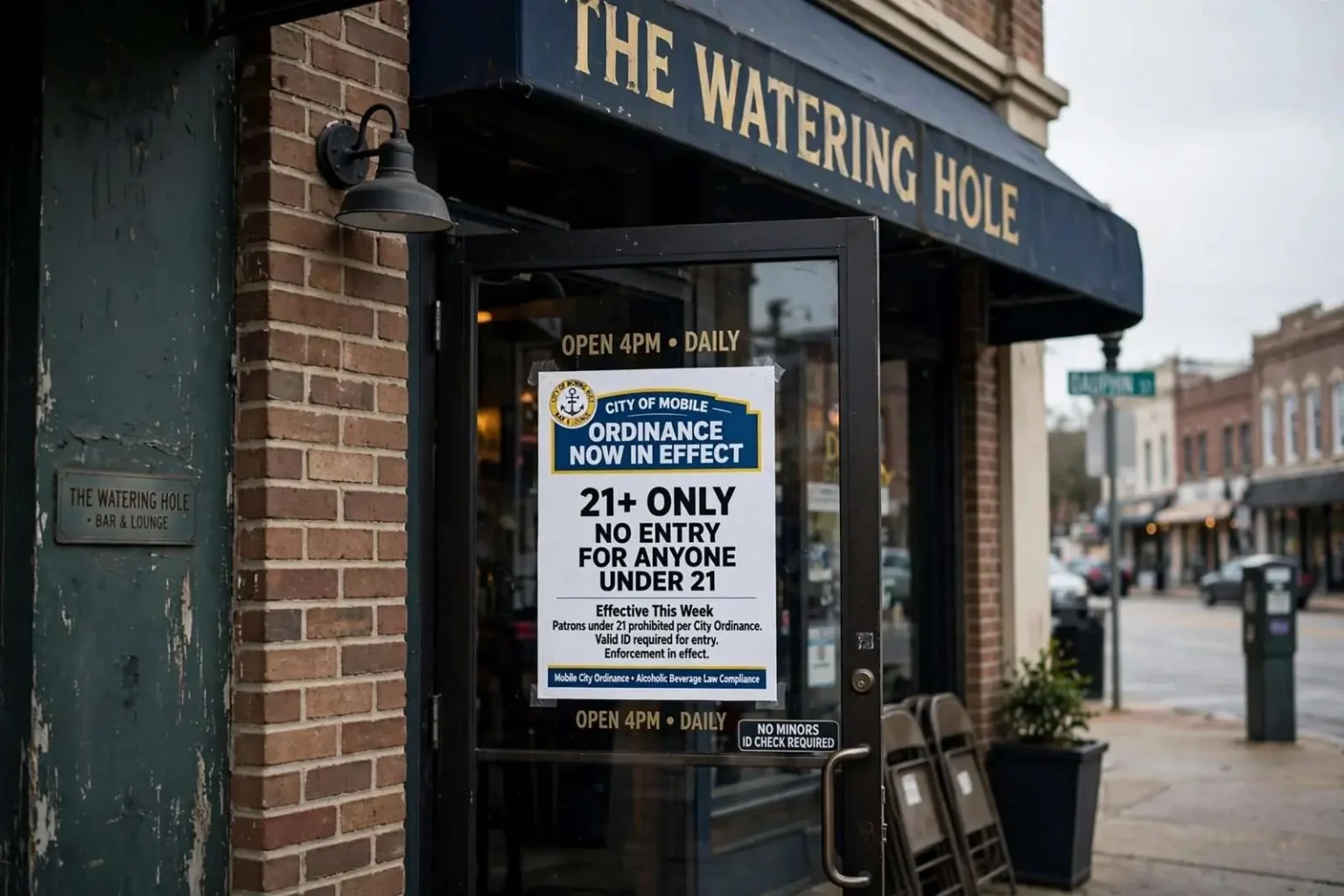
A new city ordinance restricting entry into Mobile bars to patrons 21 and older takes effect this week, part of a broader push by local officials and advocates to reduce underage drinking across the city. Supporters say the rule closes off one more avenue for teenagers and young adults to access alcohol, though even those cheering the change acknowledge it is only one piece of a much larger problem.
Under the ordinance, anyone under 21 will no longer be allowed inside establishments that operate primarily as bars, regardless of whether they intend to drink. City leaders say the change is aimed squarely at the 18-to-20 age group, which research and local enforcement data show is disproportionately likely to attempt to buy or consume alcohol illegally.
Jean Downing, a Mobile mother, said the rule reflects what many parents already know about young adults in that age range.
“They are big risk takers, and if you put a risk out there and — unless they have learned that it’s not a good idea — they are going to go for it,” Downing said, adding that she supports the new restriction.
Virginia Guy, executive director of Mobile’s Drug Education Council, said the ordinance marks a meaningful, if incremental, step forward. Guy, who also plays a leading role in the local Underage Drinking Task Force, has spent years studying how young people in the Mobile area obtain alcohol and how policy can limit that access.
“Anytime that we can restrict use and restrict access to alcohol, we can protect our young people,” Guy said.
Still, Guy was quick to caution that the ordinance alone will not solve underage drinking in Mobile. Young people determined to get alcohol often find other ways around the rules, she said, even when a bar door is closed to them.
“Sometimes adults buy it for them. Sometimes they do the ‘hey, mister’ thing. Sometimes they are getting it from older brothers and sisters. Sometimes they are buying it with fake I.D.’s,” Guy said.
Enforcement data presented at a recent meeting of the Underage Drinking Task Force illustrates how widespread the issue remains. The Alabama Alcoholic Beverage Control Board reported four tickets issued to minors in possession of alcohol and identified three businesses that sold to underage buyers during recent checks. The Mobile County Sheriff’s Office reported six businesses that sold alcohol to a minor during undercover operations, while the Mobile Police Department has documented 28 such sales since August.
Those numbers were gathered through undercover compliance checks conducted at convenience stores, restaurants, grocery stores and bars throughout the area, using underage volunteers working with law enforcement to test whether clerks and servers would sell to them without proper identification.
Guy said the pattern uncovered by those checks is rarely about business owners deliberately breaking the law.
“I think most people who own establishments really don’t want to sell to underage folks. Sometimes their employees aren’t trained well enough,” she said, pointing to a need for more consistent staff training on checking identification and recognizing fake IDs.
Guy said there is no single fix that will eliminate underage drinking in Mobile, but she believes sustained, coordinated effort across the community can shrink the problem over time.
“I think the best thing that we can do is recognize that we are all responsible. Whether it’s in our homes, in our businesses, when we’re out, at friends’ houses — it’s all of our responsibility,” Guy said.
City officials have not said whether additional enforcement measures, such as increased compliance checks or penalties for repeat violators, will accompany the new age restriction. The Underage Drinking Task Force, which includes representatives from local law enforcement agencies, the ABC Board and community organizations, continues to meet regularly to track sales data and coordinate prevention efforts across Mobile County.
The Drug Education Council offers resources for families and individuals looking for support around alcohol and substance use prevention, including educational programming aimed at parents and young people.
Alabama’s drinking-age law
Alabama law already prohibits anyone under 21 from purchasing, consuming or possessing alcoholic beverages, in line with the national minimum drinking age of 21 that took hold after Congress passed the National Minimum Drinking Age Act of 1984, which tied a portion of federal highway funding to states adopting that standard. Mobile’s ordinance goes a step further by keeping under-21 patrons out of bars altogether, rather than relying solely on servers to refuse them drinks once they are inside.
Enforcement of state alcohol laws is shared between local police and sheriff’s offices and the Alabama Alcoholic Beverage Control Board, the state agency that licenses businesses to sell alcohol and whose enforcement agents conduct compliance checks like those described above. Businesses caught selling to minors can face penalties against their alcohol licenses in addition to criminal charges against the employees who made the sale.