
Mother Accused of Helping Son After Davidson High School Shooting Faces Judge
Lasandra Dortch faces hindering prosecution charges after the Davidson High School shooting; her attorney disputes how Mobile Police made the arrest.
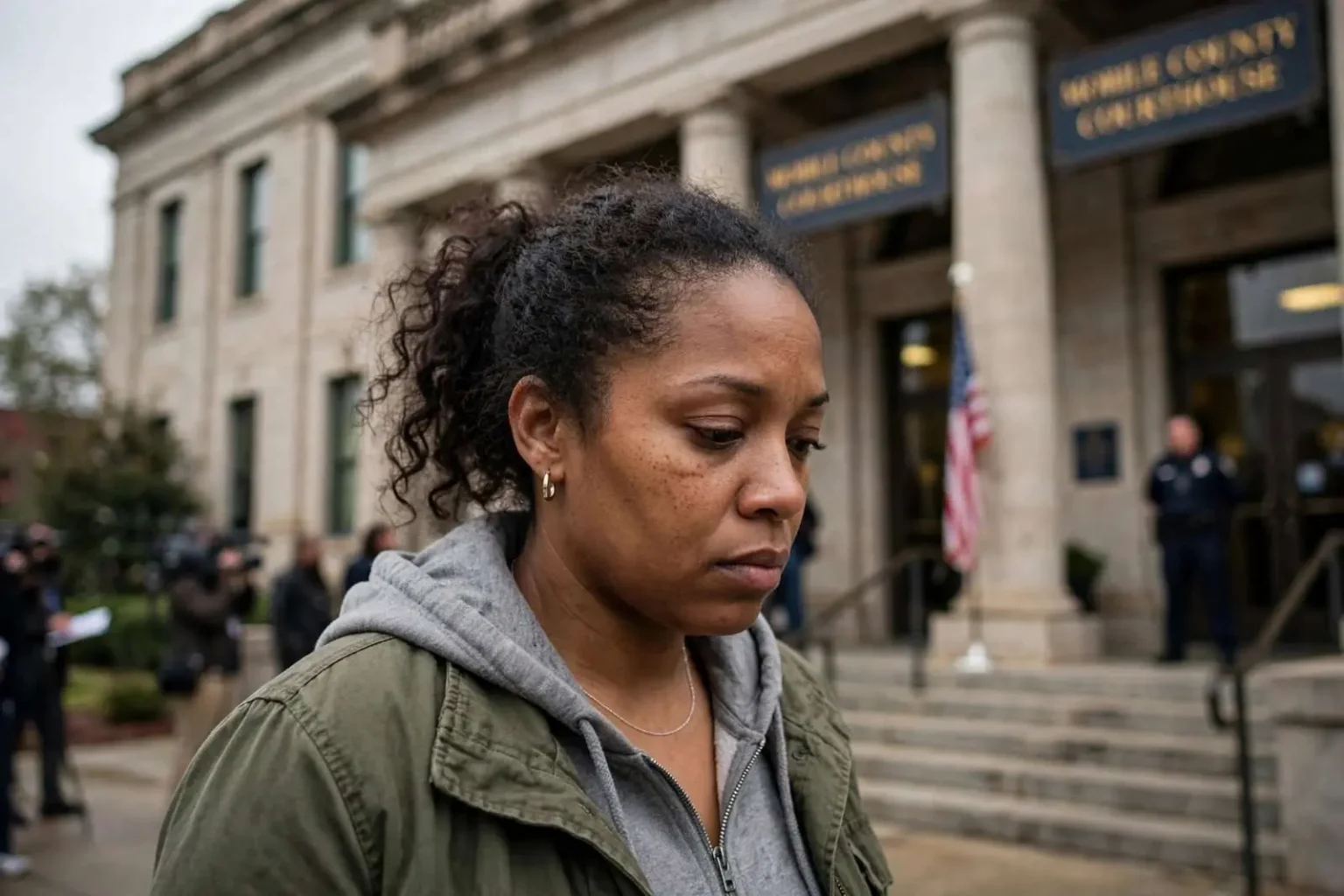
A Mobile mother arrested in connection with the shooting at Davidson High School appeared in court this week, with bond set at just over $7,200 — and her attorney sharply criticizing how the arrest was carried out.
Lasandra Dortch faces charges of assault, hindering prosecution, and giving a false name to an officer. Police do not believe she fired any shots herself. Instead, prosecutors say she helped her son after he allegedly opened fire during a basketball game at Davidson High School, wounding two people. The case has drawn attention across Mobile because it tests the line between a parent’s conduct after a child’s alleged crime and criminal liability for that conduct — and because of the unusual circumstances surrounding the arrest itself.
The charges span a wide range of Alabama criminal law. Assault is the most serious count and relates directly to the violence at the school; hindering prosecution covers actions taken to help someone avoid apprehension after a crime; and giving a false name to an officer is a misdemeanor that prosecutors allege occurred during the encounter with police. Combined, the counts put a parent’s post-incident behavior at the center of the case rather than the shooting itself, which police say was carried out by her son.
Attorney says he was misled by police
Dortch’s lawyer, John White, said Mobile Police investigators came to his office on Friday and told him they did not have a warrant for his client’s arrest — that they only wanted to meet with her to get a photo of her son for a lineup. White says he relayed that to Dortch, and when she met with police she was wrestled to the ground and charged with assault.
“Proper procedure was not followed. Period,” White said. “I was misled by the Mobile Police Department and as a result … my client was misled by me.”
White’s argument turns on the difference between what police said they intended and what they did. An attorney who is told a client is coming in voluntarily to assist with identification — not to be arrested — will prepare that client and the meeting accordingly, and White argued the encounter could have escalated into something far more dangerous had circumstances gone differently. Defense attorneys across Alabama have long warned that voluntary police contacts can shift into arrests without warning, and White’s account of the Friday meeting places this case squarely in that debate.
A Mobile Police spokesman countered that investigators conducted an investigation and had probable cause to arrest her. Probable cause is the constitutional threshold that separates a lawful arrest from an unlawful one — a reasonable belief, based on facts and circumstances, that a person has committed a crime. The department’s position is that once that threshold is met, the manner and timing of the arrest are within investigators’ discretion, regardless of the expectations an attorney may have formed from an earlier conversation.
Allegations about what happened after the shooting
Prosecutors allege Dortch took her son to his father’s house in Mississippi and claimed he was ill in an effort to keep him away from law enforcement. Under Alabama law, helping a fugitive avoid capture — by concealment, misdirection or false statements to police — forms the core of a hindering prosecution charge, and crossing state lines adds a level of complexity to the allegations that prosecutors say shows intent.
The claim that she gave a false name to an officer also fits into prosecutors’ broader narrative about the days after the shooting: that the mother’s conduct was aimed at keeping her son beyond the reach of investigators who were trying to identify and question the person who opened fire on a school campus, wounding two people during a basketball game.
The police chief’s warning to parents
Mobile Police Chief Lawrence Battiste has said he wants parents to understand that his department will hold them responsible when they help their children evade justice after a crime.
The message is aimed at a pattern investigators say they encounter repeatedly in cases involving young defendants: adults — often parents — who conceal a child’s location, mislead officers about identities, or move a young person out of jurisdiction while investigators work. Battiste’s public stance signals that the department treats that conduct not as a family matter but as a criminal one, and the charges filed against Dortch are the most visible application of that policy in a case that shook a Mobile high school community.
The chief’s position also reflects the practical reality of school-violence investigations. When a shooting happens on a campus, the first hours matter enormously — evidence degrades, witnesses disperse, and the fast identification of a suspect often determines whether a case can be proven. Investigators say parental interference in that window is among the most damaging obstacles they face, which is why the department has chosen to charge adults whose actions allegedly slowed the process.
The backdrop: violence at a school basketball game
The underlying shooting occurred during a basketball game at Davidson High School, one of Mobile County Public School System’s largest campuses, wounding two people and sending shockwaves through a school community accustomed to hosting packed gyms for athletic events. School-based violence carries consequences well beyond the victims: it disrupts the academic calendar, prompts security reviews across the district, and forces families to reconsider routine events like games that draw students and parents together in large numbers.
In the weeks since, the case has moved along two parallel tracks. The alleged shooter faces his own proceedings, while his mother’s case has become a separate controversy about police conduct, defense representation and the boundaries of parental responsibility. Prosecutors will have to prove each count against Dortch on its own terms, and her defense has already signaled that the circumstances of her arrest will be a central issue as the case proceeds.
What happens next in the case
The bond set at just over $7,200 places the case in the lower tier of felony and misdemeanor bond amounts, reflecting the charges’ mix — the misdemeanor counts and her lack of alleged involvement in the violence itself. With bond set, the case proceeds toward preliminary hearings, where a judge will evaluate whether probable cause supports each count, and eventually toward possible trial in Mobile County District Court or a grand jury review, depending on how the charges are ultimately presented.
For the defense, the immediate fight is likely to center on the arrest: what police told White on Friday, what Dortch was told, and whether the gap between “we only want a photo for a lineup” and a takedown at the meeting undermines the charges that followed. For prosecutors, the task is to show that the arrest was lawful on its own terms and that the evidence of hindering — the trip to Mississippi, the illness claim, the alleged false name — supports a conviction regardless.
For the wider Mobile community, the case has become a test of two competing expectations at once: that parents will not shield children from accountability for violence, and that police will conduct arrests — even of defendants they consider accessories — by the book. Both expectations are now on trial alongside the defendant, and the outcome will shape how similar cases are handled in Mobile County going forward.
The legal stakes of hindering prosecution
Hindering prosecution is one of the most commonly charged — and least understood — offenses in the Alabama code. It does not require any involvement in the underlying crime; a person with no role whatsoever in the original offense can still be convicted for knowingly helping someone else avoid arrest, prosecution or conviction. The statute reaches a wide range of conduct: harboring or concealing a suspect, warning them of impending arrest, destroying evidence, providing false alibis, or, as alleged here, making false statements designed to keep investigators away from a person of interest.
That breadth is why prosecutors treat these cases as a general deterrent. A parent who believes she is protecting her child by misleading police is, in the state’s view, committing a crime with victims of its own — the wounded parties still awaiting accountability, and the broader justice system whose function the concealment obstructs. The penalty structure runs from misdemeanors to felonies depending on the seriousness of the underlying offense, which means that assisting someone accused of a violent felony exposes the helper to the most serious versions of the charge.
The companion count of giving a false name to an officer is narrower but plays the same prosecutorial role. Alabama law makes it a misdemeanor to provide law enforcement a false identity during an investigation, and such charges often serve as a factual predicate — a documented moment of deception — that supports the broader narrative in the hindering count.
How Mobile County’s court process will unfold
With the appearance before a district court judge complete and bond set, the case now enters the procedural machinery familiar to Mobile County defendants. The preliminary hearing is the next consequential checkpoint, where the state must produce enough evidence for a judge to find probable cause on each count. Defense counsel can cross-examine the state’s witnesses at that stage, which for Dortch’s team means an early, formal opportunity to probe what investigators said on the Friday before the arrest and what probable cause actually rested upon.
If the case is bound over, a grand jury review or direct indictment would move it to circuit court, where felony counts are ultimately resolved. plea negotiations, dismissal motions and trial preparation all follow from there. Cases with contested arrests frequently generate litigation over the admissibility of statements made during the encounter, so the dispute between White’s account and the police department’s will likely resurface in pretrial motions even if it never reaches a jury.
Accountability on both sides of the case
However the charges resolve, the case has already produced a rare public collision between a police department and a defense attorney over the mechanics of an arrest. White’s assertion that he was misled — and that his client was misled as a result — goes to the kind of trust the process depends on: families who cooperate with investigators, attorneys who counsel clients to appear voluntarily, and the assumption that police will say plainly what a meeting is for. The department’s response, that probable cause existed and the investigation drove the arrest, asserts that none of that changes the lawfulness of what followed.
Mobile Police Chief Lawrence Battiste’s standing message to parents — that the department will hold responsible those who help their children evade justice after a crime — ensures the case will be watched as a precedent for how the department handles similar situations. And for the two people wounded in the shooting at Davidson High School, the parallel prosecutions represent the system’s attempt to account for the full chain of events: the gunfire during a basketball game that injured them, and everything prosecutors say happened afterward to keep the shooter from being found.


