Penelope House Address in Mobile, AL
Need the Penelope House address in Mobile AL? Find the exact location at 4344 Boulevard Park N, plus 24/7 crisis hotline numbers and support services for.
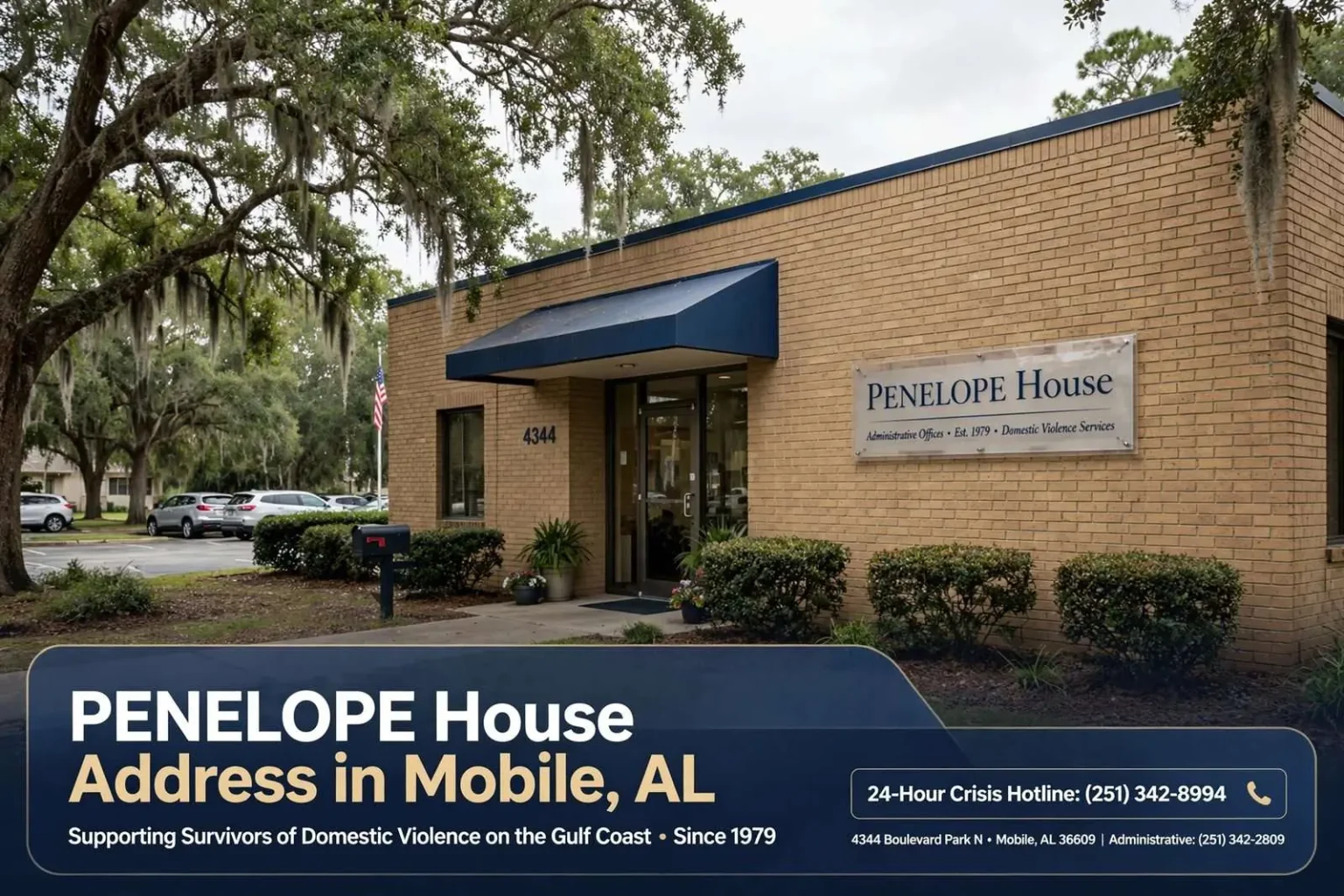
For those seeking refuge from domestic violence in the Mobile area, finding the right location for help is a critical first step. If you have been searching for the Penelope House address on Boulevard Park in Mobile, Alabama, this guide provides the verified information you need to connect with this vital community resource.
Penelope House is one of the oldest and most established domestic violence service organizations in Alabama, and the details of where to reach it — the address, the phone numbers and the mailing information — matter to the survivors, family members and professionals who rely on it. This article collects that information in one place, along with context about what the organization does and how its services work.
The Location of Penelope House
The administrative and primary facility for Penelope House is located at: 4344 Boulevard Park N, Mobile, AL 36609.
It is important to note the exact street address to ensure you reach the correct facility. The organization is situated on Boulevard Park North in Mobile. While some historical records and associated business listings reference nearby addresses like 4336 Boulevard Park N, current directories confirm the primary address as 4344 Boulevard Park N.
The Boulevard Park area sits in central Mobile, reachable from major corridors in the city, which places the organization’s offices within practical distance of residents across Mobile County. Anyone planning a visit for administrative purposes should call ahead, because services for survivors are arranged through the crisis line and are kept confidential by design.
Understanding Penelope House’s Mission
Penelope House is more than just a location; it is a lifeline. Founded in 1979, this non-profit organization serves as a safety and support program for victims of domestic violence and their children. In the nearly five decades since its founding, it has grown into a cornerstone of the Gulf Coast’s safety network, serving thousands of survivors across the region and working alongside courts, law enforcement, hospitals and schools.
The organization provides a confidential environment for survivors, offering services that go far beyond emergency shelter. Confidentiality is central to how a domestic violence shelter operates: locations of the actual shelter residences are not publicized, and access is controlled precisely because the people staying there may be hiding from someone who means them harm. The administrative address on Boulevard Park North is a business office, not the shelter itself, and that distinction is important for both safety and expectations.
Their comprehensive support includes:
- A 24-hour crisis hotline
- Emergency temporary safe shelter
- Counseling and court advocacy
- Vocational counseling and support groups
Important Contact Information
If you or someone you know needs immediate assistance, the most direct way to reach Penelope House is through their 24-hour crisis line.
24-Hour Crisis Hotline: (251) 342-8994
Administrative Office: (251) 342-2809
Mailing Address (for correspondence): PO Box 9127, Mobile, AL 36691
The crisis line is staffed around the clock, every day of the year, because emergencies do not keep business hours. Callers can be experiencing violence at that moment, planning an escape, or seeking guidance on behalf of a friend or relative. Trained staff can assess danger, explain options, arrange shelter intake and connect callers with resources ranging from protective orders to transportation.
Location Context: Penelope’s Closet and Penelope’s Park
For those navigating the area, it is helpful to note that Penelope House also operates a thrift store called Penelope’s Closet, which helps fund their mission. The store gives the community a practical way to support the organization — by donating gently used goods or shopping — while the proceeds help sustain services that are provided to survivors at no cost.
What Each Service Looks Like in Practice
Emergency temporary safe shelter is the service most people associate with a domestic violence organization, and it remains the heart of Penelope House’s work. Shelter provides a safe place to stay for survivors and their children who cannot remain in their homes, along with meals, case management and a structured environment designed to restore stability during a crisis. Stays are temporary by design, with staff working alongside each family to plan the next step, whether that is relocation, housing assistance or a return home under a safety plan.
Counseling services extend to adults and children, addressing the trauma that accompanies abuse. Children who witness domestic violence carry its effects with them, and age-appropriate counseling is one of the ways the organization works to break the intergenerational cycle that keeps families exposed to violence.
Court advocacy helps survivors navigate the legal system at one of the most disorienting moments of their lives. Advocates assist with protection orders, accompany survivors to proceedings and explain the process in plain terms. For someone who has never set foot in a courthouse, that guidance can be the difference between pursuing legal protection and abandoning it.
Vocational counseling and support groups address the longer road after crisis. Economic dependence is one of the most common reasons survivors stay with or return to abusive partners, and job-focused support works directly on that problem. Support groups connect survivors with others who have lived through similar experiences, reducing the isolation that abuse depends on.
A Long History in Mobile
Penelope House opened in 1979, making it one of the pioneering domestic violence shelters in Alabama. The organization took its name from the mythological Penelope, and from the beginning its founders built it around a simple premise: no one should have to choose between staying in a violent home and having nowhere to go. In the decades since, the organization has expanded from emergency shelter into the full continuum of services it offers today, funded through a combination of grants, donations, community support and revenue from its thrift operation.
The need remains substantial. Domestic violence touches households in every part of Mobile County, across every income level and neighborhood, and the National Domestic Violence Hotline estimates that roughly one in four women and one in nine men experience severe intimate partner violence in their lifetimes. Local organizations like Penelope House are the front line of that reality in the Gulf Coast.
If You Are Helping Someone Else
Family members and friends are often the first people a survivor tells, and how they respond matters. Advocates recommend listening without judgment, believing the person, avoiding pressure about what they should do and keeping the crisis line number handy. The 24-hour hotline at (251) 342-8994 can advise callers on how to support someone safely, including how to help them plan an exit without escalating danger.
Safety planning is a core part of that guidance. Leaving an abusive relationship is statistically one of the most dangerous moments a survivor faces, and doing it with a plan — documents, medications, money, a safe destination — measurably improves outcomes. Penelope House staff help survivors build those plans, whether or not they ever enter shelter.
For correspondence, the mailing address remains PO Box 9127, Mobile, AL 36691, and the administrative office at (251) 342-2809 handles donations, volunteering, speaking requests and general questions during business hours.
Penelope House has been part of Mobile’s safety net since 1979, and its work continues every hour of every day. The address on Boulevard Park North is where the organization’s administrative work happens; the mission — safety, support and a path forward for survivors of domestic violence and their children — happens everywhere its services reach, one call at a time.
How the Crisis Line Works
The 24-hour crisis hotline is the front door to everything Penelope House does. Calls are answered by trained staff and volunteers who understand the dynamics of domestic violence — the fear, the cycles of tension and reconciliation, the financial and family ties that make leaving complicated. A caller does not need to be in immediate physical danger to use the line; questions about warning signs, verbal abuse, or a friend’s situation are all appropriate reasons to call.
When a caller needs shelter, staff conduct an intake assessment over the phone, checking on immediate safety and arranging how and when the survivor can come in. Because the shelter locations are confidential, the specifics of arrival are coordinated privately, and transportation help can often be arranged. Survivors with children are sheltered together; keeping families intact is a guiding principle of the program.
The line also serves professionals. Nurses, teachers, clergy, employers and law enforcement officers who encounter suspected abuse can call for guidance on how to respond and how to refer someone to services without putting that person at greater risk.
Volunteering, Donations and Community Support
As a non-profit, Penelope House depends on the community that surrounds it. Donations of household goods, clothing and children’s items help furnish shelter life for families arriving with nothing, and the Penelope’s Closet thrift store turns community generosity into ongoing operating revenue. Monetary gifts fund everything from hotline staffing to counseling sessions to school supplies for children staying in shelter.
Volunteers contribute in ways that range from direct service — hotline shifts, childcare during support groups, transportation help — to behind-the-scenes work such as sorting donations and assisting with events. Businesses and civic groups across Mobile County hold drives and fundraisers for the organization throughout the year, and local churches have been among its most consistent supporters since its founding era.
Anyone interested in giving time or goods should contact the administrative office at (251) 342-2809 to confirm current needs. Shelters typically maintain specific wish lists, since storage space is limited and items like unopened hygiene products, new bedding and children’s school supplies are consistently more useful than miscellaneous donations.
Recognizing the Signs of Domestic Violence
Part of the organization’s mission is education, because early recognition can prevent escalation. Common warning signs include a partner who controls money, monitors a person’s phone or movements, isolates them from family and friends, belittles or threatens them, or reacts with explosive anger to ordinary disagreements. Physical violence is only one form of abuse; coercive control, sexual coercion and financial abuse can be equally imprisoning.
Friends and relatives who notice these patterns are encouraged to voice concern calmly and without ultimatums. Survivors frequently cite one person’s nonjudgmental support as the turning point that eventually led them to seek help. The crisis line can walk a concerned friend through that first conversation.
A Resource for the Entire Gulf Coast
While Penelope House is rooted in Mobile, its reach extends across the surrounding region, and survivors from Baldwin County and neighboring Mississippi communities also rely on its hotline and services. The organization coordinates with a statewide network of domestic violence centers, so when shelter space or specialized services are needed elsewhere, referrals and transfers can be arranged.
The essential details bear repeating for anyone who needs them: the administrative facility is at 4344 Boulevard Park N in Mobile; the 24-hour crisis hotline is (251) 342-8994; the administrative office is (251) 342-2809; and mail can be directed to PO Box 9127, Mobile, AL 36691. Behind those numbers and addresses is an organization that has answered the phone in the worst moments of thousands of Gulf Coast families’ lives since 1979 — and that stands ready to answer again.