Pensacola Man Sentenced to 28 Years in Roommate’s Killing
Donald Barbee will serve 28 years for killing his roommate, Vietnam veteran Hector Torres, whose body was found behind a Pensacola hair salon.
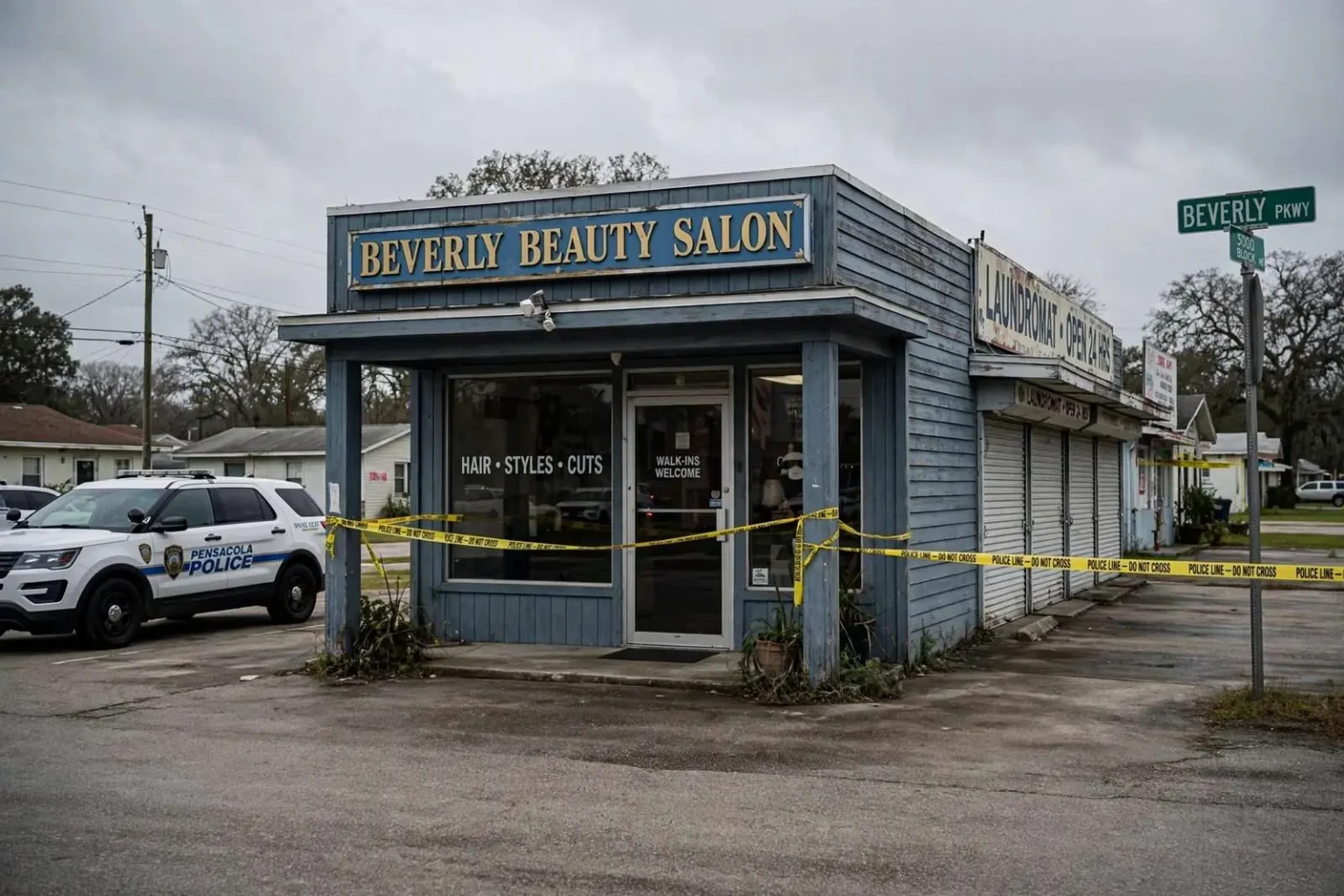
A Pensacola man has been sentenced to 28 years in prison for killing his roommate, a disabled Vietnam veteran, and dumping his body behind a hair salon. Donald Barbee, 51, was sentenced in the August 2019 death of 71-year-old Hector Torres, who had been staying with him, according to authorities. The sentence closes out a case that had unsettled the Pensacola neighborhood where the roommate arrangement turned deadly.
Barbee killed Torres and left his body wrapped in a blanket and sheet behind a salon on Beverly Parkway, where it was later discovered. The details of the discovery — a veteran in his seventies, wrapped and discarded behind a neighborhood business — struck the community as a profound violation of the trust that should exist between the people who share a home. Torres had been staying with Barbee, a living arrangement that made his death at the hands of his housemate all the harder for those who knew the men to accept.
Torres was 71 and, according to authorities, a disabled veteran of the Vietnam War. His death brought into focus a reality that advocates for older adults and veterans have long warned about: people who live in shared or dependent housing arrangements are among the most vulnerable to violence, particularly when age, disability or isolation limits their ability to protect themselves or to reach out for help. Services across the Pensacola area exist to support veterans and seniors, but those supports depend on someone knowing there is a problem — and by the time authorities learned what had happened to Torres, it was too late.
The 28-year sentence means Barbee, at 51, will serve well into his later years behind bars. Sentences of that length reflect the gravity the court assigned to the crime: the death of a vulnerable elderly man, the concealment of his body and the betrayal involved in turning a shared home into the scene of a homicide. Prosecutors pursue outcomes like this one to send the message that violence against the vulnerable carries a full measure of consequence.
For the neighborhood around Beverly Parkway, where the body was found, the case’s resolution offers a kind of quiet finality. Discovering human remains behind a local business is the kind of event that lingers in a community’s memory, and the questions it raised — who the person was, how he got there, whether anyone nearby was at risk — hung over the area from the discovery in 2019 until the sentence was handed down. With Barbee’s sentencing, the court has answered those questions as fully as the justice system allows.
How the case came together
Homicide investigations that begin with the discovery of an unidentified body move through distinct phases, and the Torres case followed the familiar path from unknown victim to named suspect to convicted killer. Investigators first had to establish who the deceased was, then reconstruct where he had lived and who his associates were, and ultimately build the case that connected his death to the man he lived with. Every step of that work is documented with the rigor that a criminal prosecution demands, because the state’s case must survive the scrutiny of defense counsel and, ultimately, a judge’s sentence.
The fact that Torres’s body was wrapped before it was left behind the salon became part of the evidentiary picture as well. Concealment of a victim’s body is treated by the courts as evidence of consciousness of guilt, and the manner in which a body is hidden factors into how prosecutors present a case and how judges weigh sentencing. In this case, the concealment delayed the discovery of Torres’s death and added to the anguish of those who knew him and waited for answers about a man who had simply stopped being seen.
Pensacola’s law enforcement and court system handled the case from discovery to sentencing over the months that followed August 2019. The resolution — a guilty outcome and a 28-year term — reflects a process that moved from a body found behind a salon to accountability in a courtroom, the trajectory every homicide case is supposed to follow even when the answers it delivers offer little comfort.
Vulnerable victims, shared homes
The case speaks to a broader pattern that social service agencies in the Pensacola area and across the country work against every day. Older adults and people with disabilities who live in shared housing or depend on housemates and caregivers are exposed to risks that independent adults are not, and abusers count on the isolation of their victims — the likelihood that no one outside the home will notice what is happening. Advocates urge friends, family and neighbors of older adults to stay in regular contact, watch for unexplained changes, and report concerns to adult protective services when something seems wrong.
Vietnam War veterans, now in their seventies and eighties, represent a generation whose needs are increasingly the focus of veterans’ services. Organizations in the Pensacola area — a community with deep military roots, anchored by Naval Air Station Pensacola — provide support ranging from housing assistance to healthcare navigation and companionship programs. The military presence that defines the region also means many residents are veterans themselves or connected to them, and the death of a 71-year-old veteran in such circumstances resonated through that community as it followed the case.
Statistics kept by social service and criminal justice agencies consistently show that violence against older adults is underreported, in part because victims may be isolated, dependent on the person harming them, or reluctant to involve authorities in household matters. Deaths like Torres’s represent the worst end of that spectrum, and cases that end in sentencing like Barbee’s are a reminder to the wider community that the people living quietly in shared homes and rental rooms around them can be at real risk — and that attention from neighbors and relatives can be the safeguard that intervenes before things go wrong.
The sentencing and what it settles
A sentencing hearing is the point at which a criminal case becomes final in practical terms, and the 28-year term handed to Barbee fixes the consequences of the August 2019 killing. At 51, Barbee will spend decades in the custody of the Florida Department of Corrections, with his release, if it comes, arriving when he is near the age his victim was when he died. Sentences of that scale are typically reserved for killings marked by aggravating circumstances, and the facts of this case — the victim’s age and disability, the household relationship, and the concealment of the body — defined its seriousness for the court.
For Torres’s family and friends, the sentencing is the justice system’s final word in a case that began with grief and uncertainty. Nothing a court does restores what was taken, and no sentence explains fully why a living arrangement became a killing. What the outcome provides is accountability: a named punishment for a named crime, delivered in open court, closing the file on a death that began behind a salon on Beverly Parkway and ended, at last, with the man responsible held to answer for it.
Beverly Parkway and the neighborhood’s ordeal
The block of Beverly Parkway where Torres’s body was found is a residential-commercial stretch of west Pensacola, the kind of street where businesses and homes sit side by side and where the discovery of human remains behind a salon became the topic no one could avoid. Residents and workers passed the building for years without incident; after the summer of 2019, the address carried a different weight. The eventual arrest and conviction of Barbee answered the question the neighborhood had been living with — that the threat had come from inside the victim’s own household, not from a stranger stalking the area.
That distinction matters to a community’s sense of safety. When a body is found near homes and businesses, people brace for the possibility of a predator at large, and police inquiries press on everyone’s nerves until the picture clarifies. Learning that the crime was isolated — connected to a specific household and a specific relationship — allows a neighborhood to exhale, even as it mourns the victim. In this case, the resolution came through patient investigative work rather than a chance capture, and the neighborhood learned the answer at the same time the courts did.
Lessons that outlast the case
Cases like this one tend to fade from headlines once the sentence is announced, but the conditions that produced them persist. Shared housing among older adults is increasingly common as housing costs rise and fixed incomes stretch thin, and most such arrangements are benign — two people splitting rent, a householder taking in a longtime friend, families combining households to get by. The lesson of the Torres case is not that shared living is dangerous, but that dependence and isolation demand the same watchfulness a community applies to any vulnerable neighbor.
The resources exist in Escambia County for exactly that purpose: adult protective services investigators respond to reports of harm or neglect, veterans’ organizations check in on former service members who live alone or with non-family housemates, and senior centers and outreach programs provide the regular contact that makes isolation harder to hide. Every report from a concerned friend or neighbor is a chance to intervene before a bad situation becomes a tragedy.
For now, the court record shows what the community waited to learn: Donald Barbee, 51, will serve 28 years for the death of Hector Torres, 71, a disabled Vietnam veteran who had been staying with him and whose body was found wrapped behind a Beverly Parkway salon. The case is closed, the neighborhood has its answer, and the sentence stands as the final word on a crime that began with a betrayal at home.