Prichard Man Honored for Pulling Driver From Truck Sinking Into Mobile Bay
Prichard celebrated James "Bubba" Coleman for pulling a driver from a truck sinking into Mobile Bay along the causeway.
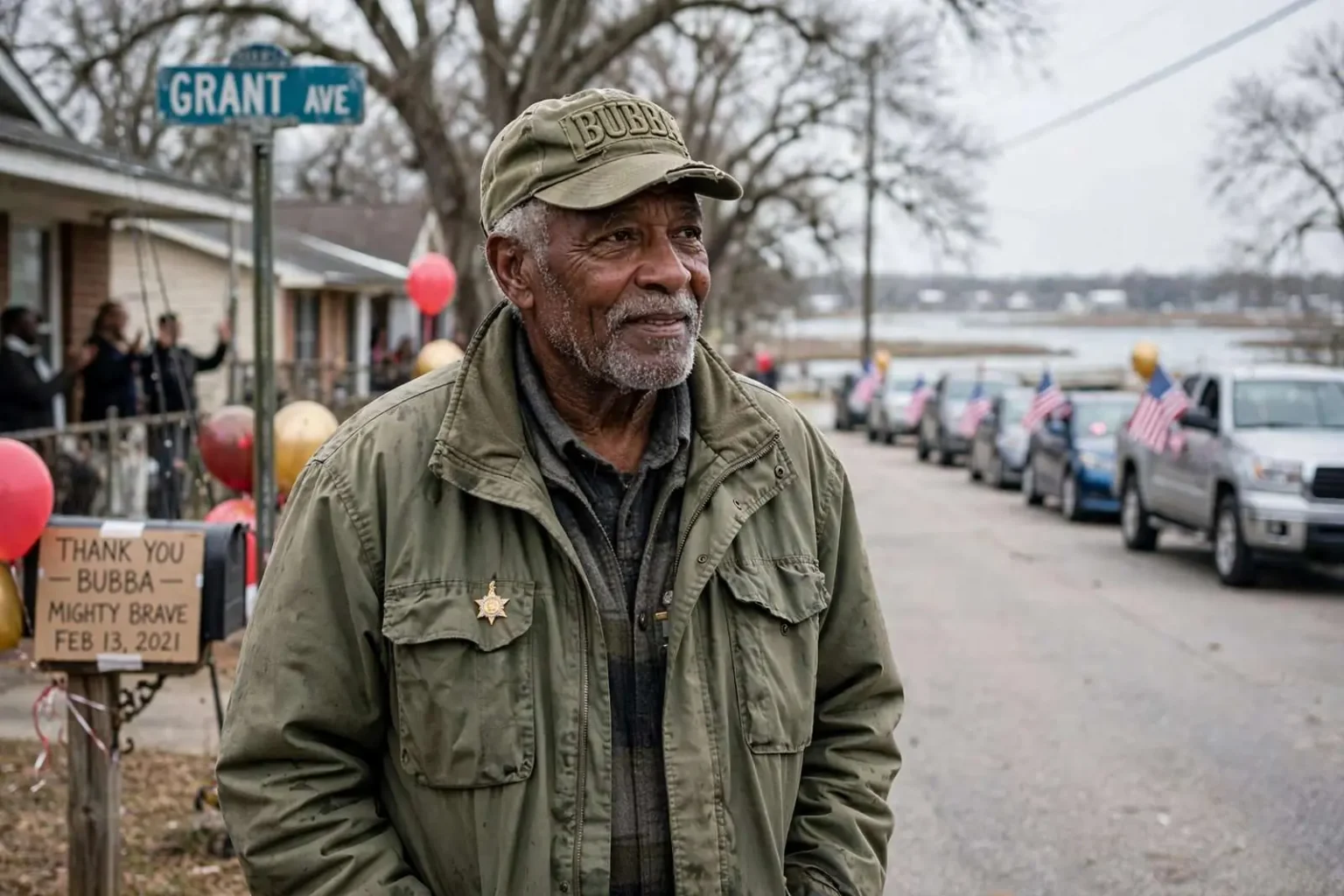
The City of Prichard honored one of its own in February 2021, celebrating James “Bubba” Coleman for helping pull a stranger from a truck that was sinking into Mobile Bay.
The rescue happened the previous December along the causeway, where a commuter’s truck struck the median and plunged into the bay. Coleman, who fishes along the water there regularly, happened to be nearby and waded in to lend a hand, helping get the driver out of the sinking vehicle.
Prichard City Councilman George McCall organized a drive-by celebration in Coleman’s honor, inviting residents to parade past his Grant Avenue street at 11 a.m. on Saturday, February 13, honking and offering words of encouragement.
A rescue on the causeway
The events that led to the honor began in December, along the stretches of the Mobile Bay causeway where the water sits close to the roadway. A commuter’s truck struck the median and plunged into the bay, leaving the driver inside a vehicle that was taking on water. It is the scenario every driver who crosses that low-lying causeway quietly dreads — a crash that puts the vehicle into the water rather than on the shoulder — and it unfolded in seconds for the motorist involved.
Coleman was nearby because the causeway is part of his regular routine. He fishes along the water there often, one of the many anglers who work the shoreline and piers along the bay on any given day. Being present at the moment of the crash was chance; what he did next was not. Coleman waded into the bay and helped get the driver out of the sinking truck, lending his effort to a rescue where minutes mattered and the water was rising around the vehicle.
Wading into Mobile Bay to reach a sinking truck means contending with water, mud and the physical mechanics of extracting a person from a vehicle that is going down. It is the kind of act that most people contemplating it from dry land would hesitate over, and Coleman did it without hesitation, helping a stranger out of a truck that was disappearing into the bay.
The driver was pulled from the vehicle, and the rescue became known in the community as word of what Coleman had done made its way through Prichard. By February, the city had decided the act deserved public recognition.
A drive-by celebration on Grant Avenue
The form the honor took was shaped by its moment. February 2021 fell in the middle of the coronavirus pandemic, when indoor gatherings were limited across Alabama, and Councilman George McCall’s answer was a drive-by celebration: residents invited to parade past Coleman’s Grant Avenue street at 11 a.m. on Saturday, February 13, honking and offering words of encouragement from their vehicles.
The format fit both the health precautions of the time and the character of the honor itself. A parade of cars rolling down a residential street, horns sounding for a man standing in front of his own home, is a distinctly neighborhood-scale tribute — personal rather than ceremonial, and visible to everyone on the block. Grant Avenue, like the streets around it in Prichard, is a residential road where neighbors know one another, and the event gave the community a way to participate in celebrating Coleman without a crowd indoors.
McCall organized the event in his role as the district’s councilman, the elected position that makes a council member the natural convener of a community tribute. Invitations went out to residents, and the plan was straightforward: drive past, honk, and let Coleman see how many people knew what he had done.
“Mighty brave”
McCall said he arranged the tribute because Coleman risked his own life despite being older and living with health conditions — an act he called “mighty brave.” The description captures what made the rescue stand out even among acts of spontaneous heroism: the person wading into the bay was not a young man in peak condition, but someone for whom the water itself posed a serious risk.
Rescues like the one on the causeway are statistically dangerous for exactly that reason. Vehicles sink quickly, the water and mud along the bay’s edge are difficult to move through, and the physical effort of pulling a person from a cab strains even the fit. Coleman went in anyway, and the fact that he did so while managing his own health circumstances is the reason his neighbors and his councilman treated the act as remarkable.
The recognition also carried the weight of the moment. February 2021 was a winter when the pandemic had strained communities for nearly a year, and an act of one resident risking himself for a stranger gave the city something to celebrate together — a reminder that the qualities communities depend on show up in ordinary places, on ordinary days, in people who happen to be fishing by the road when someone needs help.
The causeway and the bay
The Mobile Bay causeway, formally the Battleship Parkway, runs across the northern end of Mobile Bay, linking Mobile and the Eastern Shore along a low causeway that sits at water level for much of its length. It is a working road — carrying commuters between the Mobile area and Baldwin County, anglers to their fishing spots and travelers to the USS Alabama Battleship Memorial Park that sits along its span — and its proximity to the water is inseparable from its character.
For fishermen like Coleman, the causeway is a destination as much as a road. The shoreline along the bay offers fishing access that draws people from both sides of the bay, and on any decent day the pull-offs and edges along the causeway host anglers working the water. That constant presence of people along the road is occasionally what turns a crash into a rescue: when a vehicle leaves the pavement and enters the bay, the chances of a passerby being close depend on exactly the kind of regular human presence the causeway’s fishermen provide.
The December crash that put a commuter’s truck into the bay was a version of the incidents that the causeway has seen before. Low-lying roads at water level leave no margin for error when a vehicle strikes a median or slides off the pavement, and the result is a scenario in which the response of whoever is nearby matters more than any infrastructure.
Prichard celebrates its own
Prichard, the city Coleman calls home, sits just north of Mobile in Mobile County, a community of neighborhoods where civic life runs through its churches, its schools and its City Council districts. The drive-by salute on Grant Avenue was the city’s way of marking what one of its residents did, and events of that kind are part of how the city’s identity is maintained — through public, neighborly recognition of the people who reflect well on the place.
Councilman McCall’s role in organizing the tribute fit the position he holds. Council members in Prichard represent districts and serve as the connective tissue between City Hall and the neighborhoods, and a tribute organized through a councilman’s office carries the city’s formal gratitude into a residential street where it can be seen.
For Coleman, the honor was public confirmation of a private act. He was fishing where he usually fishes when a stranger’s truck went off the causeway and into the bay, and he did what needed doing. Months later, his neighbors drove past his house and honked.
The February 13 celebration remains the record of how Prichard chose to thank him: a line of cars, a street full of horns, and a city saying aloud what the rescue had already shown — that James “Bubba” Coleman was, in his councilman’s words, mighty brave.
Water rescues and the people who make them
Rescues from sinking vehicles are among the most unforgiving situations a bystander can encounter. A truck that has entered a bay does not float for long; water enters the cabin, the vehicle grows heavy and begins to submerge, and the person inside has only the time between the crash and the waterline to escape or be reached. The people who intervene successfully in those minutes are almost never trained professionals arriving with equipment — they are the ones who happen to be close enough to act while the vehicle is still reachable.
That is what made Coleman’s presence matter. As someone who fishes along the causeway regularly, he knew the water he was entering, and he was within reach of the sinking truck when it counted. The decision to wade in — made without time for deliberation, with the vehicle going down — is the essence of the kind of courage that communities hold up afterward, because it cannot be planned, assigned or rewarded in advance.
Along the causeway and across coastal Alabama, anglers, boaters and people who work near the water have been part of rescues like this one before. The Gulf Coast’s relationship with its waters means that people comfortable around them are often nearby when someone else is in trouble, and Coleman’s rescue fits that pattern of ordinary people close to the water doing what the moment demands.
Recognizing everyday heroism
The drive-by salute also illustrates how communities have adapted public recognition to the pandemic era. Traditional ceremonies — a council chamber presentation, a plaque handed before a crowd — gave way in 2021 to formats that let people participate from their cars. The honking parade past Grant Avenue was that adaptation applied to one of Prichard’s own, and it succeeded in making the recognition personal: Coleman stood at his home and watched his neighborhood arrive for him.
Recognition of bystander rescues serves a purpose beyond the individual honored. When a city publicly celebrates someone who risked himself for a stranger, it marks the behavior as representative of the community’s values — the thing people there do for one another. For younger residents, the story becomes part of what the neighborhood expects of its own; for the honoree, it is assurance that the act was seen and valued.
McCall’s decision to organize the salute within weeks of the rescue kept that window open. Honors that arrive while the community still remembers the event land differently than those that arrive years later, and the February 13 date — a Saturday at 11 a.m., when neighborhood traffic would be light and participants could gather easily — reflected the practical thinking that went into the event.
The commuter whose life changed that day
At the center of the story is the driver whose truck left the causeway pavement and ended up in Mobile Bay. A commute that began like any other became a fight to escape a sinking vehicle, and it ended with a stranger wading into the water to help pull the driver out. The driver’s condition following the rescue and the specifics of the crash were not detailed in the accounts of the celebration, but the outcome — a person out of the truck and alive — is the fact that everything else follows from.
For the driver, the rescue means that an ordinary December drive was survived because of the presence and willingness of someone who was fishing nearby. It is the kind of debt that cannot be repaid except by living, and it is the reason the City of Prichard chose to make Coleman’s act a matter of public record.
The story that Grant Avenue told with its horns that Saturday morning in February 2021 is a simple one: a fisherman from Prichard saw a truck sinking into the bay, waded in despite his age and his health, and helped a stranger live. The city said thank you the only way a neighborhood can — out loud, in front of his house, with every car that passed.