Renovated Bayou Sara Boat Launch in Saraland Reopens to the Public
The Bayou Sara boat launch on Ruben Avenue in Saraland, Alabama has reopened after renovations. Alabama Power lighting installation is the final pending.
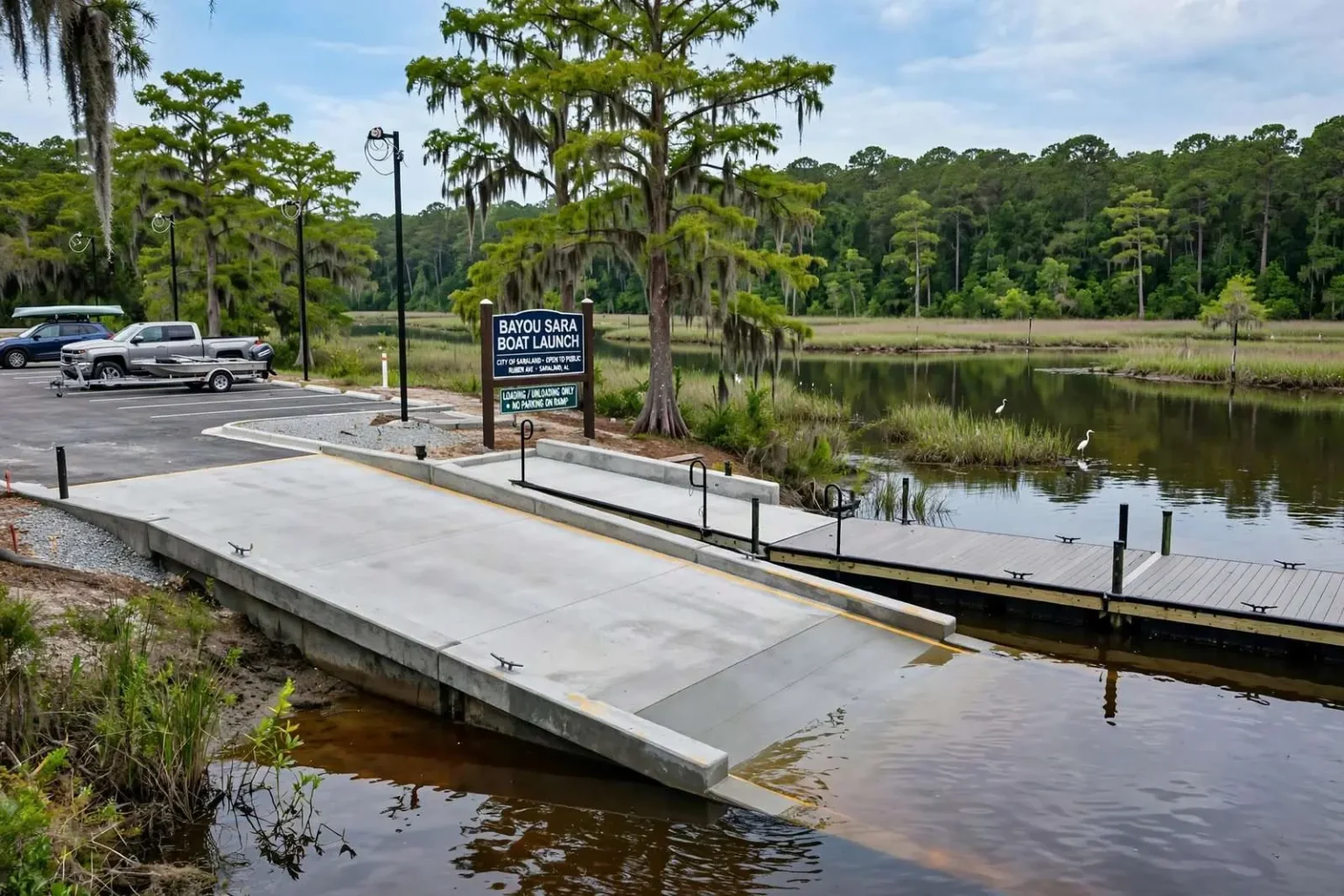
SARALAND, Ala. — Residents of Saraland and the surrounding Mobile County area have a familiar waterfront spot open once again. The Bayou Sara boat launch, located on Ruben Avenue in Saraland, has completed renovations and is now available for public use.
The city of Saraland confirmed the reopening this week, noting that the boat launch improvements include updated infrastructure designed to better serve boaters, anglers and other outdoor enthusiasts who rely on the facility for access to local waterways. The work marks the completion of a project that city officials have pointed to as part of their broader investment in the community’s public recreation assets.
The only remaining item on the project punch list is lighting. Alabama Power had been scheduled to begin installing new fixtures at the site, weather permitting. Once complete, the full set of improvements will provide a safer and more convenient experience for users launching boats during both daytime and evening hours — a meaningful upgrade for anglers who favor dawn launches and duck hunters and fishermen returning after dark.
A popular gateway to local waterways
The Bayou Sara launch sits in an area of Mobile County that draws steady recreational traffic throughout the year, from weekend fishermen to families heading out onto Mobile Bay. Access points like this one are the practical starting line for thousands of outings across the region, where a public ramp is often the difference between a quick afternoon on the water and a long drive to a distant landing.
Boaters who put in at Bayou Sara can work the surrounding creeks and bayous or make their way toward the larger systems that define south Alabama’s landscape. The Mobile-Tensaw Delta, one of the most biologically rich river systems in the country, spreads across hundreds of thousands of acres north of Mobile Bay, and the network of tributaries threading through north Mobile County connects anglers and paddlers to that vast backwater maze.
Freshwater fishermen target largemouth bass, crappie, bream, and catfish in the dark, tannin-stained waters of the local streams, while saltwater anglers launching from area ramps can run south toward the bay and its legendary spring runs of speckled trout and redfish. Kayakers and canoeists have increasingly joined the traffic as paddling has grown across the Gulf Coast, and a dependable public launch serves all of them.
What the renovation included
City officials said the improvements center on updated infrastructure intended to make the facility more durable and more usable through the seasons. Launch ramps in south Alabama take a beating from fluctuating water levels, heavy trailer traffic, and the steady humidity that accelerates wear on wood, metal, and concrete, so periodic rebuilds are essential to keeping a public access point open and safe.
The addition of lighting stands out as the most consequential remaining piece. A lit launch extends the usable hours of the facility in every season, improving safety for early-morning and late-evening launches and adding a deterrent to after-hours vandalism and theft that plague unlit boat ramps. Utility coordination — in this case with Alabama Power, the state’s largest electric utility, headquartered in Birmingham with operations across the Gulf Coast region — is a routine but often slow-moving part of public works projects, since fixture installation depends on crew scheduling and, as officials noted, on the weather.
Once the fixtures are in, the city expects the completed project to deliver a noticeably better experience for anyone backing a trailer down the ramp, from the depth and condition of the launch surface to the comfort of arriving at a well-lit site in the pre-dawn hours.
Saraland’s investment in public access
The renovation reflects the city’s continued investment in maintaining and upgrading public access points to the water. Saraland has grown into one of the largest cities in Mobile County, straddling U.S. 43 and Interstate 65 north of Mobile, and its leadership has increasingly emphasized parks, recreation, and quality-of-life projects as the city competes for families and businesses moving into the fast-growing northern reaches of the metro area.
Public boat ramps are a small line item in most municipal budgets but a large part of daily life in communities near the delta. The waterways around Saraland — Bayou Sara among them — have shaped the area’s identity since long before incorporation, providing travel routes, fishing grounds, and floodplain bottoms that defined where roads and neighborhoods could go. Keeping public access to those waters open, functional, and safe is a continuing municipal responsibility that most residents only notice when a ramp closes.
The closure for renovation temporarily removed one of the area’s convenient options, pushing some traffic to other public landings in Mobile County and across the bay. With the reopening, regular users regain their traditional put-in point, and city officials hope the upgrades reduce the maintenance cycles that kept older facilities out of service in the past.
The Bayou Sara area
Bayou Sara itself winds through the Saraland landscape as part of the greater Mobile Bay watershed. Streams like it drain the uplands of north Mobile County, collect rainfall across forested floodplains, and carry that flow toward the delta and the bay. Water levels rise and fall with rain events and with the seasonal tides that push brackish water up the system, creating the mix of fresh and salt habitat that makes the region’s fishing so productive.
That mix supports a wide range of outdoor pursuits beyond hook-and-line fishing. Crabbing and gigging have long traditions along the bayous, waterfowl hunters work the flooded timber in winter, and wildlife photographers find herons, egrets, ospreys, and the occasional alligator along the banks. A public launch multiplies access to all of it, particularly for residents without waterfront property or private landings.
Local anglers often describe north Mobile County’s creeks as a quiet alternative to the crowded public ramps closer to Mobile Bay, and the Bayou Sara facility’s reopening restores one of the access points that reputation depends on. Steady recreational traffic through the year — from bass tournaments to family crabbing outings — has long made reliable ramps a community priority in the area.
What users should know
The launch is open for public use now, with the lighting installation still to come. Alabama Power’s scheduled fixture work will proceed weather permitting, and users may encounter brief work activity at the site until the punch list is fully cleared. City officials expect the finished project to serve boaters, anglers and other outdoor enthusiasts in both daytime and evening hours once the lights are operational.
As with any public ramp, users are encouraged to follow standard courtesy — limiting time on the ramp itself, staging trailers in designated areas, and reporting any damage or hazards to the city. Well-maintained facilities last longer when the community that uses them helps look after them, and the investment Saraland has made at Bayou Sara is intended to pay off for years of launches to come.
Why public boat launches matter in Mobile County
Mobile County sits at the center of one of the most water-rich regions in the United States. The Mobile River system, fed by the Alabama, Tombigbee, and Tensaw rivers, drains a vast interior watershed into Mobile Bay, and the county’s map is laced with bayous, creeks, and distributaries. For generations, that geography has made boating and fishing less a hobby than a way of life across the area’s communities, from the working waterfronts of the bay to the backwater camps of the delta.
Public access infrastructure is what connects residents to that heritage. State and city agencies maintain ramps at dozens of sites across the county, and demand has only grown as the metro population expands and outdoor recreation boomed in the wake of the pandemic. Communities that maintain quality launches — with solid ramps, adequate parking, and now lighting — see the payoff in tournament traffic, tourism spending, and residents’ everyday use of the natural resources at their doorstep.
Saraland’s position in the northern part of the county puts the Bayou Sara launch within easy reach of residents in Satsuma, Chickasaw, Creola, and Prichard as well, making it a regional asset rather than a purely municipal one. Steady use by boaters from across the area is part of why the city’s investment in the facility carries significance beyond the city limits.
The economics of a ramp renovation
Projects like the Bayou Sara overhaul typically involve marine construction considerations that separate them from ordinary street work: materials that withstand submersion and salt influence, grading that accounts for tidal range, and staging that keeps neighboring properties and wetlands undisturbed. Weather windows matter as much for construction crews as they do for the boaters waiting to return, which is one reason the lighting installation remains scheduled around forecast conditions.
The punch-list approach the city described — completing the main improvements, reopening the facility, and finishing the lighting as the utility’s schedule allows — reflects the practical sequencing most municipalities use to balance service restoration against project completeness. Reopening the ramp first minimizes the disruption to regular users; finishing the lighting afterward delivers the final safety upgrade without extending the closure.
For the boaters and anglers who have watched the project take shape on Ruben Avenue, the reopening restores a routine. Dawn bait runs, after-work fishing trips, and weekend family outings can resume from the familiar bank, with the promise of a lit, upgraded facility once the final fixtures are in place.
Looking ahead
With the ramp back in service and lighting on the way, the Bayou Sara launch returns to its place in the rotation of north Mobile County’s outdoor infrastructure. City officials have framed the completed project as part of a longer-term commitment to the waterways that define the community, and users can expect the improved facility to handle the steady seasonal traffic that has always flowed through it.
The reopening is good news for anyone who trailers a boat in the area — and a reminder of how much of south Alabama’s outdoor life depends on the unglamorous public infrastructure that gets them onto the water.