Shelly the Schnoodle Has Found Her Forever Family
Shelly, a four-month-old Poodle/Schnauzer Schnoodle puppy featured as Mobile SPCA Pet of the Week, has been adopted into a loving home.
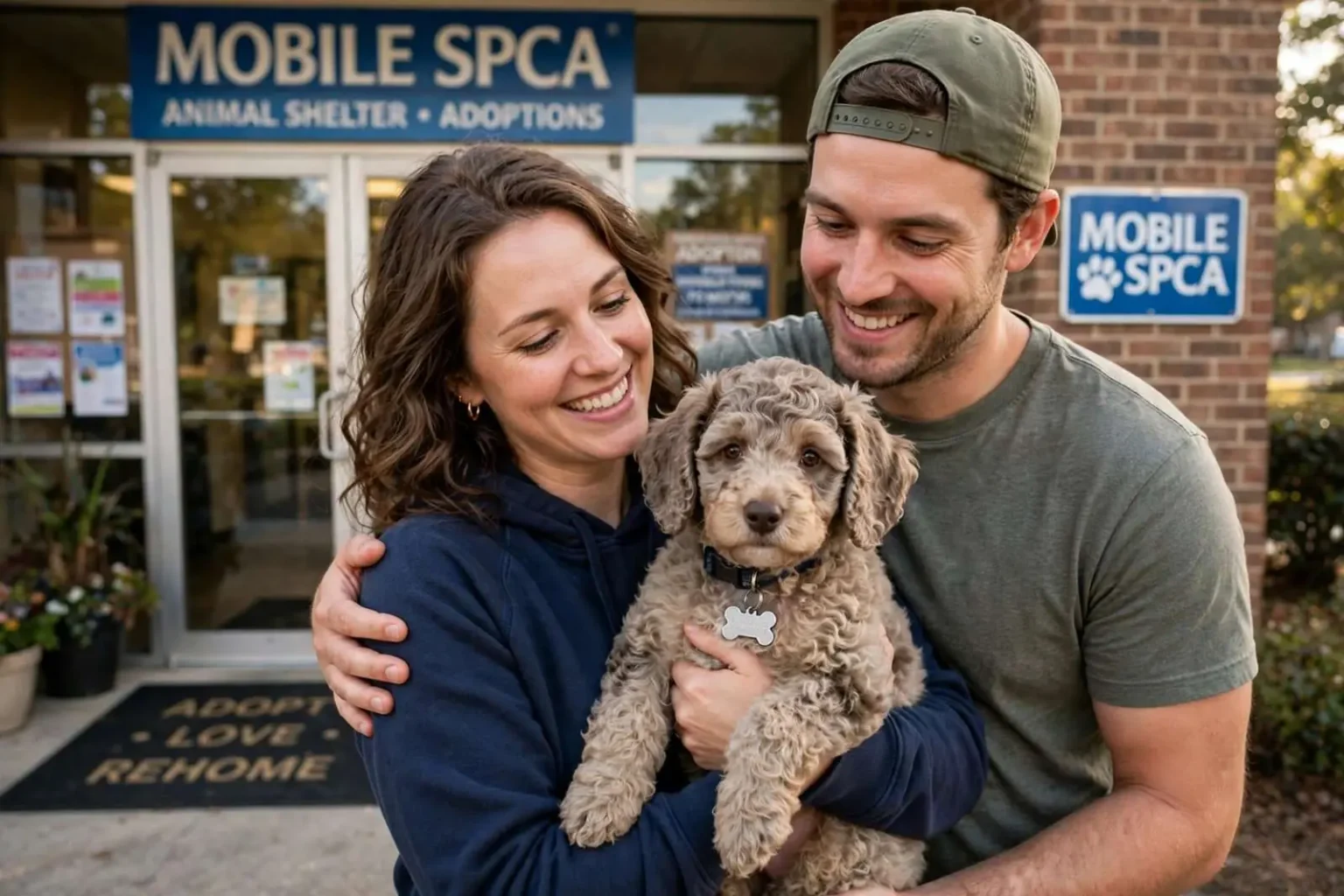
Shelly — the four-month-old Schnoodle who charmed visitors as the Mobile SPCA’s Pet of the Week — has been adopted. The happy little puppy left the shelter with her new family, closing out one of the most pleasant success stories the organization has shared with the community in recent weeks.
A Schnoodle, for the uninitiated, is a cross between a Poodle and a Schnauzer, and Shelly fit the description perfectly: a happy little dog with remarkably soft fur and a calm demeanor that belied her puppy energy. The mix has become one of the most sought-after of the so-called designer crosses, prized for the combination of the Poodle’s intelligence and low-shedding coat with the Schnauzer’s sturdy, spirited personality.
Staff noted she was not much of a barker, a trait many adopters prize in an apartment- or neighborhood-friendly companion. For a puppy still in the middle of her formative months, that easygoing temperament was a strong signal of the companion she would grow into — adaptable, trainable and comfortable in a variety of home settings.
About the Breed Mix
The Schnoodle crosses two of the most popular companion breeds in the country. Poodles, whether standard, miniature or toy, rank among the most intelligent of all dog breeds and are famous for their curly, low-shedding coats. Schnauzers — also bred in three sizes — bring alertness, loyalty and a wiry double coat, along with the breed’s signature beard and eyebrows. Crossed together, the two produce puppies that tend toward the best of both lines: bright, affectionate and often friendlier to allergy-sensitive households than many breeds.
Because both parent breeds come in multiple sizes, Schnoodles can range from lap-dog scale to a medium-sized family pet, depending on whether the parents were toy, miniature or standard. Shelly, at four months old, was still growing into her adult frame — one of the practical reasons adopters of young puppies are asked to think ahead about the size and energy level of the dog they are bringing home.
The mix’s popularity has a downside that shelters know well: the designer-dog boom has produced plenty of casual breeding, and Schnoodles show up in shelters and rescues alongside purebreds when owners underestimate the training, exercise and grooming commitment a puppy requires. Adoption, as Shelly’s story shows, is one of the most reliable ways to find one of these dogs — and the only one that comes with the shelter’s support behind the placement.
A Dog Who Loves a Good Grooming
Because of her Poodle heritage, Shelly will need regular grooming to keep that plush coat in top shape — a small price, her new family decided, for such a sweet and gentle pup. Poodle-mix coats grow continuously rather than shedding out seasonally, which means routine brushing at home and professional trims on a regular schedule to prevent matting and keep the coat comfortable.
Grooming is more than cosmetic for this kind of coat. Matted fur traps moisture and debris, can pull at the skin, and often hides skin irritations that a regular brushing session would surface early. For a new puppy, the grooming routine also doubles as handling practice: dogs accustomed early to brushing, bathing and paw-handling grow into adults who tolerate nail trims and vet exams without stress.
New owners of a Poodle-cross puppy typically settle into a schedule of brushing several times a week and professional grooming every six to eight weeks or so, adjusted to the coat the puppy grows into. Shelly’s soft puppy coat will change texture as she matures — another reason groomers recommend starting the routine early, while the dog is young enough to take it in stride.
Her low-key bark habit, meanwhile, is worth its own note: quiet dogs make good neighbors in close quarters, and a puppy that already prefers calm over noise is a head start on the kind of companion that fits easily into apartments, townhomes and quiet streets alike.
The Mobile SPCA’s Mission
The Mobile SPCA has served the Gulf Coast’s animals for decades as one of the area’s principal private humane organizations, working to rescue, shelter and rehome companion animals across Mobile County. Beyond adoptions, the organization advocates for spay-and-neuter programs, humane education and responsible pet ownership — the long-game work that reduces the flow of unwanted animals into shelters in the first place.
The Pet of the Week feature that introduced Shelly to the public is one of the organization’s most effective adoption tools. Each week, a single animal gets a profile — temperament, age, quirks and the practical details a prospective adopter needs — giving that dog or cat a spotlight in a shelter system where dozens of animals are waiting at any given time. Featured pets routinely draw adopters who had not yet planned to visit, and Shelly’s quick placement fits the pattern.
Adopting from the SPCA is a structured process rather than a first-come transaction. Prospective adopters complete an application, meet the animal, and talk through the pet’s history and needs with staff, all aimed at matching animals to households that will keep them. Adoption fees typically cover initial vaccinations and spay or neuter surgery, costs that make adoption one of the most affordable entry points into pet ownership.
The Rehm Animal Clinic Partnership
As with every Mobile SPCA Pet of the Week, Shelly’s adopter was eligible for a free comprehensive physical exam through the shelter’s partnership with Rehm Animal Clinic, helping her start life in her new home on the right paw. Rehm, a long-established veterinary practice with locations across the Mobile area, has worked with the shelter to give newly adopted animals a clean bill of health and their new families a professional baseline.
A comprehensive first exam matters most in the early weeks of a new adoption. A veterinarian checks the puppy’s weight and growth, confirms vaccination status, screens for the parasites common in Gulf Coast animals, and sets the vaccination and deworming schedule a young puppy needs across its first year. For a four-month-old like Shelly, that first visit also established the timeline for spay surgery and the microchip and licensing details that keep a new pet traceable if she is ever lost.
The partnership also lowers a real barrier for adopters. Vet costs are one of the most common hesitations for first-time pet owners, and a free first exam converts a hesitant adopter into a established veterinary client — which pays off for the animal across its lifetime, since dogs with a regular vet get preventive care that keeps small problems from becoming emergencies.
What Happens After the Adoption
Shelly’s transition home is the part of the story shelters care about most. The first weeks of a puppy adoption set the pattern for the dog’s whole life: house training, crate training, socialization with new people and animals, and the beginning of basic obedience. Animal welfare organizations encourage new adopters to think of the first month as an adjustment period, structured and calm, while the puppy learns the routines of her new household.
For a four-month-old Schnoodle, that schedule is well suited to family life. Both parent breeds train eagerly, and the mix’s intelligence means Shelly will pick up house rules quickly with consistent, positive reinforcement. Puppy kindergarten classes, widely available through Mobile-area trainers and pet retailers, give young dogs the socialization and skill foundation that prevents the behavior problems that send adult dogs back to shelters.
Shelters also remind adopters that a puppy’s calm demeanor at four months is the beginning, not the finish. Puppies need daily exercise, mental stimulation and companionship — but the payoff, in a well-adjusted adult dog, is exactly what Shelly’s soft fur and easy temperament promised her new family from the start.
Why Adoption Stories Matter
Every completed adoption like Shelly’s does double duty: it gives one animal a home, and it frees kennel space and staff attention for the next animal through the shelter’s door. Gulf Coast shelters take in animals year-round, with seasonal surges tied to spring breeding and the aftermath of Gulf storms, and each placement keeps the system moving.
The Pet of the Week program’s track record shows how much presentation matters in animal adoption. A photograph and an honest temperament profile turn a shelter resident into a individual dog with a story — and turns casual readers into visitors. Shelly’s combination of puppy appeal, a distinctive breed mix and an easygoing personality made her exactly the kind of featured pet that moves quickly.
Advice for Prospective Adopters
Animal welfare groups recommend that anyone considering adoption think through the commitment before falling for a face like Shelly’s. A puppy is a ten-to-fifteen-year responsibility involving food, veterinary care, training and daily time — costs and commitments worth planning for before the visit. Families with children, renters and homeowners association members should also confirm that a dog of Shelly’s eventual adult size fits the household and any lease or community rules.
The Mobile SPCA’s staff walk adopters through those questions during the process, and the shelter’s follow-up support — including the veterinary partnership that covered Shelly’s first exam — is designed to catch problems early. Adoptions that begin with honest matching are the ones that last.
For readers still looking for a companion, the organization’s adoptable animals are updated regularly, and the next Pet of the Week is always waiting for the right household — a lesson Shelly’s story illustrates better than most: the right match, with the right family, finds a home fast.