South Alabama Tops 14,000 Students With Its Most Academically Talented Freshman Class
The University of South Alabama enrolled 14,157 students this fall, its third straight year above 14,000, with an entering class averaging a 3.79 high school GPA and campus housing at an all-time high of 3,478 residents.
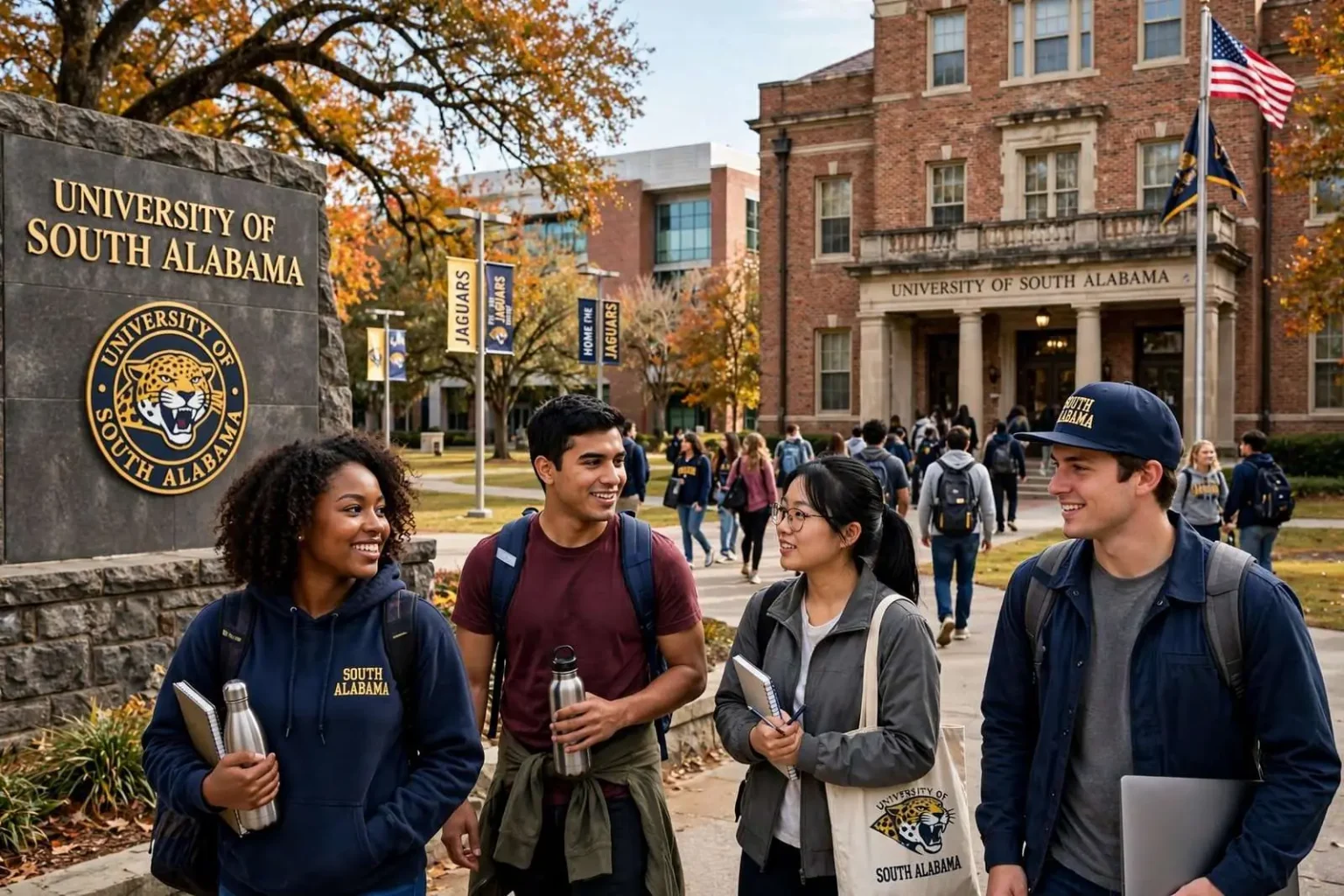
MOBILE, Ala. — The University of South Alabama enrolled its most academically talented freshman class and its fourth largest ever this fall, with total enrollment reaching 14,157 — the third consecutive year above 14,000, according to fall 2026 enrollment data.
The cumulative average high school grade point average for the Class of 2030 was 3.79. Both undergraduate and transfer student enrollment grew year over year.
“To the students we recruit, we make promises about the value of their education as a first-class ticket to a brighter future. We make commitments, and we deliver on those commitments,” said President Jo Bonner. “Welcoming one of our largest and the most academically talented freshman classes, alongside record housing numbers, shows that students and families recognize the return on a South education.”
What the Report Shows
The fall 2026 enrollment report identifies growth across several areas of the university:
- The Honors College is the largest it has ever been, with 390 students.
- The Mitchell College of Business has more graduate students than ever before, a 3.1 percent increase over last year.
- The Pat Capps Covey College of Allied Health Professions recorded a double-digit percentage increase in undergraduate enrollment, with graduate enrollment also growing.
- Campus housing reached an all-time high with 3,478 residents.
- Students come from all 67 Alabama counties, 49 states and 53 countries.
- Retention of students returning for their second and fourth years is at its second highest level.
“The last few years have established an incredible trajectory for the University of South Alabama,” said Dr. Andi Kent, executive vice president and provost. “Our fall 2026 enrollment report shows we continue on that path — with high academic standards, gains in retention and an unwavering commitment to student success.”
Why the Retention Number Matters Most
Of all the figures in the report, retention is the one that reveals the most about institutional health, and it is the one that receives the least attention.
Enrollment counts how many students an institution recruited. Retention counts how many decided to stay. A university can increase enrollment through admissions and marketing effort alone; it cannot increase retention that way, because retention is determined by what happens after students arrive — whether they can get into required courses, whether advising works, whether financial aid holds up, whether they find a place in campus life.
Second-year retention captures the transition most likely to end in departure. Fourth-year retention captures persistence through to completion. South reporting its second-highest levels on both measures alongside record enrollment indicates growth that the institution is absorbing rather than straining against.
The Housing Number and What It Required
Campus housing reached an all-time high of 3,478 residents, and accommodating that number required the university to acquire additional capacity.
In May, the university purchased the Central House on Stadium apartments, now renamed SouthPaw Village, with upgrades already underway.
Acquiring an existing apartment complex is a markedly different proposition from building a residence hall. New construction takes years from design through occupancy and carries a cost per bed that can be several times higher. Purchasing an adjacent property brings beds online in months and converts an off-campus complex into managed university housing.
The demand behind that purchase is itself a meaningful signal. Residential enrollment correlates strongly with retention and with the academic profile of an entering class. Students who live on campus persist at higher rates and engage more with campus programming. Record housing occupancy alongside a record GPA is not a coincidence — it reflects an institution attracting students who intend a full residential college experience.
A 3.79 Average and What It Signals
The Class of 2030’s cumulative high school GPA of 3.79 places the entering class solidly above a B-plus average.
Academic profile has become a more visible measure of institutional competitiveness in recent years, particularly as universities have moved away from standardized test requirements. GPA is now the primary comparative metric available in many admissions contexts.
For a public research university in a state with several competing institutions, an entering class with that profile represents students who had options. South’s enrollment of students from all 67 Alabama counties, 49 states and 53 countries indicates a draw that extends well beyond its immediate region.
The Marching Band Reaches 300
For the first time, participation in the Jaguar Marching Band grew to 300 this fall, as the band opened the doors to its new Geri and Gordon Moulton Jaguar Marching Band Complex.
The $13 million indoor and outdoor practice facility was funded as part of the university’s Where Bold Begins campaign.
The connection between the facility and the participation number is direct. Marching band programs are constrained by rehearsal space in ways that are easy to overlook. A band of 300 requires a field large enough to drill on, indoor space for sectional and full-ensemble rehearsal, storage for instruments and uniforms, and the ability to practice regardless of weather. Programs without adequate facilities cap participation because they cannot rehearse everyone.
A dedicated complex removes that ceiling, and the resulting growth — to 300 members in the first year of the new facility — suggests the constraint had been real.
The Campaign Behind the Construction
Where Bold Begins is the largest fundraising effort in the university’s history, and the marching band complex is one of several projects it is funding.
The campaign is also financing the new Frederick P. Whiddon College of Medicine building, set to open next year, and plans are underway to construct a College of Education and Professional Studies building closer to the center of campus.
Beyond buildings, the campaign raises support for scholarships, research and USA Health, along with other institutional priorities.
The medical college building carries particular weight for the region. USA Health operates the area’s academic medical center, and the pipeline from the College of Medicine into regional practice is a significant factor in physician supply along the Gulf Coast. A new facility affects the college’s capacity to train and its ability to recruit faculty and students.
The growth reported in the Pat Capps Covey College of Allied Health Professions points in the same direction. Double-digit undergraduate growth alongside graduate growth reflects sustained demand for healthcare education — demand driven by workforce shortages in nursing, respiratory therapy, physician assistant practice, speech pathology and related fields that persist across the region.
The Business School’s Graduate Growth
The Mitchell College of Business recording its highest-ever graduate enrollment, up 3.1 percent, runs somewhat against a national trend in which traditional MBA enrollment has faced pressure from online alternatives and from employer skepticism about the degree’s return.
Regional public business schools have generally responded by developing specialized master’s programs, flexible formats for working professionals, and closer alignment with local employer needs. Growth in that segment typically reflects those adaptations rather than a resurgence in conventional full-time programs.
The Trajectory
Three consecutive years above 14,000 students, record housing, record Honors College enrollment, a record academic profile and near-record retention describe an institution in a sustained upward period rather than experiencing a single good year.
The construction underway — a medical college building opening next year, an education building in planning, a marching band complex already in use — represents investment made on the expectation that the trajectory continues.
For the Mobile region, a university of this scale functions as an employer, a healthcare provider through USA Health, a research institution and the primary supplier of credentialed professionals to the local economy. Enrollment figures are, in that sense, a regional economic indicator as much as an institutional one.