Swimming advisory lifted at Fairhope park on Mobile Bay
ADPH has lifted the swimming advisory for Mobile Bay at Fairhope's Mary Ann Nelson Park after water samples showed bacteria levels back below the EPA.
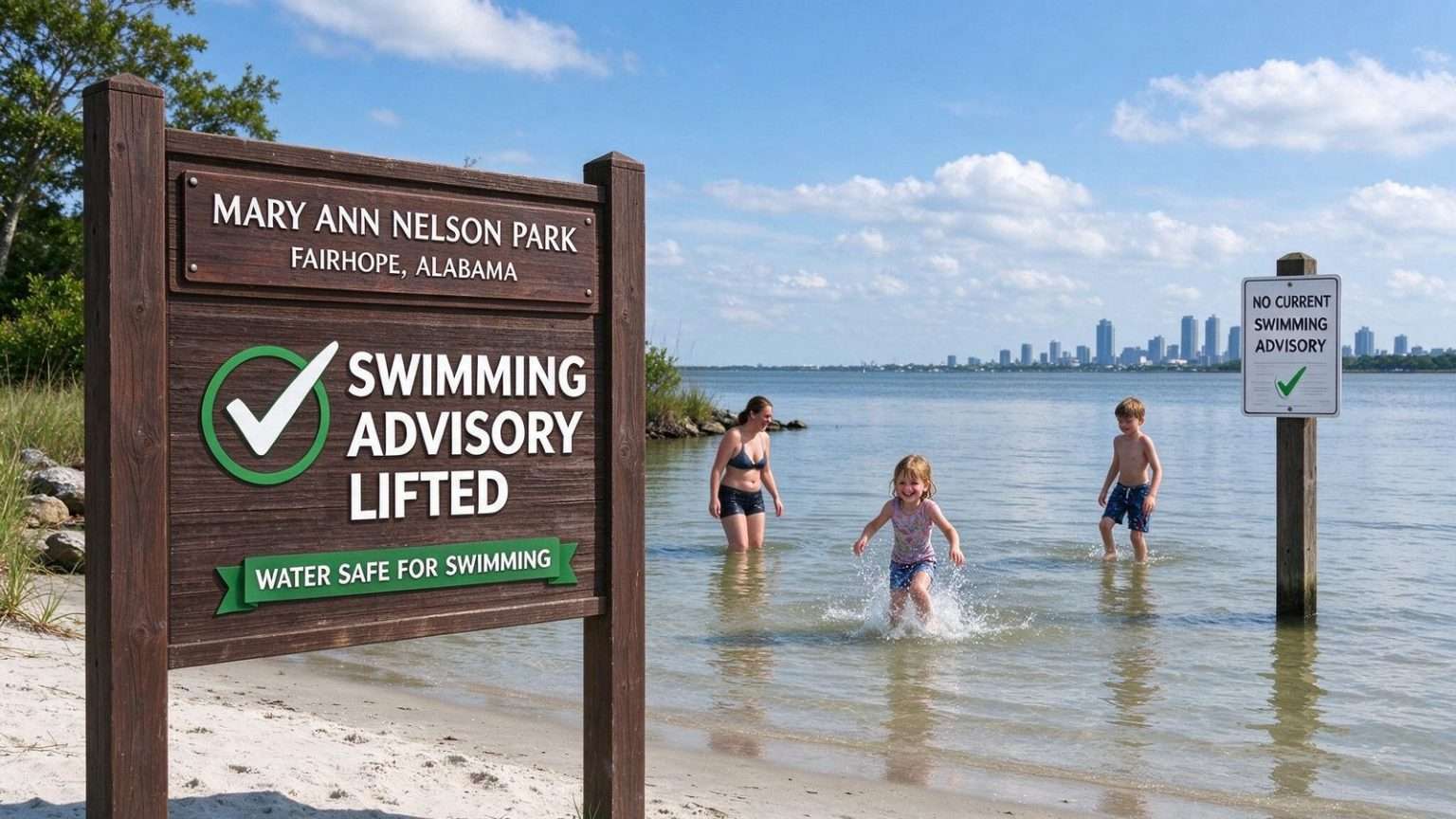
BALDWIN COUNTY, Ala. — The Alabama Department of Public Health has lifted the swimming advisory it issued Oct. 5 for the waters of Mobile Bay at Mary Ann Nelson Park in Fairhope, meaning the water is once again considered safe for swimming.
Health department staff collected new water samples from the area on Tuesday, and results showed enterococci levels below the U.S. Environmental Protection Agency’s threshold of 104 colonies per 100 milliliters. With the counts back within the acceptable range, swimming water quality at the park is again good.
What the advisory was about
The advisory, in place since Oct. 5, warned swimmers that bacteria levels in the water at the small beach on Mobile Bay had exceeded the EPA standard. Enterococci are bacteria that live in the intestines of humans and other warm-blooded animals and pass into water through fecal matter. They are not usually dangerous themselves; health officials use them as an indicator species because their presence suggests that other disease-causing germs may be present in the water as well.
Swimming in water with elevated bacteria counts carries real risks. Swallowing even small amounts of contaminated water can cause gastrointestinal illness, and exposure through cuts or open wounds can lead to skin infections. Children, older adults, pregnant women and people with weakened immune systems face the greatest risk, which is why the health department posts advisories rather than leaving the decision entirely to individual judgment.
How the monitoring program works
The sampling that led to both the advisory and its lifting comes from Alabama’s coastal water monitoring program, run by the Alabama Department of Public Health in cooperation with partner agencies along the coast. During the swimming season, staff collect water samples on a regular schedule from swim beaches along Mobile Bay, the Gulf beaches and the bayous of Baldwin and Mobile counties. The samples are analyzed in a laboratory, and the results are compared against the EPA’s recreational water quality criteria.
When a sample comes back above the threshold of 104 enterococci colonies per 100 milliliters, the department issues an advisory for that site and resamples until two consecutive clean samples show the water is back within the standard. That resampling discipline matters, because bacteria counts can spike for a day and fall quickly; a single bad reading triggers a warning, but a single good one does not clear the beach. The Tuesday samples at Mary Ann Nelson Park provided the confirmation needed to lift the Oct. 5 advisory.
Why bacteria levels rise and fall
Advisories along Mobile Bay tend to follow a familiar set of causes. Heavy rain washes stormwater — and whatever it carries from streets, yards and aging sewer infrastructure — into the bay, and the days after a storm are when advisories most often appear. High flows can overwhelm sewer lines and pump stations, sending untreated waste into tributaries that drain to the bay. Wildlife contributes as well, since droppings from birds and other animals near a beach add bacteria directly to the water.
Time and tide do the cleanup. Sunlight kills bacteria in the water column, and the bay’s tides flush the shoreline, moving contaminated water out and cleaner water in. Counts that exceed the standard after a rainstorm often fall back below it within a few days of dry weather, which is what typically allows an advisory to be lifted. The pattern is predictable enough that coastal residents learn to treat the first day or two after a heavy rain as a natural caution period for swimming anywhere near a stormwater outfall.
Mary Ann Nelson Park and Fairhope’s shoreline
Mary Ann Nelson Park is one of the small public accesses along Fairhope’s stretch of Mobile Bay shoreline, offering a sandy patch of beach, water access and views across the bay toward the Mobile skyline. Fairhope, perched on the bluffs of the eastern shore, has long prized its public access to the water, and residents swim, fish and paddle along these beaches much of the year. The Eastern Shore’s beaches are popular with families precisely because the bay’s water is calmer than the Gulf, making it friendlier for young swimmers.
That popularity is why the health department’s advisories matter locally. A sign or a posted advisory at a bay beach changes weekend plans for families across the Eastern Shore, and word travels quickly in a community that watches the water closely. The lifting of an advisory is the good news version of that cycle — the samples are clean, the water is open, and the beach is back to normal use.
What swimmers should know going forward
Health officials encourage swimmers to stay informed about water quality rather than guessing. The department posts current advisories on its website, and coastal monitoring results are published so the public can check conditions at specific beaches before heading out. Swimmers can also follow common-sense practices: avoid swallowing bay water, stay out of the water for a day or two after heavy rains, keep children who are still in diapers out of the water during advisories, and shower after swimming near stormwater outfalls.
People with open cuts or compromised immune systems should be especially cautious, since bacterial exposure through broken skin is the main route for infections. Anyone who develops gastrointestinal symptoms, fever or a worsening skin condition after swimming should mention the exposure to their doctor. These are ordinary precautions, not alarms — most days the water along the Eastern Shore meets the standard, as Tuesday’s samples at Mary Ann Nelson Park confirmed.
The bigger picture on the Eastern Shore
Baldwin County is one of the fastest-growing counties in Alabama, and the growth has consequences for water quality in Mobile Bay. More rooftops and roads mean more stormwater runoff, and the sewer systems serving the Eastern Shore have faced capacity pressure in wet weather. Municipalities, water and sewer boards and environmental organizations along the shore have invested in upgrades — expanded treatment capacity, improved pump stations and stormwater management — precisely to reduce the kinds of bacteria spikes that trigger advisories.
Volunteer and nonprofit monitoring programs supplement the state’s work, sampling tributaries and reporting conditions to the public. Groups such as Mobile Baykeeper have made bacterial pollution and sewer overflows a continuing focus of their advocacy on both sides of the bay, pushing for infrastructure investment and enforcement. The shared goal is a bay clean enough that advisories are rare, not routine.
For now, the news at Mary Ann Nelson Park is straightforward: the advisory issued Oct. 5 has been lifted, Tuesday’s samples came back below the EPA threshold of 104 colonies per 100 milliliters, and the water at the park is again good for swimming. Residents and visitors can return to enjoying the bay — with the usual reminders to check advisories, respect the rain, and let the water tell them when it is ready.
Reading an advisory sign correctly
When an advisory is active, the health department and local officials post notices at the affected beach, and the language matters. An advisory is not a closure: it is a warning that bacteria counts exceed the standard and that swimming may pose a health risk, particularly for vulnerable people. Fishing, boating and beach walking are generally unaffected, since the risk comes from swallowing or being exposed to the water in ways that beach activities do not involve.
Residents sometimes confuse swim advisories with the notices issued after sewage spills, which the public health department and water utilities report separately and which may carry stricter guidance. Both involve bacteria, but an advisory based on routine monitoring is a measured, data-driven signal, and the clean samples that lift it are the definitive word. The end of the Mary Ann Nelson Park advisory means the most recent data, not just optimism, supports the reopening.
The EPA standard in plain terms
The number at the center of this story — 104 enterococci colonies per 100 milliliters — is the EPA’s recreational water quality criterion for marine water, the level above which illness rates among swimmers begin to rise measurably. Laboratories measure it by filtering a water sample and counting the bacterial colonies that grow under controlled conditions, producing a figure that can be compared directly against the standard. Sites are evaluated on the geometric mean of many samples as well as single-sample results, which smooths out day-to-day noise and identifies beaches with persistent problems.
Alabama’s coastal program was built in cooperation with the EPA and partner coastal states to give swimmers timely, local information rather than leaving them to rely on decades-old assumptions about water safety. The program’s structure — sample, compare, advise, resample, lift — is deliberately conservative on the front end and evidence-based on the back end, so that beaches are protected when they need protecting and reopened as soon as the data justifies it.
That cycle played out exactly as designed at Mary Ann Nelson Park: an elevated sample on Oct. 5, an advisory to keep swimmers informed, fresh samples on Tuesday, and clean results that lifted the warning. For the latest conditions at any Baldwin County or Mobile County swim site, the Alabama Department of Public Health’s coastal monitoring pages carry the current advisories, and updates are issued as new results arrive.