University of South Alabama Mobile
Team Focus Fundraiser Brings Nick Saban to University of South Alabama
A mentoring charity for fatherless boys is holding its annual fundraiser at the University of South Alabama, featuring Alabama coach Nick Saban.
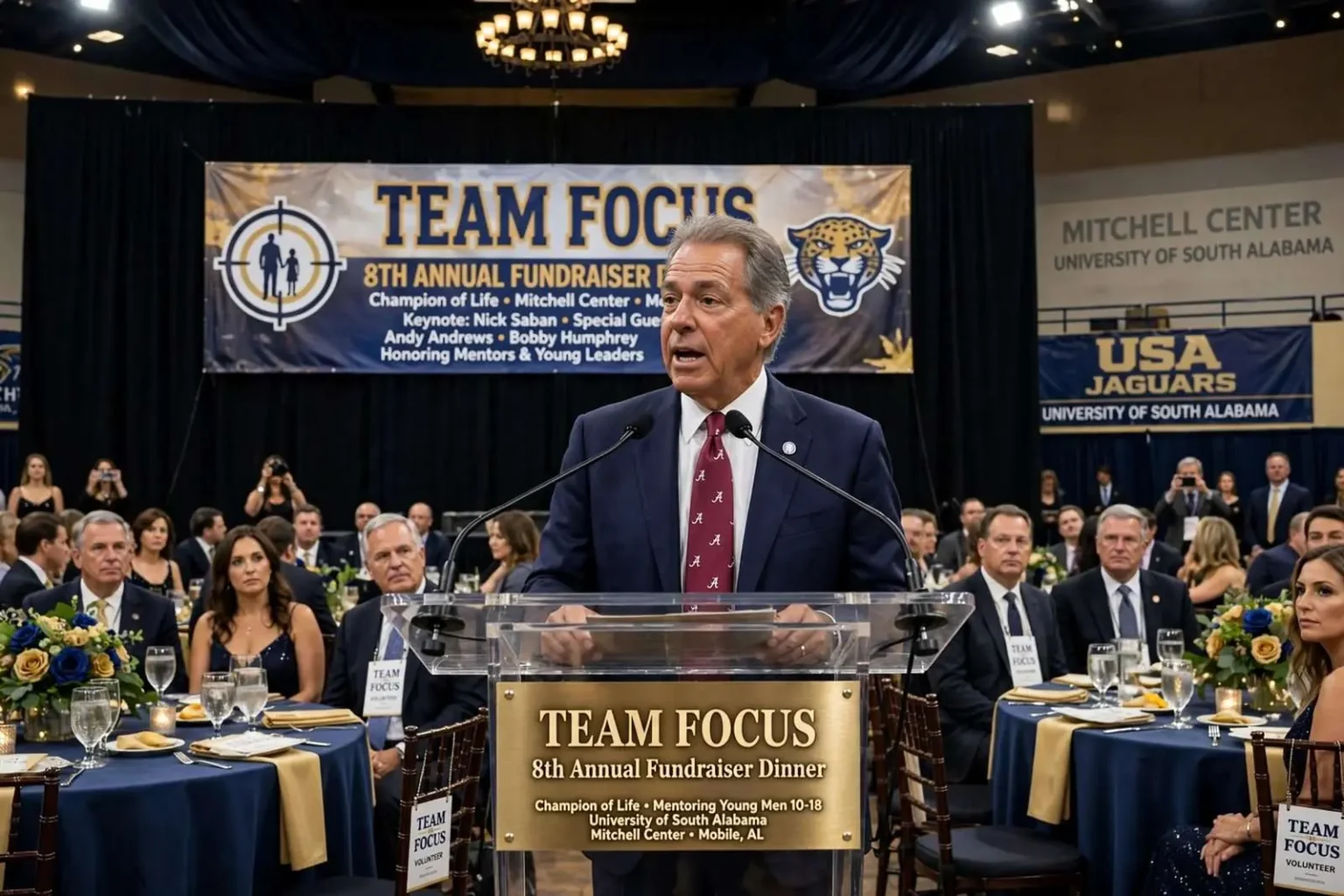
A Mobile-based mentoring charity is preparing for its biggest fundraiser of the year, drawing one of college football’s most recognizable names to the University of South Alabama’s Mitchell Center this month. The arena on the USA campus — home court for the Jaguars’ basketball programs and one of the largest indoor venues in the region — will host an evening built around a name that carries unmatched weight across Alabama, where college football is as much civic identity as sport.
Team Focus, a nonprofit that pairs fatherless boys ages 10 to 18 with adult mentors and leadership programming, is holding the eighth annual edition of its signature dinner event. For the organization, the dinner is the night the community shows up: the one evening each year when the program’s supporters, volunteers and families gather under one roof to hear about the work and fund the year ahead. Eight years in, the event has become a fixture on Mobile’s philanthropic calendar, and its headliners have grown with it.
The evening is built around a keynote address from Alabama head football coach Nick Saban, who has appeared at the event for years to support the organization’s mission. Saban’s presence gives the fundraiser a drawing power few charities in the state can match. His Alabama program has become the standard in college football, and his appearances off the field — particularly for causes involving young people and families — have made him a fixture of the state’s charitable circuit, where his name on a program fills seats on its own.
The Program Behind the Event
The nonprofit was founded by longtime sports commentator Mike Gottfried, who has said the program aims to give young men without a father figure consistent guidance, mentorship and a sense of community they might otherwise be missing. Gottfried spent years coaching college football before building a national broadcasting career, and along the way he saw what the absence of steady adult mentorship does to boys growing up without it. Team Focus was his answer — a program built around the belief that a consistent adult presence, week after week, can change the direction of a young life.
The mentoring model Team Focus uses is deliberately practical. Boys in the program are matched with mentors who show up — for meals, for games, for homework, for the ordinary rhythm of weekends — and the organization supplements those relationships with leadership camps and group programming designed to build character and confidence. The age range, 10 to 18, spans the years when a young man’s path is most open to redirection, and the program’s leaders describe their work as investment made early enough to compound.
This year’s gathering starts in the early evening with dinner, followed by remarks from Saban and other guests. Author and motivational speaker Andy Andrews, known for books that blend storytelling with practical life lessons, is scheduled to appear alongside former Alabama running back Bobby Humphrey, who went on to play in the NFL. Both are set to receive an honor recognizing individuals who exemplify the event’s “Champion of Life” theme. The theme is the program’s credo in miniature: the measure it asks its mentors to model and its young men to pursue, treating success as something broader than statistics or salaries.
Andrews has built his career on the premise that stories teach what lectures cannot, and his appearances at fundraising events across the country pair humor with the kind of direct moral appeals that suit an evening about mentorship. Humphrey brings the Alabama football connection full circle — a star of the Crimson Tide’s backfield who reached the professional ranks, he represents the trajectory the sport promises, and his presence alongside Saban ties the evening’s message to the program that dominates the state’s attention each autumn.
Why the Dinner Matters Financially
Organizers describe the dinner as the organization’s sole major fundraiser each year, meaning ticket sales and sponsorships collected during the event fund much of Team Focus’s mentoring work for the months that follow. That concentration gives the night outsized importance: a strong turnout sustains the program’s operations, while a weak one ripples through the budget for the entire year. Small nonprofits run this way live on the edge of their calendars, and the Mitchell Center event is where Team Focus makes its margin.
The Mitchell Center gives the event the room its growth requires. Opened on the USA campus, the arena seats thousands and offers the banquet-scale floor space a dinner of this size needs, along with the parking and access that draw attendees from across the Gulf Coast — not just Mobile but Baldwin County and the Mississippi coast as well. Organizations that outgrow hotel ballrooms often find the jump to arena-scale events daunting; Team Focus’s ability to fill the Mitchell Center for a mentoring program is a measure of how far its support network extends.
Individual tickets and table packages are available, with larger sponsorship tiers offering donors the chance to meet Saban directly. The tiered structure is standard practice for charity dinners, but the meet-and-greet element attached to the top levels reflects the reality of Saban’s drawing power: for Alabama football’s most devoted supporters, the chance to spend a moment with the coach is itself a prize worth a significant donation, and the organization channels that enthusiasm into its operating budget.
The event’s location at the University of South Alabama underscores the strong local ties between the charity and the Mobile community, where Team Focus has built relationships with schools, mentors and volunteer families over its history. The university’s arena provides the scale the event has outgrown smaller rooms to need, and the campus setting keeps the evening rooted in the city where the organization was founded and where its programs operate. Hosting the dinner at USA also places the fundraiser in front of the university community — students, staff and alumni who are natural sources of future mentors.
The mentoring pipeline runs through Mobile’s schools. Team Focus works with area school systems to identify boys who would benefit from a mentor, and teachers and counselors become the program’s eyes on the ground — spotting the students who need an adult in their corner and connecting families to the program. Those school partnerships, built over years, are what allow the organization to grow its reach without losing the personal touch that defines its model.
Those interested in attending or supporting the program can find ticket information through the organization’s website or by calling its Mobile office. Organizers say proceeds go directly toward mentoring services, leadership retreats and ongoing support for the young men in the program.
The Broader Need
Gottfried’s broadcasting career gave the program a network of sports-world contacts that most startups could only dream of, and the annual dinner reflects it: coaches, former players and broadcasters have rotated through the event’s program over its eight years, each appearance adding to the guest list of the next. That roster, headlined now by the most successful coach in Alabama football history, keeps the event fresh for repeat attendees while reinforcing the same message — that the community’s attention is one of the most valuable things a mentoring program can offer its kids.
The need the program addresses is a quiet constant across the Gulf Coast. Families without a father present are common enough that schools, churches and community organizations across Mobile have built services around the gap, and mentoring programs like Team Focus occupy a specific place in that network: not a substitute for a parent, but a consistent adult presence chosen for the role and supported by training. The boys the program serves range from elementary-age children to teenagers on the edge of adulthood, and the organization’s leaders say the mentor relationships often continue past the formal program years.
Saban’s annual support gives the charity something few nonprofits of its size enjoy: a headline attraction who returns year after year, lending both star power and credibility to the mission. In a state where the Alabama football coach is followed with an intensity that borders on civic attention, his endorsement of a mentoring program reaches audiences — small-town donors, football families, corporate sponsors — that a small charity could not reach on its own. Organizers credit that visibility with helping the dinner grow into the organization’s financial anchor.
For the young men in the program, the dinner is more than a fundraiser — it is an evening when the community they are learning to trust shows up for them in a stadium-sized way. The boys attend alongside their mentors, hear from speakers whose stories mirror the challenges they face, and see recognized adults — a championship coach, a published author, a former professional athlete — treat their futures as worth investing in. That message, organizers say, is the event’s real product. The money raised keeps the program running; the evening itself tells the program’s participants what the community believes they are worth.