The $40 Million Ghost: How the James Family Built—and Bankrupted—Thomasville’s Only Hospital
How Jodie and Curtis James mismanaged Thomasville Regional Medical Center into bankruptcy, leaving rural Alabama without a hospital.
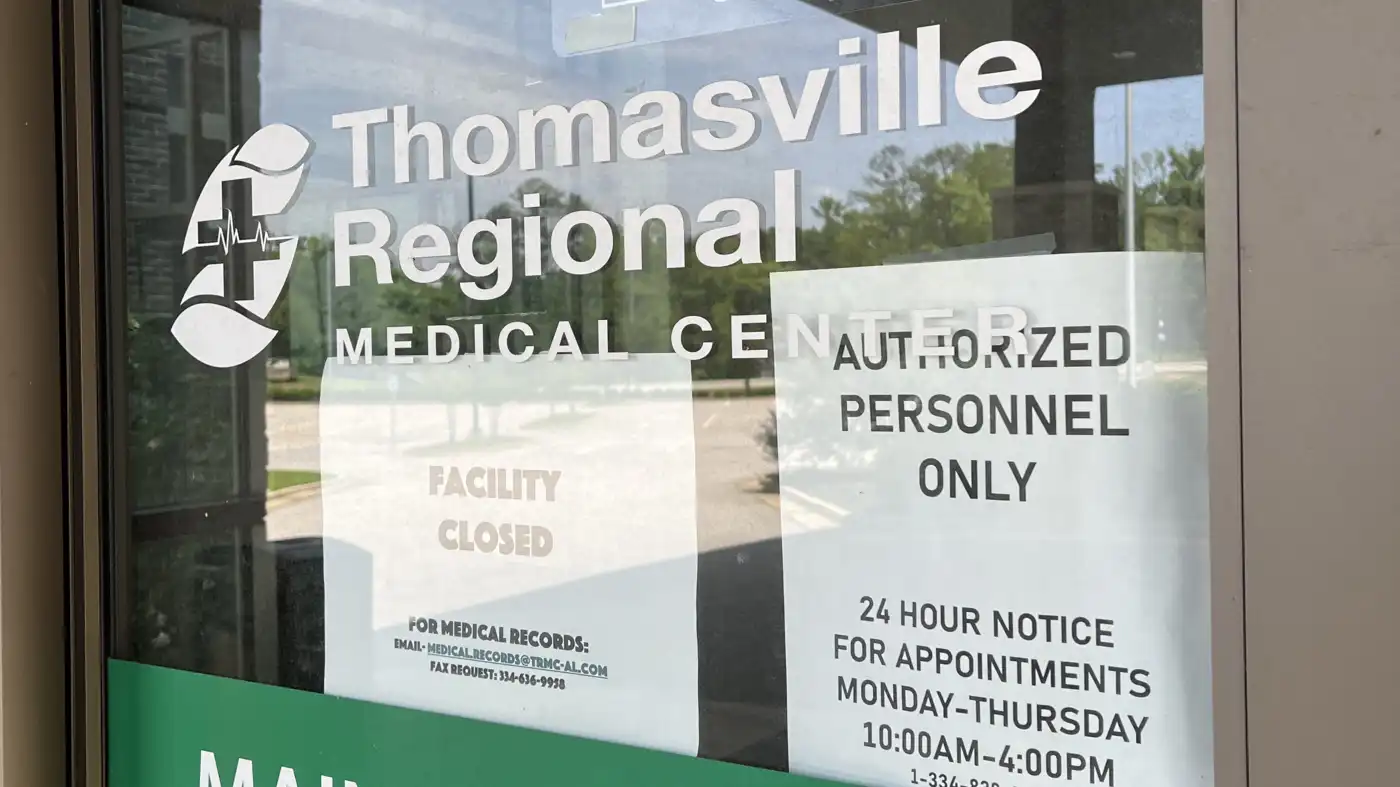
The soaring, sun-drenched lobby of the Thomasville Regional Medical Center is a monument to what was supposed to be a new era. The last hospital in this timber country closed more than a decade ago, forcing residents of this impoverished swath of the Black Belt to drive an hour and a half for advanced diagnostics. When the gleaming $40 million facility opened in February 2020, it was a celebration of community triumph. Today, the lobby is a mausoleum. The state-of-the-art 3D mammography machines sit idle. The paper remains on the exam chairs.
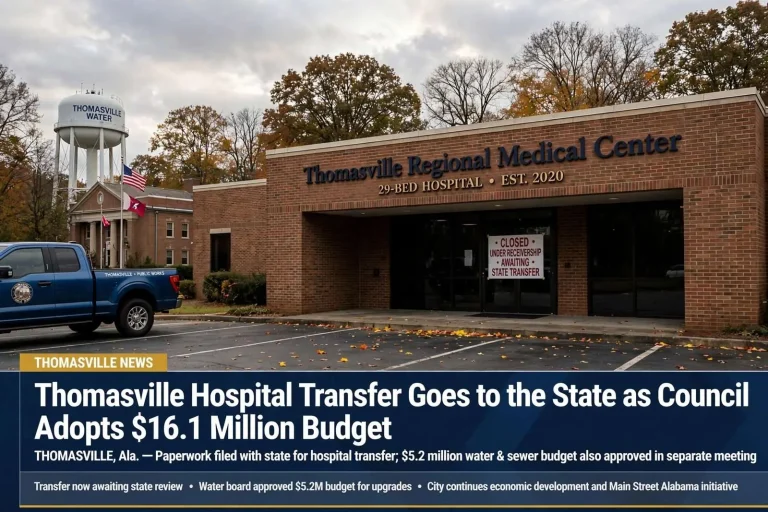
And the only in-house MRI machine for dozens of miles is gathering dust in the dark. The hospital closed in September 2024, less than five years after it opened, leaving a community once again stranded without critical care. Thomasville Regional Medical Center While Mayor Sheldon Day points to the COVID-19 pandemic as the primary cause of the hospital's financial death spiral, a hard look at the numbers and the management decisions reveals a different story.
The pandemic was a catalyst, but the groundwork for failure was laid by the financial mismanagement and hubris of the hospital's architects: Chairman Curtis James and his daughter, Chief Operating Officer Jodie James. A Dream Built on Debt The hospital was long overdue for Thomasville. Residents of the Black Belt, where about 70% of the population qualifies for Medicare or Medicaid, had been underserved for generations. After years of lobbying, the city partnered with a municipal health authority to secure funding and began construction on the 29-bed facility. The James family was at the forefront.
Curtis James served as Chairman of the Board, while his daughter, Jodie James, initially served as Director of Communications and Marketing before being promoted to Director of Operations following the departure of the first CEO, Stuart Hurley, in June 2020. Jodie James of Thomasville, AL At the ribbon-cutting in February 2020, Curtis James stood before the community and promised a hospital built on "core values" and staffed by "the best of the best." But behind the scenes, the financial foundation was a house of cards.
The hospital was financed by a complicated mix of grants, donations, a half-cent city sales tax, and heavy borrowing. By the time the doors opened, the facility was carrying a debt load of approximately $35 million. Then, just weeks after opening, the COVID-19 pandemic hit. The "Unfair" Excuse The hospital's leaders and local politicians have consistently cited the pandemic's timing as the reason for the failure. Because the hospital opened in March 2020, it had no 2019 financial statements to prove lost revenue and qualify for the massive CARES Act relief that kept other rural hospitals afloat.
Background and Context
While other hospitals received $8 million to $9 million, Thomasville Regional was forced to survive on roughly $1 million. "We thought we were off to a good start. And then everything shut down," Curtis James told the Associated Press in 2022. This narrative, while compelling, obscures the reckless decisions that followed. As Mayor Sheldon Day later admitted, "Unfortunately, our owners went out and borrowed money thinking that they're going to get this money back to try to sustain operations.
They took the debt they were struggling to pay, laid it on more debt." Rather than making the hard choices to cut costs or restructure operations to fit the new reality of the pandemic, the James family doubled down, betting the hospital's future on federal bailout money that was never guaranteed. The Telecom Fiasco: A Symptom of a Bigger Disease As the financial walls began to close in, an anecdote emerged that sheds a stark light on the management style at TRMC.
A local telecom salesperson, seeing the "Hospital Coming Soon" signs go up, approached the facility to offer high-speed communication services at a competitive rate. When the salesperson contacted Jodie James to offer a price that would save the hospital thousands of dollars annually, they were reportedly brushed off. Jodie James wasn't interested in hearing a bid. A decision had already been made to sign a contract with a massive national telecom provider—at more than triple the cost the local company would have charged.
This was not just an isolated incident of poor business etiquette; it was a microcosm of the hospital's entire financial philosophy. A facility built on taxpayer and donor money was hemorrhaging cash on unnecessary overhead. This decision to prioritize a "big name" vendor over local savings contributed to the cash flow problems that would eventually cripple the hospital. Inside the Collapse By 2022, the financial situation was dire. The hospital was missing payroll and slashing services. In an attempt to stay afloat, the James family sought a $2 million loan from the Birmingham-based Medical Properties Trust. It wasn't enough.
By 2024, the situation turned catastrophic. Curtis James of Thomasville, AL A court filing by North Avenue Capital, the primary lender, revealed a facility in total disarray. In a complaint for foreclosure, the bank requested a receiver to "maintain the hospital's assets, for fear the property would begin to lose value" because the hospital was "empty of staff with no one to care for the property." The bank expressed concern that the expensive medical equipment hadn't even been "properly shut down." The final chapter was a disgrace. In September 2024, employees walked out after they weren't paid on time.
Background and Context
An email sent to staff informed them that "we do not have sufficient funds for payroll or physician payments at this time," adding that they were "trying to avoid this becoming a permanent closure." Staff were stranded, working 80-hour weeks for no pay, while the James family's gamble officially imploded. A judge eventually awarded a $1.29 million summary judgment against the hospital for failing to pay GE Health Financial Services for leased equipment, and the hospital was forced into receivership. The Aftermath: A Town Left to Die Today, the hospital sits empty, a $40 million monument to mismanagement.
A Clarke County Revenue Commissioner confirmed that the hospital owes nearly $80,000 in back taxes alone, with tax sales pending for the property. Mayor Day has been reduced to giving tours to prospective buyers, hoping to sell the facility for roughly $12 million—about one-fifth of its construction cost. Even at that bargain price, the deal is struggling. Mayor Day noted that buyers get "foaming at the mouth" until they work the numbers and realize the financial viability is non-existent. State Representative Thomas Jackson, who watched the hospital he helped champion close, now lives in fear.
"If something happened to me, if I get in an accident, where do I go?" he asked. While the Mayor and others look for a white knight to rescue the facility, the community is left to deal with the consequences of the James family's hubris. The hospital board was stacked with local names, but the financial decisions were dominated by a father-daughter duo who treated a critical public health asset like a private fiefdom.
They accepted public money and community goodwill, only to gamble it away on expensive contracts, high debt, and a waiting game for federal bailouts that never came. The Thomasville Regional Medical Center could have been the lifeline the Black Belt needed. Instead, it serves as a cautionary tale of how a few people in power, armed with ambition but lacking financial discipline, can ruin a community's only chance at survival. The lobby is still beautiful, the equipment is still state-of-the-art, and the community is still waiting for a miracle.
But the trust is gone, and the debt remains a crushing weight on a town that can barely afford to breathe.
Wider Significance for Coastal Alabama
This story is part of a broader set of changes playing out across Mobile, Baldwin and the wider Gulf Coast region. Local residents, businesses and government agencies have been watching developments like this one closely, because decisions made in Mobile and Baldwin counties often ripple outward into neighboring communities across south Alabama, Mississippi and the Florida Panhandle. Public meetings, council work sessions and state legislative hearings have all carried echoes of the underlying concerns, with stakeholders ranging from neighborhood associations to industry groups weighing in on what the outcomes will mean for daily life along the Gulf Coast. Reporters and editors in the region have worked to document how these issues affect ordinary people, from commuters on Interstate 10 to families visiting the public libraries and parks that anchor so many of the Port City’s neighborhoods. The deeper context often emerges over months rather than days, as projects move from announcement to planning to construction, and as the people most directly affected find their voices in the public record. Continued coverage remains important, both for accountability and for the historical record, and the unfolding situation is one that warrants attention from anyone with a stake in the future of south Alabama.
Looking ahead, observers across the region expect the conversation to continue evolving. Local officials have signaled their intent to monitor outcomes closely, and community organizations have indicated they will remain engaged as new information becomes available. The intersection of state policy, local implementation and on-the-ground impact is precisely where stories like this one tend to develop their lasting significance. For Mobile and Baldwin residents, the practical effects will play out over time, in everything from tax bills and utility rates to traffic patterns and the availability of public services. Following the developments requires patience and attention to detail, but it is also a reminder of how civic life in coastal Alabama continues to be shaped by decisions that begin far from the neighborhoods they ultimately touch. Residents who want to stay informed can do so by following local government meetings, attending public hearings when significant issues arise, and reading the regional reporting that tracks how these stories progress from one phase to the next.
Local news organizations continue to follow this story closely, and updates are expected as more details emerge. The developments have generated discussion across the region, with attention from both longtime residents and newcomers who are following the issue for the first time. Community leaders have emphasized the importance of staying engaged with local government and participating in public meetings when significant decisions are being made. As the situation continues to unfold, residents are encouraged to remain informed through reliable local reporting and official city and county communications channels. The story remains active, and additional information is anticipated in the coming days and weeks as the relevant agencies and stakeholders complete their work.