Truck driver shot and killed near Jackson in Clarke County
A log truck driver was found shot dead near a gravel pit off Walker Springs Road outside Jackson, Alabama, Jackson Police Chief Jerry Taylor said.
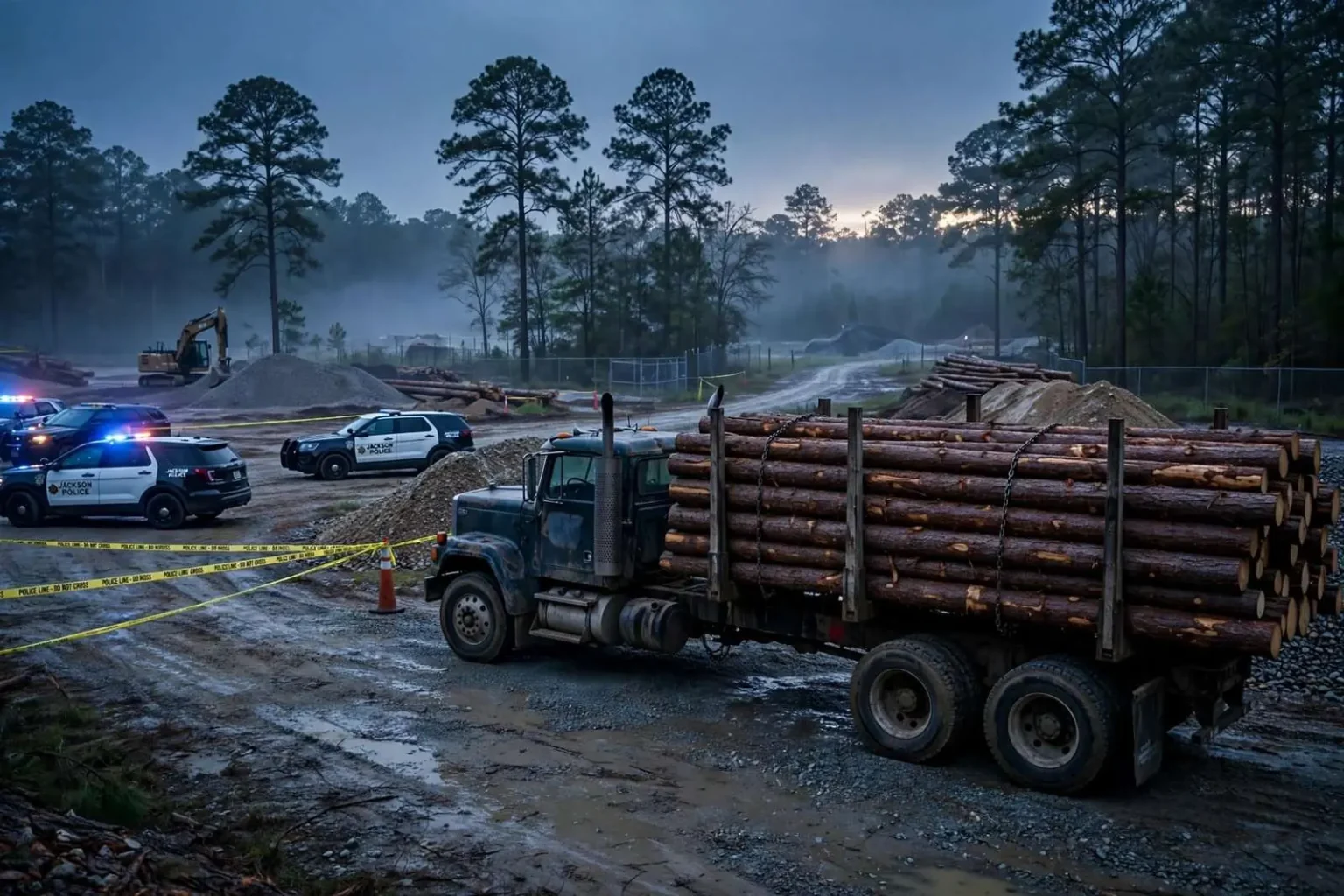
JACKSON, Ala. — Jackson Police Chief Jerry Taylor confirmed his department is investigating a deadly shooting near a gravel pit off Walker Springs Road that left a log truck driver dead. The victim was identified as 72-year-old Thearthor Dixon of Thomasville, according to Chief Taylor, and the killing has shaken the small Clarke County community where the timber industry is woven into daily life.
Dixon was shot and killed near his logging truck around 5 a.m. Thursday, an hour when loggers across south Alabama are already at work — the industry’s days begin before dawn, with drivers loading and running their first hauls while most of the county is still asleep. Investigators are still interviewing witnesses, but it appears robbery may have been the motive, according to the chief, who emphasized that the inquiry remained in its early stages.
The driver of the log truck was found dead near his truck, according to the chief. Taylor said an employee at the gravel pit called 911 after finding the body, bringing law enforcement to the scene in the early morning hours. The discovery transformed a routine work site into a crime scene, and deputies and investigators spent the day canvassing the area, collecting evidence and piecing together the driver’s final hours.
The Scene: A Gravel Pit West of Highway 43
The gravel pit is a few miles west of Highway 43, where logging crews have been working, and its remote setting shaped both the crime and the investigation. Gravel pits are isolated by nature — screened from the road, populated by heavy equipment operators and a handful of workers, and quiet in the hours before full operations begin. A location like that offers few witnesses, and the ones it has are coworkers whose morning routines may place them among the only people who saw anything at all.
Walker Springs Road runs west out of the Jackson area into the rural reaches of Clarke County, threading through timberland that has been worked for generations. The county’s economy rests heavily on its forests — pine plantations and hardwood stands that feed sawmills, paper mills and the trucking operations that connect them. Log truck drivers like Dixon are the link in that chain, running loads from the woods to the mills along highways and back roads at all hours.
Chief Taylor said he does not believe this was a random act. That assessment, based on the circumstances investigators had assembled so far, suggested the victim and the assailant were connected in some way — through work, acquaintance or opportunity — rather than the killing being a chance encounter with a stranger. The chief said he had interviewed several people who may have information, but no suspect had been named as the investigation continued.
The Victim and His Work
Dixon’s age marked him as a veteran of a demanding trade. At 72, he belonged to the generation of loggers who built careers across decades of change in the timber industry — from older trucks and rougher roads to the modern, mechanized operations that now dominate south Alabama’s forests. Drivers in that trade accumulate intimate knowledge of the region’s geography: which county roads hold up under loaded trailers, which mills pay fairly, which gates open before sunrise.
Thomasville, his hometown, lies up Highway 43 to the north in Clarke County, a small city that serves as a commercial hub for the county’s rural stretches. The route between Thomasville and the work sites south of Jackson passes through some of the state’s most productive timberland, and drivers make the run daily, often starting before 5 a.m. — the very hour Dixon was killed at his truck.
The timber community in Clarke County is tight-knit, and word of the killing moved quickly through the mills, the logging crews and the trucking outfits that share drivers, roads and radio chatter. Loggers work in small crews whose members depend on one another for safety in dangerous woods, and the death of a driver — at work, near his truck, in the dark of a workday morning — struck the industry’s local ranks with particular force.
Robbery as a Possible Motive
The possibility that robbery was the motive pointed investigators toward the circumstances of a log driver’s morning. Drivers carry cash and valuables in small amounts, and early-morning work sites see deliveries of pay, purchases and transactions that leave traces investigators can trace. A motive theory in an active case is provisional by definition — Taylor presented it as what investigators believed so far, subject to revision as interviews and evidence filled in the picture.
The chief’s belief that the killing was not random rested on that same developing picture. Random violence in rural Clarke County is rare enough that its absence from the evidence was itself a finding: nothing about the scene suggested a stranger’s ambush of an unlucky passerby. The area’s isolation cuts both ways in an investigation — fewer witnesses, but also fewer opportunities for a truly chance encounter, and a limited population of people with any reason to be at a gravel pit at 5 a.m.
How Rural Homicide Investigations Proceed
An investigation of this kind unfolds in a rhythm familiar to small-city police departments. The first hours belong to the scene: securing the area around the truck, documenting everything, collecting physical evidence that will either support or discard the working motive theory. The following days belong to interviews — coworkers, family, acquaintances, anyone whose connection to the victim or the site might bear on the case — and each interview either opens a new line of inquiry or closes an old one.
Taylor’s disclosure that he had interviewed several people who may have information indicated the second phase was underway. In communities the size of Jackson, detectives often know the people they interview, and information travels through channels both formal and social. That proximity can be an investigative advantage — local officers read local silences well — but it also raises the stakes of accuracy, since the department’s conclusions land on neighbors.
Resources matter as well. Small departments routinely lean on county and state partners for forensic work, and evidence collected at a rural scene must often travel to state labs, adding time between collection and answers. For the community waiting on those answers, the chief’s steadiness — confirming facts, resisting speculation, declining to name a suspect — set the tone for an investigation that was continuing methodically.
A Community and an Industry Mark Time
For Clarke County, the killing registered beyond the loss of one life. The timber industry’s workforce is a brotherhood of early mornings, and a 72-year-old driver still climbing into a truck before dawn commanded respect in that world. The image left by the case — a veteran logger dead beside his truck at a work site as the day began — was one the community absorbed with the grim attention small places pay to violence among their own.
The investigation’s early findings, as Chief Taylor laid them out, left the county with more questions than answers: a possible robbery motive, a belief that the killing was no random act, several people interviewed, no suspect named. Until the inquiry advanced, Walker Springs Road’s work sites went about their mornings under a new watchfulness, and the logging crews west of Highway 43 worked on — mindful that one of their own had died where he worked, and that the men and women of the Jackson Police Department were still counting the evidence.
Chief Taylor asked anyone with information to come forward, as such investigations always do. In a county where everyone knows everyone, the appeal is more than procedural — it is the mechanism by which rural homicide cases close. The department continued to gather testimony and evidence as the week went on, and the facts confirmed so far — the victim, the hour, the place, the suspected motive, the refusal to call it random — formed the skeleton of a case that investigators were still assembling.
The Geography of the Case
Understanding the setting clarifies the investigation’s challenges. Clarke County sprawls across southwest Alabama’s pine belt, with Jackson as its seat of government and Thomasville as its other principal city. Highway 43 connects the two, running north and south through timber country, while roads like Walker Springs Road branch west into the plantation tracts and work sites where the county’s timber is cut, loaded and hauled.
A shooting at a remote work site may leave no witnesses beyond the few employees present at the hour it occurred, no surveillance cameras, and no passersby — only the physical scene and the small circle of people whose work puts them there before dawn. Investigators in such cases work backward from a narrow set of facts, and the early conclusions a chief can offer the public are correspondingly restrained.
The hour of the shooting — around 5 a.m. — matches the industry’s schedule rather than the county’s. Loggers and gravel crews start early to maximize daylight and avoid afternoon heat, and drivers often arrive at work sites while the roads are still empty. The same emptiness that makes the early morning efficient for timber work made Dixon’s last morning lonely: the person or persons who approached his truck chose a time and place where help was far away.
The Log Truck Trade in South Alabama
The victim’s profession deserves its own accounting, because the trade he practiced is essential to the region. South Alabama’s timber economy — one of the most productive in the nation — depends entirely on log truck drivers who move harvested wood from the woods to the mills on tight schedules. A driver’s day includes loading under the knuckleboom, securing tons of pine or hardwood, running narrow county roads with a loaded trailer and meeting mill deadlines, all in weather that ranges from summer heat to the kind of early-morning dark in which Dixon died.
It is skilled, hazardous work performed largely out of public sight, by men and women who often drive the same routes for decades. A 72-year-old driver is a member of the trade’s elder ranks, and his continued presence behind the wheel suggests both competence and commitment to a way of life that many leave earlier. In Clarke County, where timber pays landowners, mills, crews and truckers alike, drivers like Dixon are the daily connective tissue of the local economy.
The killing of a working driver thus resonated through an entire industry’s local network — the mills he delivered to, the crews he hauled for, the drivers who shared his roads. Across the region’s logging community, the case was discussed in the practical terms the trade understands: the hour, the place, the truck, the question of who would approach a driver at work and why.
What Comes Next
The investigation, as Chief Taylor described it, remained open on every front. Witnesses were still being interviewed; the robbery theory was still being tested against evidence; the belief that the killing was not random was still being confirmed or complicated by each new account. No suspect had been named, and no arrest had been announced — the status of a case that was, in the chief’s telling, moving deliberately rather than quickly.
For the public, the department’s request was the standard one, and in a county of Clarke’s size, an unusually meaningful one: anyone with information should contact authorities. Cases in rural counties often turn on exactly that — a memory of a vehicle, a remark, an absence explained — and the several interviews the chief had already conducted suggested the department was working through the community’s knowledge systematically.
Until the investigation advances, the facts stand as confirmed: Thearthor Dixon, 72, of Thomasville, a log truck driver, was shot and killed near his truck around 5 a.m. Thursday at a gravel pit off Walker Springs Road a few miles west of Highway 43, found by a gravel pit employee who called 911. Jackson Police Chief Jerry Taylor leads the inquiry, believes robbery may have been the motive, does not believe the killing was random, and has interviewed several people who may have information. The county’s timber community, meanwhile, keeps its early-morning schedule — and waits for answers.