Updated: Major crash closes I-10 WB for hours near Mississippi state line — Expanded Local Coverage
A major multi-vehicle crash closed I-10 westbound for hours near the Mississippi state line, backing up traffic and forcing drivers onto alternate routes.
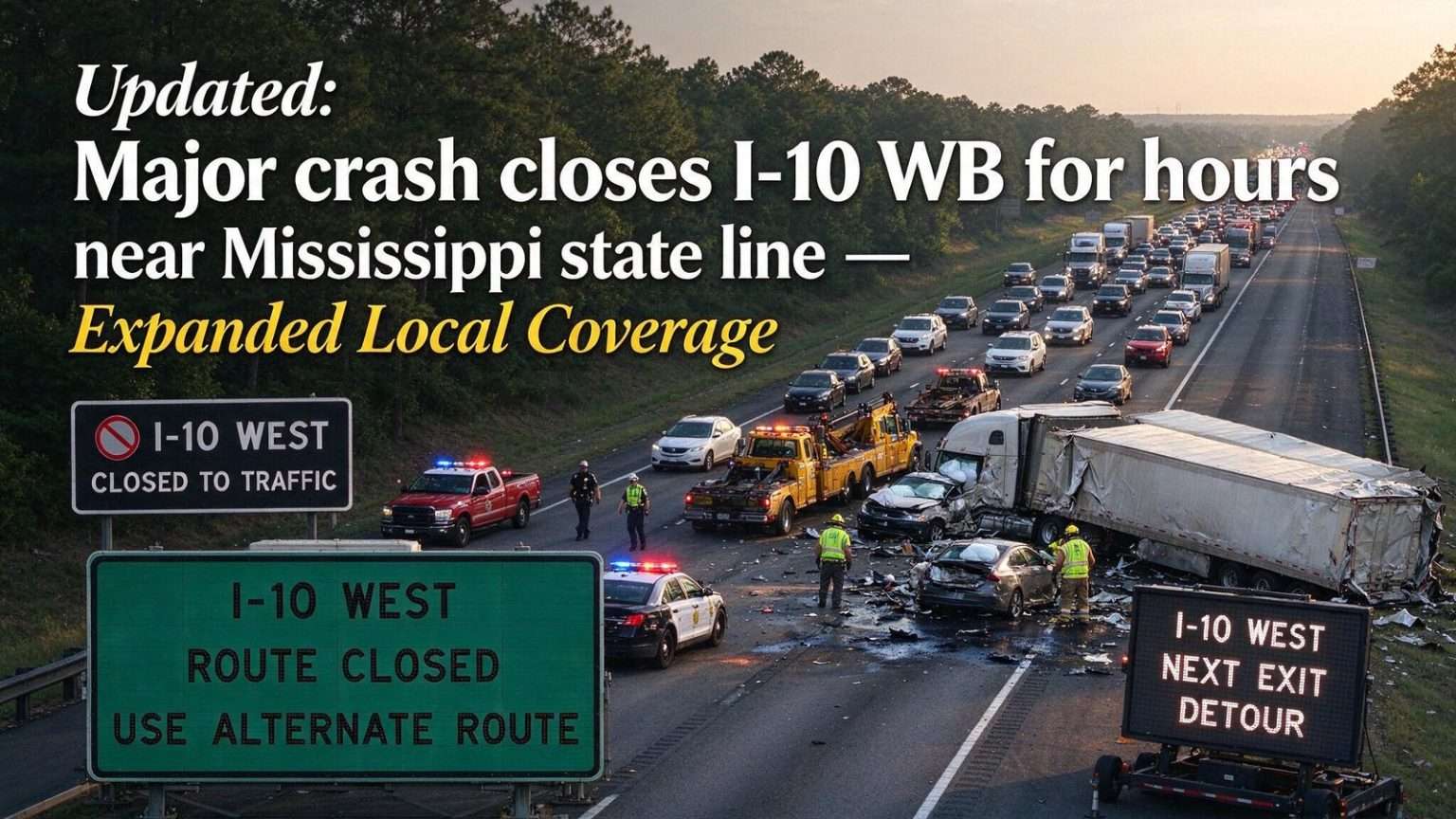
A major crash on Interstate 10 westbound near the Mississippi state line left the busy east-west highway closed for several hours on a recent afternoon, backing up traffic for miles and forcing travelers to seek alternate routes around the western edge of Alabama. The closure affected one of the most heavily traveled stretches of interstate in the southeastern United States, a route that connects Mobile and the Gulf Coast to the rest of the country.
According to initial reports from state troopers, the crash involved multiple vehicles and resulted in significant damage to the roadway and the vehicles involved. Emergency responders from both Alabama and Mississippi converged on the scene, and westbound lanes of I-10 were shut down for hours while crews worked to clear the wreckage, investigate the cause and reopen the road to traffic. Eastbound traffic was also affected at times as responders worked the scene.
Interstate 10 is the spine of the Gulf Coast transportation network, carrying commercial trucks, tourists and commuters between Mobile, Pensacola, Biloxi and New Orleans every day. Any extended closure of the highway tends to ripple across the region, with delays quickly stacking up on parallel routes like U.S. Highway 90 and State Route 188 as drivers look for ways around the blockage. Local gas stations and convenience stores along the detour routes reported heavy traffic during the closure as travelers stopped to refuel and stretch their legs.
What is known about the crash
State troopers with the Alabama Law Enforcement Agency responded to the crash scene, working alongside local sheriff’s deputies, fire and rescue crews and Mississippi highway patrol officers. Details about the specific cause of the crash, including whether weather, driver error or vehicle malfunction played a role, were still emerging as crews worked to clear the roadway. Investigators typically spend several hours at the scene of a major interstate crash documenting the wreckage and interviewing witnesses before they can release a formal cause.
The crash’s location near the Mississippi state line put it in a part of the region where emergency response involves coordination between agencies from two states. The Alabama Department of Transportation and the Mississippi Department of Transportation worked together on traffic management, with message boards and detour signage updated as conditions on the ground changed.
Local emergency management officials urged residents to avoid the area if possible, both during the active closure and for some time afterward as the roadway was inspected for any damage. Crews also had to clear debris, fuel spills and damaged cargo from the roadway before the lanes could safely be reopened to traffic.
The impact on travel across the Gulf Coast
Closures of I-10 westbound near the Mississippi state line routinely affect thousands of drivers. The interstate carries a steady flow of freight traffic between the Port of Mobile, manufacturing centers in Mississippi and the broader interstate highway system. A multi-hour closure of the kind that occurred during the recent crash typically means significant delays for truckers making tight delivery windows, and operators sometimes reroute long-haul trips well north of the closure to I-20 or I-59 to make up time.
Tourist travel was also affected. The stretch of I-10 near the Mississippi state line is one of the main routes into Alabama’s Gulf Shores and Orange Beach tourism region, and drivers heading to or from the beach communities during the closure had to navigate around the blocked roadway. Visitors heading west toward Biloxi, Gulfport and New Orleans also faced delays, with many choosing to delay their trips until the lanes were reopened.
How ALDOT and MDOT manage closures
The Alabama Department of Transportation operates a network of message boards, traffic cameras and highway advisory radio stations along I-10 to keep drivers informed about closures and delays. When a major crash occurs, ALDOT updates the boards with detour information and pushes notifications through the state’s 511 traveler information system. Mississippi’s Department of Transportation runs a similar system on its side of the state line, and the two agencies coordinate to provide consistent information to drivers crossing between states.
Detour routes during I-10 closures typically include U.S. 90, which parallels the interstate along the Gulf Coast, and a series of state highways that connect to the interstate at points east and west of the closure. Local law enforcement is usually deployed at key intersections along the detour routes to keep traffic moving and respond to any secondary incidents caused by the sudden increase in vehicles on smaller roads.
Staying safe on I-10
Major crashes on interstates like I-10 often serve as reminders for drivers to keep safety top of mind during long trips. Transportation officials consistently urge drivers to maintain safe following distances, avoid distracted driving and check weather and traffic conditions before setting out on a long drive. The interstate’s high speed limits and heavy commercial truck traffic combine to make even momentary lapses in attention potentially dangerous.
Drivers who witnessed the recent crash or who may have dashcam footage of the moments leading up to it are typically asked to contact the Alabama Law Enforcement Agency or the Mississippi Highway Patrol, depending on where the incident occurred. Witness statements and video can play an important role in helping investigators piece together the sequence of events that led to the crash.
As the highway reopened, transportation officials thanked drivers for their patience during the closure and reminded travelers to use caution when approaching any future incident scenes on I-10. More information about traffic conditions and active closures on Alabama interstates is available through the ALDOT 511 system and on the department’s social media channels.
A critical corridor for the region
Interstate 10 is more than just a highway on the western edge of Alabama. It is the main artery connecting Mobile to the rest of the country, a corridor that supports the Port of Mobile’s role as a major gateway for international trade. The interstate moves containers, chemicals, paper products and forest goods from southwest Alabama to markets across the eastern United States, and any disruption to that flow has economic consequences that stretch far beyond the immediate closure.
Local businesses that rely on just-in-time deliveries felt the impact almost as quickly as commuters did. Trucking companies rerouted drivers onto longer alternate routes, adding hours to trips that would normally have been straightforward highway miles. Distribution centers along the Gulf Coast reported delays in receiving shipments, and some retail deliveries to stores in the area were pushed back as the closure continued.
Coordination across state lines
Crashes near the Mississippi state line require a particular kind of coordination because the response straddles two states. Alabama state troopers, Mississippi highway patrol officers, local sheriffs’ deputies and emergency medical personnel from both states often end up working the same scene, with each agency playing a specific role. Investigators from the lead agency typically take charge of the scene, while partner agencies handle traffic control, medical response and witness coordination.
The Federal Highway Administration has long worked with states to make sure that interstates like I-10 are managed consistently across state lines, and the recent crash underscored how that cooperation plays out in practice. Communications between the Alabama and Mississippi departments of transportation were continuous throughout the closure, with both agencies pushing updates to their respective traveler information systems as conditions evolved.
Looking back at recent closures
Major closures of I-10 near the Mississippi state line are not unusual. The highway’s heavy traffic volume, combined with its mix of commercial trucks and passenger vehicles, makes it prone to serious crashes when conditions are right. State transportation officials have spent years studying the corridor and making incremental safety improvements, including updated message boards, additional lighting and periodic resurfacing work designed to improve traction.
Drivers who use I-10 regularly often develop their own habits to deal with the highway’s occasional closures, from keeping extra snacks and water in their vehicles to staying subscribed to ALGO traffic alerts and the 511 traveler information system. Those small preparations can make a big difference when a major crash turns an ordinary commute into a multi-hour detour, as it did during the recent closure.
How drivers can stay informed
Alabama and Mississippi travelers have a number of tools at their disposal to keep tabs on I-10 conditions. The ALGO traffic alert system sends notifications about major crashes and closures to anyone signed up for alerts, and the 511 phone system provides up-to-the-minute information about road conditions across both states. Local radio stations in Mobile, Pascagoula and Biloxi also carry regular traffic reports during morning and afternoon drive times, helping commuters stay ahead of any major backups.
For drivers who were on the road during the recent closure, transportation officials reminded travelers that patience and courtesy go a long way when traffic patterns shift suddenly. Drivers encountering detour routes are encouraged to follow posted speed limits, watch for emergency personnel and avoid the temptation to use neighborhood streets to bypass highway traffic. Those small efforts help keep both the detour routes and the surrounding neighborhoods safe during major closures.
A reminder of how much depends on I-10
Hours-long closures of I-10 westbound near the Mississippi state line tend to refocus attention on just how much the region depends on a single highway. From commuters making their daily trips to work to truckers hauling freight across the Southeast, the interstate is woven into the daily life of the Gulf Coast in ways that are easy to overlook until something disrupts it. The recent crash was the latest reminder that even short disruptions to the highway can have wide-reaching effects on travel, commerce and emergency response across the region.