

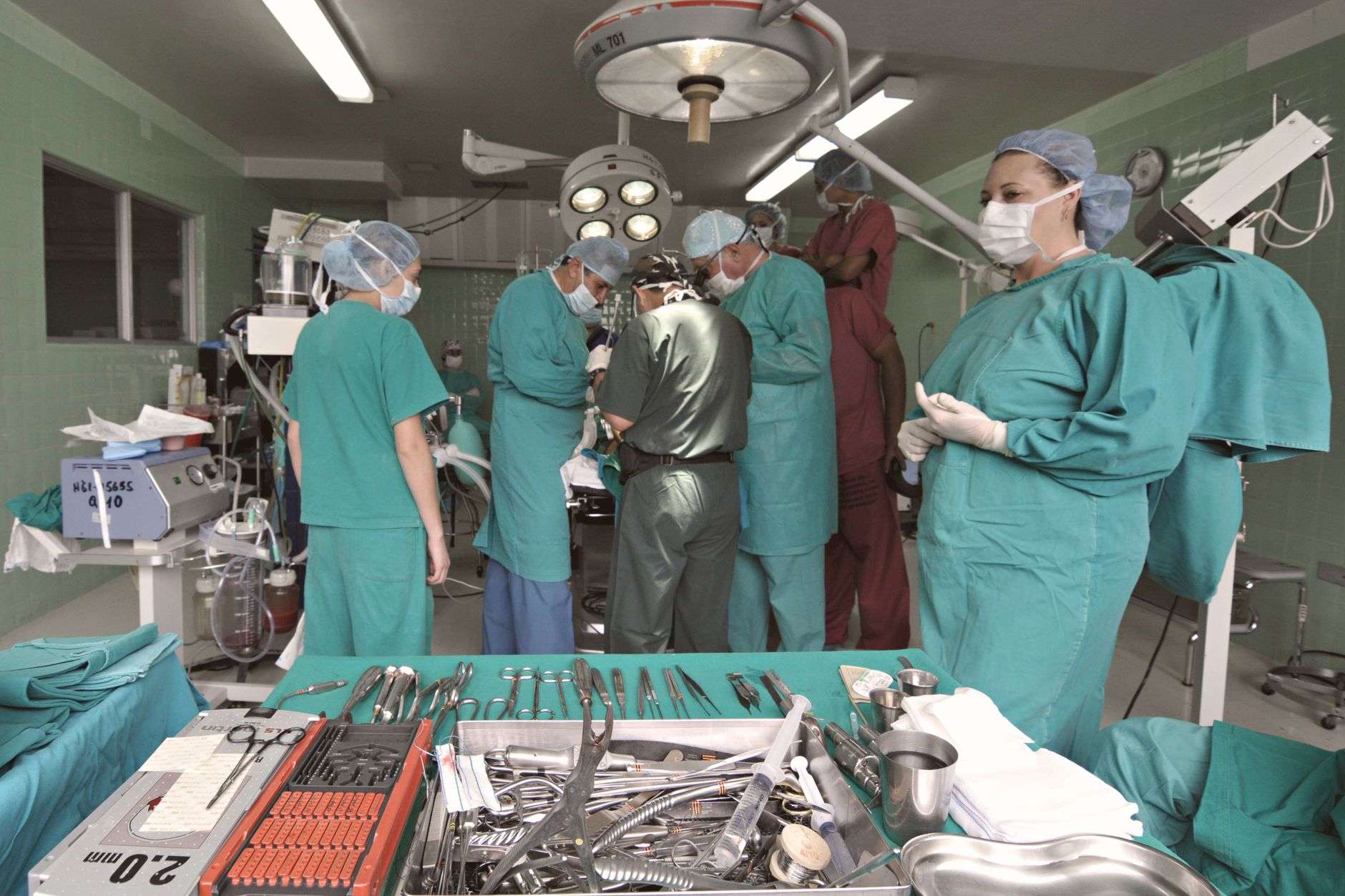
MOBILE, Ala. — USA Health University Hospital has performed its first Barostim implant procedure, providing a new treatment option to relieve symptoms in patients living with heart failure.
W. Johnson Hardy III, M.D., a fellowship-trained vascular surgeon at USA Health, performed the procedure Tuesday, Sept. 15, at USA Health University Hospital. The procedure involved implanting a small device beneath the skin of the patient’s chest and neck to help manage symptoms associated with symptomatic systolic heart failure.
What the Surgeon Said
“The addition of Barostim is game changing,” Hardy said. “This is without question one of the most exciting advances to date in the management of symptomatic heart failure, and from a patient perspective, it’s one of the most impactful surgeries that we offer. Performing these procedures is critical to USA Health’s mission of helping people across south Alabama and the Gulf Coast lead longer, better lives.”
The Problem Being Treated
Heart failure is a chronic condition in which the heart cannot pump blood as effectively as it should. As the condition progresses, the body can respond by activating its natural “fight-or-flight” stress response, causing the heart to work harder and contributing to symptoms such as shortness of breath, fatigue and swelling.
This contributes to severely diminished quality of life for heart failure patients, making it difficult to complete routine daily tasks such as grocery shopping or walking to the mailbox.
That compensatory response is one of the central problems in heart failure management. The body’s reaction to a weakened heart — increasing sympathetic nervous system activity to maintain circulation — is helpful in the short term and harmful over the long term, because it places sustained additional demand on a heart that is already struggling.
How It Works
Barostim is designed to counter that fight-or-flight response by using neuromodulation — the power of the brain and nervous system — to improve symptoms for patients.
Unlike other heart failure device therapies, Barostim contains no hardware in the heart or blood vessels. It works by electrically stimulating special receptors that tell the nervous system how to regulate heart, kidney and vascular function. Together, these effects reduce the heart’s workload and help it pump more efficiently, helping to restore balance to the autonomic nervous system and improve the symptoms of heart failure.
The absence of hardware inside the heart or vasculature is the design feature that most distinguishes it from pacemakers and defibrillators, which place leads within the cardiac chambers.
A Cardiologist’s Assessment
“We are lucky, these days, that patients with heart failure have access to many therapies that can improve symptoms and prolong life,” said Luanda Grazette, M.D., MPH, FACC, a fellowship-trained cardiologist and division chief of cardiology at USA Health.
“Barostim is a standout as a treatment because it offers functional gains and improvements in exercise tolerance above and beyond conventional heart failure medications and devices,” Grazette said. “It is definitely one of the most effective therapies for delivering improved quality of life in heart failure patients.”
Barostim plus heart failure medications have been shown to improve activity level and quality of life, helping patients successfully return to the lifestyle they want.
Why a Regional Program Matters
USA Health offers a comprehensive program for heart care, including cardiology, vascular surgery and cardiothoracic surgery, backed by the only extracorporeal membrane oxygenation program for advanced life support in the region.
Availability is the practical issue for patients along the central Gulf Coast. Advanced cardiac therapies are typically concentrated at academic medical centers, and when a procedure is not offered locally, patients face travel to Birmingham, New Orleans or farther — trips that are burdensome for anyone and particularly so for people whose condition already limits how far they can walk.
Adding a therapy locally removes that barrier for the patients in the region who are candidates for it.
Talking to a Doctor
Barostim is indicated for specific patients with symptomatic systolic heart failure, and candidacy is determined through clinical evaluation. Patients living with heart failure who are interested in whether the therapy applies to their situation should raise it with their cardiologist.
This article is reported for general information and is not medical advice.