University of South Alabama Mobile
USA Health Adds Urologic Oncologist Dr. Tarek Lawen to Expand Robotic Cancer Surgery
Fellowship-trained urologic oncologist Dr. Tarek I. Lawen has joined USA Health, bringing expertise in robotic and minimally invasive surgery for prostate, kidney, bladder and other urologic cancers.
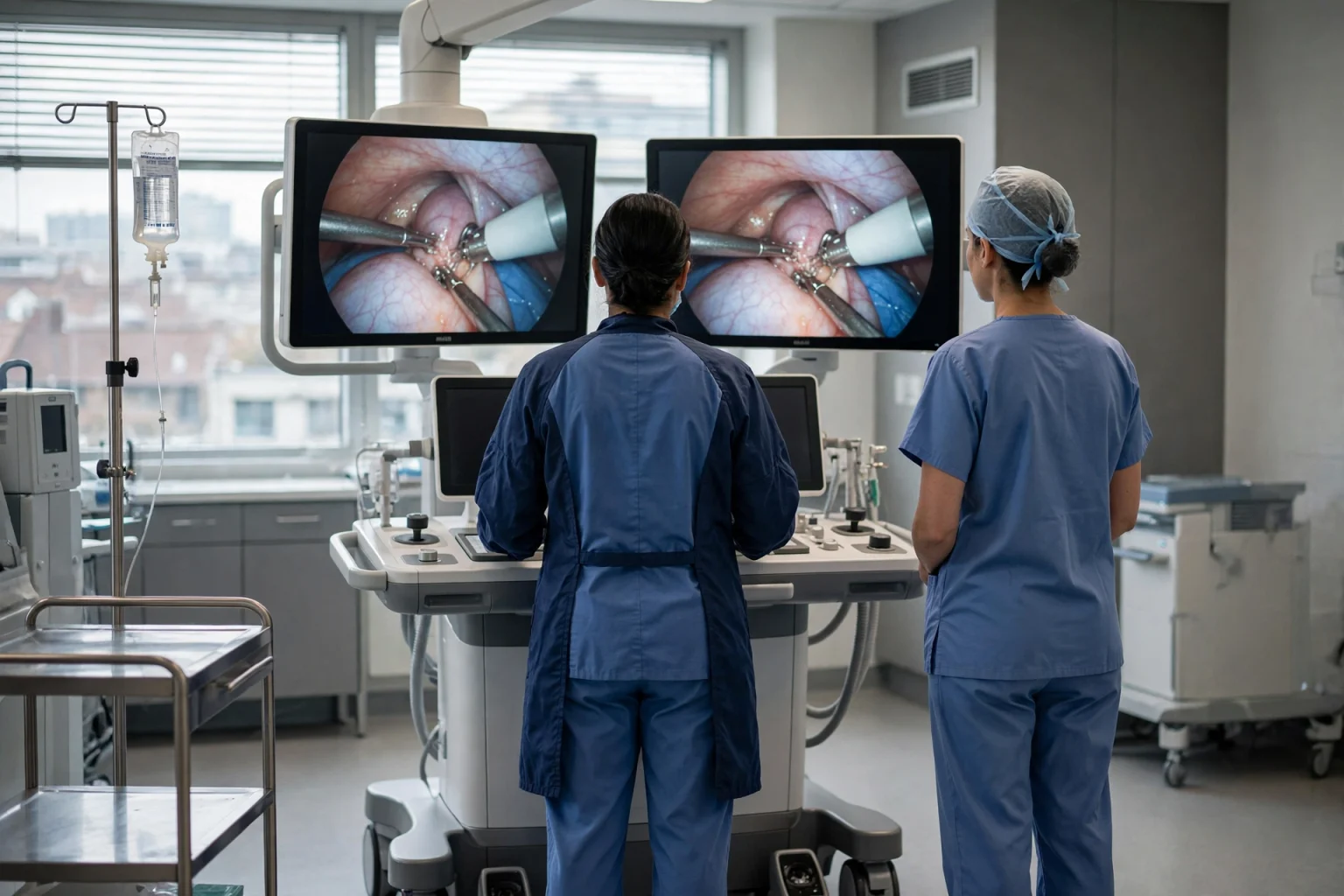
MOBILE, Ala. — USA Health has added a fellowship-trained urologic oncologist to its cancer care team. Dr. Tarek I. Lawen, a surgeon who specializes in robotic and minimally invasive operations for cancers of the urinary tract and male reproductive organs, has joined the University of South Alabama’s academic health system, giving patients along the central Gulf Coast another option for advanced cancer surgery close to home.
Lawen will also hold a faculty appointment as an assistant professor of urology at the university’s Frederick P. Whiddon College of Medicine, where he will take part in the training of future physicians.
What brought him to the specialty
Lawen said the field appealed to him because it blends lasting relationships with patients and the chance to make a decisive difference through surgery.
“I was drawn to urologic oncology because it combines several things I love about medicine,” Lawen said. “You develop long-term relationships with patients, help them navigate some of the most difficult moments of their lives, and often have the opportunity to treat or even cure their cancer through surgery.”
Urologic oncology is a subspecialty of urology focused on cancers of the kidneys, bladder, ureters, prostate, testicles and penis, along with related tumors. Surgeons in the field typically complete a urology residency and then pursue additional fellowship training devoted to cancer care.
Cancers he will treat
According to USA Health, Lawen will treat patients with:
- Prostate cancer
- Kidney cancer
- Cancer of the ureter
- Bladder cancer
- Testicular cancer
- Penile cancer
He will also evaluate adrenal masses and other complex urologic tumors in cases where surgery is needed.
As general background, robotic-assisted surgery allows a surgeon to operate through small incisions using precise instruments controlled from a console. Minimally invasive approaches like these are now commonly used for many urologic cancer operations, including removal of the prostate or kidney, and are generally associated with smaller incisions than traditional open surgery. Whether a robotic approach is appropriate depends on each patient’s condition, and that decision is made between a patient and the surgical team.
Department leader welcomes new surgeon
Dr. Christopher E. Keel, chair of the Department of Urology, said Lawen’s skills will broaden what the department can offer.
“We are excited to welcome Dr. Lawen to USA Health,” Keel said. “His expertise in urologic oncology and robotic surgery will strengthen our team and expand access to advanced cancer care for patients throughout the region. We look forward to the contributions he will make to our patients and our department.”
USA Health said Lawen’s role is meant to complement the expertise already in place within the department while widening access to robotic surgery and specialized cancer treatment.
A team approach centered at Mitchell Cancer Institute
The USA Health Mitchell Cancer Institute will play a key part in Lawen’s practice, the health system said. He will work alongside medical oncologists, radiation oncologists, radiologists, pathologists and other specialists to design treatment plans tailored to each patient.
“Cancer treatment is rarely the work of one physician,” Lawen said. “I collaborate closely with medical oncologists, radiation oncologists, radiologists, pathologists and the broader cancer care team to review each patient’s case and develop an individualized plan.”
This type of multidisciplinary care is standard at many cancer centers. In practice, specialists often meet to review a patient’s imaging, pathology results and overall health before recommending a course of treatment, which may include surgery, radiation, medication or a combination.
Preparing patients before surgery
One area of particular interest for Lawen is helping patients get physically ready for cancer treatment. He focuses on exercise, nutrition and overall health optimization, and he tells patients that recovery starts well before they reach the operating room and continues long after they leave it.
“Surgery should not be viewed as a single day,” he said. “It is a process, and the better prepared patients are going into it, the better positioned they may be to recover afterward.”
The idea of preparing patients ahead of a major operation, sometimes described as “prehabilitation,” has drawn increasing attention in surgical care in recent years. Patients considering surgery should talk with their own physicians about what steps are right for them.
Training in Canada and Texas
Lawen earned his undergraduate degree in anatomy and physiology at McGill University in Montreal. He went on to complete a master’s degree in physiology and biophysics, and earned his medical degree and completed his urology residency at Dalhousie University in Halifax, Nova Scotia.
He then completed fellowship training in urologic oncology at MD Anderson in Houston. As background, the University of Texas MD Anderson Cancer Center is one of the largest cancer treatment and research centers in the United States.
Lawen also holds Royal College Examination credentials in Surgical Foundations and Urology, according to USA Health. The Royal College of Physicians and Surgeons of Canada oversees specialty certification examinations for physicians trained in Canada.
Quality of life and shared decisions
Lawen said his goals go beyond removing a tumor. He aims to treat each patient’s cancer while also preserving quality of life and helping patients understand and take part in decisions about their care.
“Ultimately, I want patients to receive the same thoughtful, advanced and compassionate cancer care here in Mobile that they would expect from any major cancer center in the country,” he said.
What it means for local patients
For residents of Mobile, Baldwin and surrounding counties, the addition of another urologic cancer surgeon at the region’s academic medical center may reduce the need to travel to larger cities for specialized care. Patients who have questions about whether they should see a urologic oncologist are encouraged to speak with their primary care physician or urologist about a referral.
USA Health is the academic health system of the University of South Alabama and includes hospitals, physician practices and the Mitchell Cancer Institute in Mobile.