The Wrecking Ball on South Lawrence Street, and What Was Left Behind
Part nine of a memoir of a bygone Mobile: after years of haggling, the old family house sold for $18,292.80 and came down for a parking lot in the fall of 1964.
The ninth installment of a serialized memoir of a bygone Mobile brings the story of the family house on South Lawrence Street to its end — in a survey, a note, a hurricane watch and a wrecking ball. For years the neighbor who wanted the lot had proposed deals and let them lapse.
He would come by the brokerage office and announce that he was ready at last, that he needed only to go over the papers with his lawyer and accountant, and that he could offer something in the neighborhood of $25,000. The story changed with nearly every visit.
The deadlines came and went.
A deal, at last
In May of 1964 he came by and meant it.
He haggled over the price. He haggled over the size of the lot.
He insisted on a survey. And then the deal closed: a gross sales price of $18,292.80, with a substantial down payment and a note for the balance.
The memoirist, by his own account completely inexperienced in real estate and disinclined to trust the buyer even a little, hired an attorney friend to handle the transfer. The sale closed June 15, 1964.
The buyer said he planned to pay off the note within a few months. The seller devoutly hoped so; the alternative was ten years of monthly collections.
He named a bank as collecting agent, and the buyer proceeded to miss every single due date, paying only after a telephone call each month. With interest on the note at 5 percent, there seemed little reason for him to retire it early, and the prospect of 120 months of haggling loomed.
On Sept. 1, 1964, the buyer walked into the office and handed over a check for the entire balance.
The seller hustled it to the bank, half expecting it not to clear. It cleared, and he was out of the landlord business.
Not quite, as it turned out. One condition of the sale required him to keep operating the house as the buyer’s unpaid agent for a time — some tax arrangement that required the new owner to show he had bought the property as a rental investment before demolishing it for a parking lot.
The memoirist suspects he meant to depreciate the entire value of the building in 1964 and claim it as a deduction, and he seems to recall the buyer having trouble with the Internal Revenue Service over it. With the check safely cleared and no written agreement in force, he could have walked away.
He did the work instead. It lasted about three months.
The last Saturday
In September he told the dwindling roster of tenants that the house would be demolished. Rumors had already been circulating.
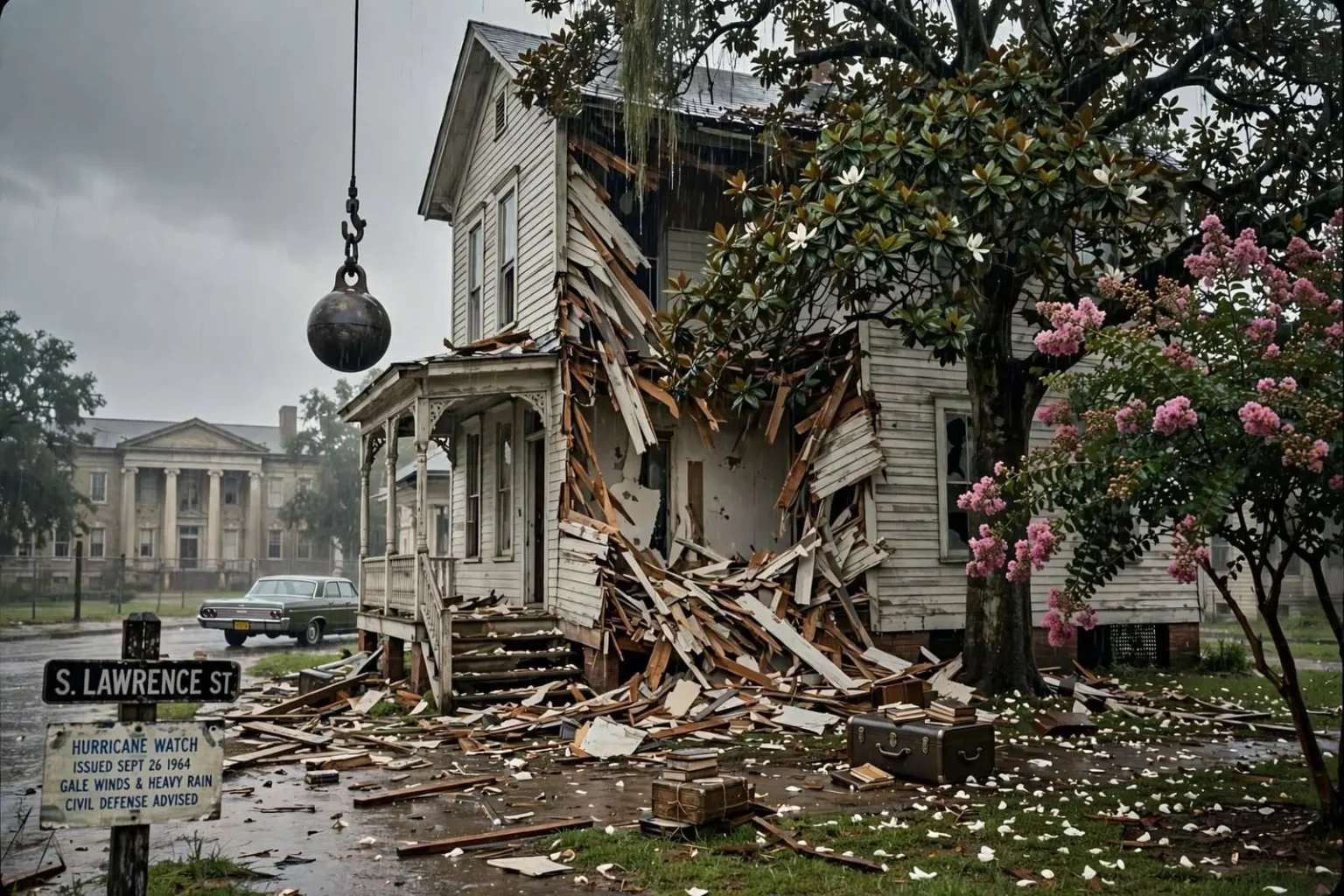
He and his brother and sister and their mother’s family made one last visit on a gloomy late-September Saturday afternoon, with a hurricane watch posted and a light driving rain falling — the kind of weather the house had shrugged off many times before. Their mother’s will left her furniture to his sister, and her family moved it out.
They went up into the attic, that gloomy repository of a century of discarded possessions. He took away many of the old books.
They carried out fragile steamer trunks whose manufacture, he was sure, went back a hundred years or more. Then they said goodbye to the place.
Over the years, he reckoned, it had been home to well over a hundred people. It had welcomed a few babies.
It had been the last address of many more. The demolition was mercifully swift.
The pine siding gave way at once. The heavy old timbers were another matter, as was the pecan floor in his mother’s apartment; both were carefully salvaged, and he never learned who ended up with them.
What he wishes he had kept
He wanted his mother’s dining room table, the one whose mahogany surface she polished to a mirror shine, whose extra leaves came out at Thanksgiving and Christmas, and over which she presided with her children and grandchildren around her. His sister did not want it and his wife judged it too large for their small dining room, so a cousin bought it.
He defers to his wife in matters of furnishing, he writes, and believes that is the wisest policy. But he should have insisted on that table — and on the many-colored canopy of a chandelier with one glass segment missing, and on the big front door with its colored glass panels, which he could still see catching the late afternoon sun as he came home from play and vaulted the five steps to the porch in a single bound.
This is a practical generation, he concludes, and practically speaking there was no reason to keep any of it. So it exists for him only in memory.
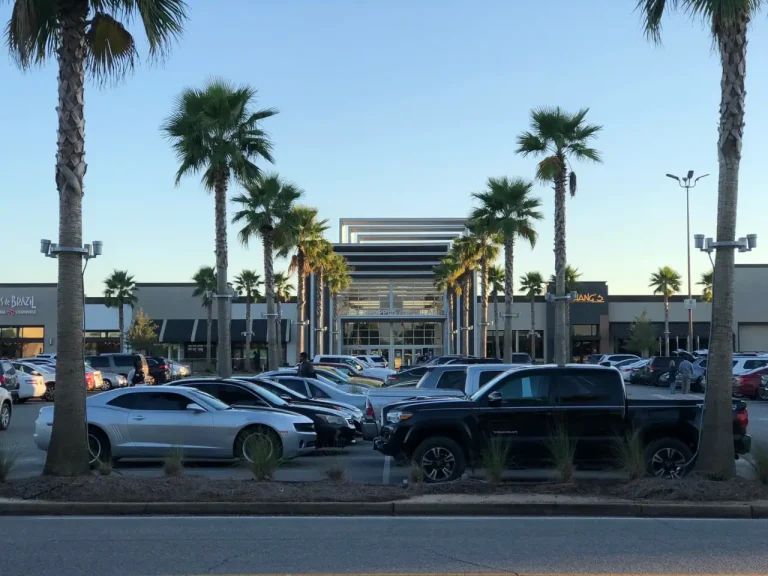
When he drives through the neighborhood of his boyhood now, three familiar things stand guard over the asphalt where the house used to be: the massive magnolias that weep each spring over the scene, and an old crepe myrtle whose colors once filtered his view of the Barton School yard from the porch swing on long summer days.
The schoolyard he remembered belonged to Barton Academy, which fills the block bounded by Government, Cedar, Conti and Lawrence streets. Built between 1836 and 1839 in the Greek Revival style, it was the first public school in Alabama.
Next in the series: The doctor operates in the market, and I am happy to assist.