Volunteers Roll Up Sleeves at Pensacola Veterans Village, Then Surprise Residents With a Month of Free Rent
Home Depot Foundation and Volunteers of America volunteers beautified the Pensacola Veterans Village and paid December rent for veterans in Pensacola and.
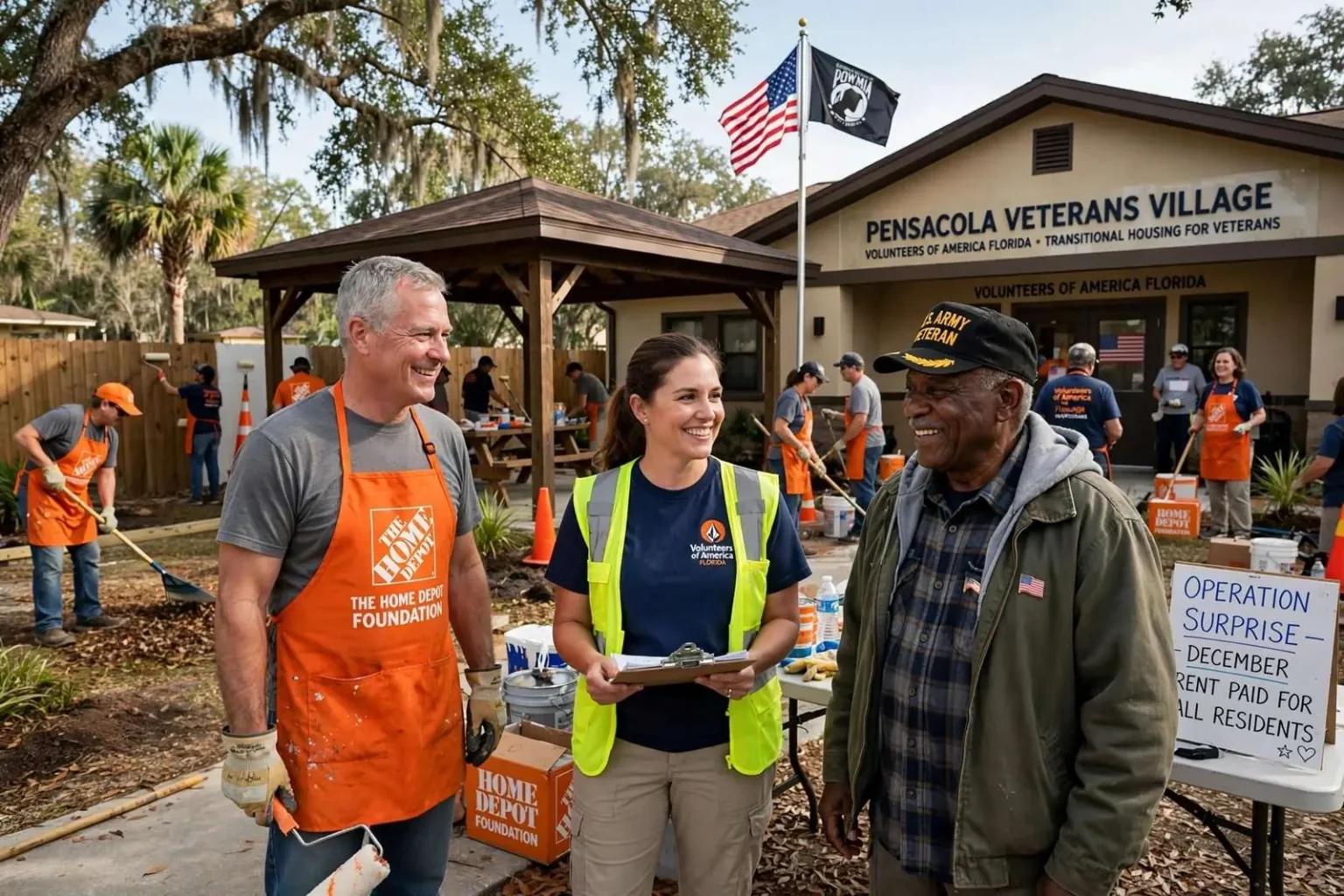
Dozens of volunteers spent a Wednesday morning wielding rakes, paint rollers and drills at the Pensacola Veterans Village, giving the transitional housing facility a makeover just ahead of Veterans Day — and then delivering a financial surprise that will carry its residents into the holiday season. The combination of physical labor and direct financial help turned a routine volunteer day into one of the more memorable pre-holiday events in the facility’s history.
The volunteer day brought together crews from the Home Depot Foundation and Volunteers of America Florida, the organization that operates the village, which has provided housing and support to hundreds of veterans in need since opening its doors in 2012. The facility is currently home to 30 veterans, men and women who came to the village after periods of homelessness and who work through its programs on the path toward permanent housing.
Teams landscaped the property, repaired fencing, assembled furniture and installed two new flag poles. The work transformed grounds that had been worn by daily use, and volunteers spread across the campus in crews, each taking a piece of the checklist that staff had prepared for the day. By midday the changes were visible from the entrance, the kind of cumulative improvement that turns a facility into a place residents are proud to call home.
The centerpiece of the effort is a new gazebo, which program manager Roger Coleman said will give residents a place to gather outdoors. “Our staff is limited, so for them to come out — our veterans appreciate it,” Coleman said. “They’re putting up a gazebo where they can come out and congregate. They can have their time together and barbecue or picnic.”
A surprise beyond the landscaping
When the work was done, store manager Brian Clifford revealed that the Home Depot Foundation’s help would extend well past the workday. Through what organizers call “Operation Surprise,” the foundation is paying December rent for every veteran living at the Pensacola facility. The announcement landed after a morning of physical work, adding a financial layer to a day residents had already seen change their surroundings.
The generosity doesn’t stop at the state line: the foundation is also covering December rent for veterans at Volunteers of America’s Eagles Landing facility in Mobile, extending the gesture to residents on the Alabama side of the Gulf Coast. The dual-state gift ties together the two facilities that Volunteers of America operates in the central Gulf Coast region, and it means veterans in both cities enter December with one less bill standing between them and stability.
For a transitional housing program, a month of covered rent is more than a gesture. Residents of facilities like the village are typically working through case plans that involve employment, benefits and savings goals, and an unexpected month without rent can accelerate a resident’s progress toward permanent housing. Program staff can redirect what a resident would have paid in December rent toward the deposits, debts or moving costs that stand between them and their own lease.
More than a roof
Residents say the village offers more than shelter. Army veteran Alvin Brown, who lives at the facility, credited its programs with helping him rebuild his independence. “Here at the Veterans Village, they have different programs to help you get back on your feet, and helping me with my disability plan,” Brown said. “After that, we go into the next step of moving into housing for the veterans around here.”
Brown’s description tracks the model that transitional housing programs across the Gulf Coast follow: residents arrive from homelessness, stabilize with case management support, address the benefits and health issues that often accompany long periods without housing, and then graduate into permanent units. The village’s role as a stopping point on that journey is what distinguishes it from an emergency shelter, and its decade of operation has made it a fixture of Pensacola’s response to veteran homelessness.
The Foundation’s role
The Home Depot Foundation has built its national reputation on veteran housing, directing hundreds of millions of dollars toward repairing and improving homes and facilities for veterans across the country. Its volunteer days pair that funding with the labor of store associates, who turn out in teams for projects ranging from single-home repairs for disabled veterans to full makeovers of transitional facilities. Pensacola’s Wednesday workday fit squarely in that tradition.
The involvement of store-level staff matters to how these projects run. Volunteers from local stores bring professional familiarity with the materials and tools involved, from fencing and landscaping to the assembly of the furniture and flag poles installed on the property. When those teams descend on a facility for a single morning, the output rivals what a small nonprofit staff could accomplish in weeks.
Volunteers of America’s Gulf Coast footprint
Volunteers of America Florida operates the village as part of a broader portfolio of veteran services, and its reach across the Gulf Coast gives its programs a regional character. The Eagles Landing facility in Mobile serves the same mission on the Alabama side of the state line, providing transitional housing and support to veterans in Mobile County. The two facilities together represent a cross-border continuum of care, and the December rent gift spans both.
Veteran homelessness along the central Gulf Coast reflects the region’s military footprint, with installations and veteran populations from Pensacola’s naval aviation hub through Mobile’s expanding veteran community. Transitional facilities like the village and Eagles Landing work in coordination with the Department of Veterans Affairs, local governments and nonprofit partners to move veterans off the streets, and their staffs describe the work as a pipeline with measurable steps rather than an open-ended shelter stay.
Since opening in 2012, the village has provided housing and support to hundreds of veterans, a cumulative figure that represents hundreds of individual exits from homelessness into stable living. The current census of 30 residents represents the men and women in the middle of that journey right now, each working through the case plans that Brown described.
Veterans Day timing
The timing of the makeover, just ahead of Veterans Day, gave the volunteer day added meaning. Communities across the Gulf Coast mark the holiday with ceremonies, parades and school programs, and service projects conducted in the days before November 11 have become a favored way for companies and organizations to put their observance into action. For the residents of the village, this year’s observance included both a renewed campus and a rent-free December.
Coleman’s remark about limited staff framed why the outside help matters so much. Facilities like the village run lean, with case managers and staff focused on the daily work of moving residents forward, leaving little capacity for capital improvements and grounds work. Volunteer days fill that gap, and the partnership model that brought the foundation’s crews to the property is one that veteran service organizations across the region have learned to cultivate.
For the 30 veterans now living at the Pensacola facility, the day’s legacy is twofold: a gazebo where they can gather for barbecues and picnics, and a December when their rent is paid while they continue the work of getting back on their feet. The same holds across the bay in Mobile, where Eagles Landing residents enter the holiday season with the same unexpected support, a cross-state gift that made this Veterans Day one to remember on both sides of the line.
Transitional housing occupies a specific and often misunderstood place in the homelessness response system. Unlike emergency shelters, which provide short-term beds with few conditions, transitional programs ask residents to commit to a structured stay during which they work on the specific obstacles that led to their homelessness, whether those are income, health, benefits or legal issues. The model requires patience from residents and flexibility from staff, and its results are measured in leases signed rather than nights sheltered.
For veterans specifically, the system carries additional supports. Federal programs coordinate with local providers to prioritize veterans for housing vouchers, and case managers at facilities like the village help residents navigate the disability claims process that Brown referenced when he described his disability plan. Claims work can take months and involves documentation many veterans struggle to assemble on their own, which is why the on-site assistance matters to outcomes.
The gazebo, modest as it may sound, addresses a genuine need in facilities like this one. Communal outdoor space is where the informal support network of a transitional program takes shape, with residents comparing notes on job interviews, sharing rides and building the peer relationships that research on homelessness consistently links to lasting stability. A covered space for barbecues and picnics gives that life a permanent home on the campus.
The flag poles installed during the volunteer day carry their own significance at a veterans’ facility, where flag ceremonies are part of the culture of the campus. Small installations like that often anchor holiday observances and commemorations, giving residents a place to gather that reflects the service identities they carry even while working through housing instability.
The December rent gift also lands at a moment when holiday costs pressure low-income households everywhere. For residents on fixed or just-starting incomes, the weeks between Thanksgiving and the new year strain every budget line, and a covered month of rent frees up resources for family visits, winter needs and the savings goals embedded in each case plan. Staff at the village and at Eagles Landing can now build December service plans around that unexpected margin.
Partnerships of this kind have become the financial engine of veteran services on the Gulf Coast. Corporate foundations supply the capital and volunteer labor, local nonprofits supply the expertise and continuity, and federal partners supply the housing vouchers and benefits that residents ultimately rely on. When the pieces align, as they did at the Pensacola Veterans Village this week, a single morning of work produces improvements that staff could not fund and a rent month that residents did not expect.
The volunteers, for their part, walked away with a direct view of what their labor accomplished. Corporate volunteer days are often abstract exercises, but a facility where residents live and work side by side with the visiting crews gives the effort a face, and the gratitude Coleman described flowed in both directions as the gazebo took shape and the surprise announcement landed.