Waste Management Urges Residents to Prep Containers and Debris Plans as 2015 Hurricane Season Opens
Waste Management's 2015 hurricane season guidance for Gulf Coast residents: secure containers, bundle debris and sort household trash after the storm.
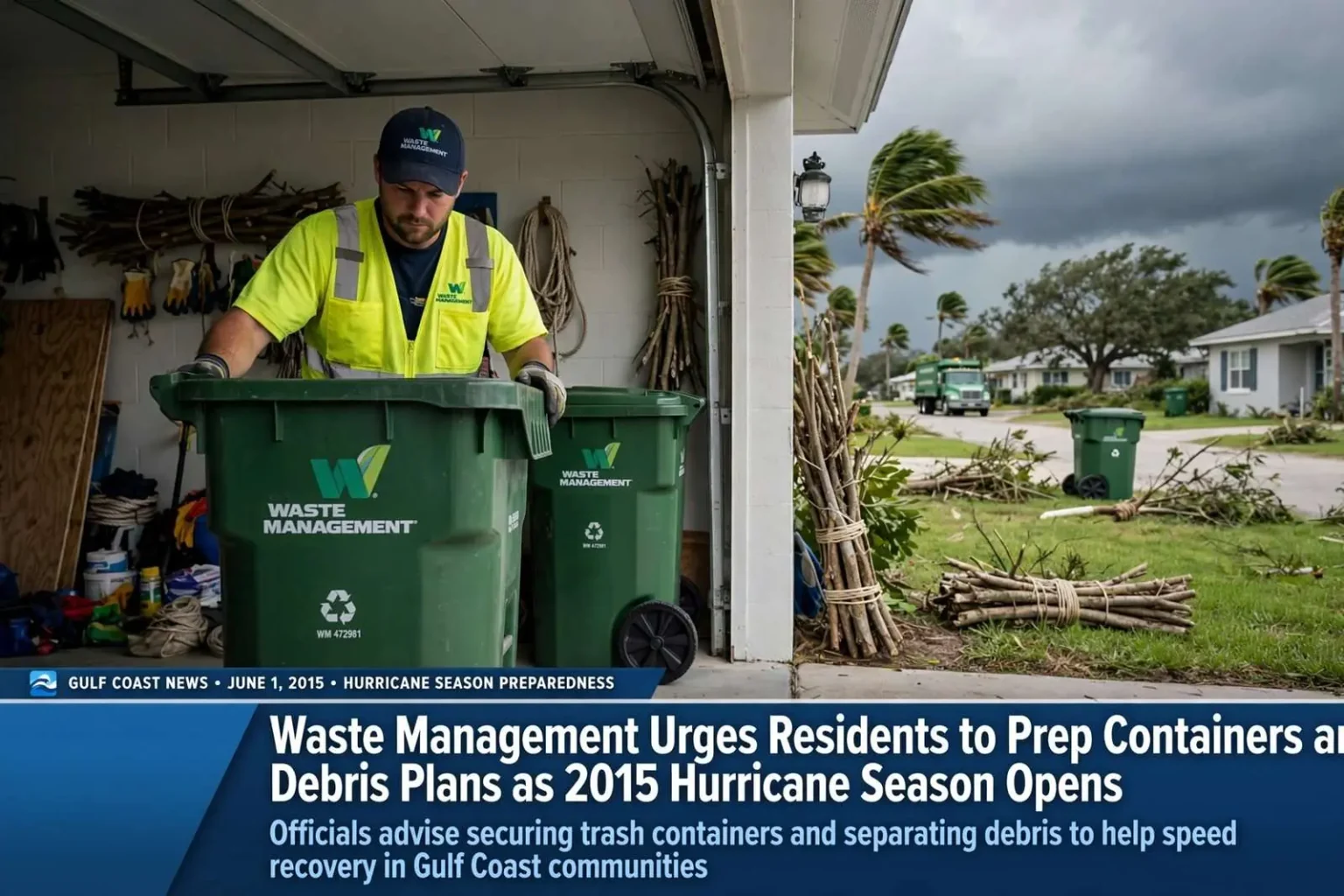
As the 2015 Atlantic hurricane season gets underway, Waste Management officials say Gulf Coast residents should add storm readiness for their trash to the usual hurricane checklist — securing containers before a storm and knowing how debris will be handled after one. The company, which handles residential collection across communities from New Orleans to the Florida panhandle, issues the reminder each June because the busiest waste-hauling weeks of any year on the Gulf Coast are the ones that follow a landfall.
The message is aimed at a hazard most residents never think about: an unsecured garbage can in hurricane-force winds. A standard wheeled container is light, hollow and top-heavy, which makes it exactly the kind of object that becomes airborne in tropical weather. Crews who work storm recovery describe containers traveling for blocks and striking homes, vehicles and power equipment — a preventable form of damage that costs nothing to avoid if households act before conditions deteriorate.
Before the Storm
If a storm threatens, residents and businesses should move garbage and recycling containers somewhere the wind can’t turn them into projectiles. Garages, carports and the leeward side of sturdy structures all work; the key is to get containers off the curb and out of the open well before a watch or warning is issued, since collection schedules halt as conditions build and there is no pickup to empty a container at the last minute.
Loose yard debris should be bundled and tied down as well — tree limbs, loose materials and construction debris can become wind-borne damage hazards if left unsecured. Post-storm cleanup in past Gulf hurricanes has shown how much material a single mature tree can shed, and limbs that are already cut and bundled before a storm are easier to secure, easier to collect afterward and far less likely to break windows or down lines when the wind arrives. Residents with ongoing construction or renovation projects face the same calculus on a larger scale, and contractors are urged to secure or remove scrap piles before an event.
After the Storm
Collection service does not restart immediately after landfall. Waste Management says trucks return to routes only once local and state officials declare streets safe and passable. That sequencing surprises some residents, but it reflects the realities of storm response: debris-choked roads, downed power lines, standing water and emergency traffic all take priority in the first hours and days after a storm, and waste trucks share the same damaged streets everyone else does. The restart of regular collection is one of the clearest signs a community is returning to normal operations.
Once pickup resumes, sorting matters. Household waste such as food scraps, diapers and wrappers should be kept separate from storm debris caused by rain, wind and rising water, so each stream can be handled properly. The distinction is not bureaucratic fussiness — storm debris is typically collected by separate removal operations, often under FEMA-funded programs with their own rules, while household garbage goes through the normal disposal system. Mixed piles slow both efforts, and misclassified material can delay collection for an entire street.
Residents who lived through prior Gulf storms know the scale involved. Major hurricanes generate millions of cubic yards of debris across a region, and hauling it away takes weeks or months even under the best coordination. Every household that keeps its regular waste separate and its yard debris stacked cleanly makes the whole operation faster, reducing the time spoiled food and damaged material sit in neighborhoods.
Experience From Past Gulf Storms
The company says its response plans draw on years of hurricane recovery work across the Gulf Coast. “At Waste Management, we consider it a top priority to ensure the safety of the communities we serve,” said René Faucheux, the company’s Gulf Coast senior manager of government and community affairs, adding that residents and businesses must also do their part “in order to have an effective storm response.”
Faucheux’s point about shared responsibility runs through the company’s seasonal guidance. Storm response is a partnership in which haulers position equipment, pre-stage trucks and coordinate with emergency managers, while residents secure what they own and follow the sorting rules that let recovery operations move at full speed. When either side falls short, the work of the other is multiplied.
Waste Management’s Gulf Coast operations have absorbed direct hits from some of the region’s most damaging storms over the decades, and each recovery has refined the playbook the company carries into new seasons. Crews learn where routes flood first, which contracts activate when a parish or county declares an emergency, and how to surge equipment and drivers into an affected area from across the company’s national network. That institutional experience is why the company begins its public reminders at the start of the season rather than waiting for the first storm with a name.
Officials recommend reviewing official emergency coordination plans now — before any system has a name — rather than scrambling when tropical weather is already on the maps. For households, that means knowing how local government will communicate in an emergency, where debris will be collected and what the post-storm pickup rules are in their own community, because those rules differ from one municipality to the next along the coast.
Why Early Preparation Pays Off
The first storms of a season often catch residents who let preparedness slide during quiet years, and emergency managers say the habits are easiest to build before they are needed. Moving a container indoors takes five minutes on a sunny Tuesday and can be impossible in the driving rain of an evacuation. The same is true of trimming and bundling yard waste, which is far safer to do in calm weather than in the compressed, stressful hours before landfall.
The 2015 season outlook had forecasters expecting a below-average year in the Atlantic, but Gulf Coast residents are regularly reminded that it takes only one storm to make a season memorable — a lesson coastal Alabama and the broader Gulf region learned repeatedly in past decades. Communities from Bay St. Louis to Pensacola carry the memory of storms whose names remain shorthand for the damage they did, and the recovery work that followed each of them included the unglamorous job of hauling away what the wind left behind.
For Gulf Coast households, the guidance boils down to three steps: secure containers and loose debris before a storm, expect a pause in regular collection after landfall while officials clear the streets, and sort household waste from storm debris once pickup resumes. Residents with questions about their local collection schedule or debris rules can contact their municipal or county public works office, which coordinates directly with Waste Management on storm operations.
What Storm Debris Collection Looks Like
When a significant storm strikes, debris removal usually operates in phases. Emergency pass clear primary arteries so first responders can move, then crews work neighborhood by neighborhood, collecting vegetative debris, construction and demolition material, white goods such as appliances, and electronics in separate streams. Residents are asked to stack material at the curb without blocking roads, drains or fire hydrants, and to keep the piles away from utility boxes and mailboxes so mechanical arms can reach them.
Regular household collection resumes on a different track, often with adjusted schedules published through local government channels. The two operations can run in parallel for weeks, which is exactly why the sorting rule matters so much — a household that mixes spoiled food into a debris pile has effectively converted part of the recovery effort’s workload back into the regular hauler’s problem, slowing both.
Businesses face parallel responsibilities. Dumpsters and compactors should be secured or emptied before a storm, since commercial containers are even larger projectiles than residential carts. Retail strips and restaurants along the coast that maintain regular waste service are encouraged to review their contracts’ storm provisions in advance so they know what to expect after an event.
The Season Ahead
Waste Management’s officials say their teams will be watching the tropics through the season’s traditional peak and that residents should assume the same of their own preparations. The company’s reminder is one thread in the larger fabric of seasonal readiness — alongside supply kits, evacuation plans and insurance reviews — but it is a thread that touches every household on the coast, because every household generates waste and every household’s yard has the potential to produce debris.
The Gulf Coast’s long experience with hurricanes has taught its communities that recovery begins before the storm makes landfall. Securing a garbage can is a small act, but multiplied across thousands of homes, it removes thousands of potential projectiles from the wind field — and makes the first days after the next storm measurably safer for everyone.