

Hurricanes, recessions, inflation and a pandemic have all come and gone, and the Dew Drop Inn is still serving hot dogs on Old Shell Road. Founded in 1924, the Dew Drop Inn is considered Mobile’s oldest restaurant, and more than a century later it remains a place where the menu, the atmosphere and even the advice passed from one owner to the next have barely changed — which is exactly how its regulars like it.
Located at 1808 Old Shell Road in midtown Mobile, the restaurant has become a local institution known for its hot dogs, its cheeseburgers “all the way,” a long list of fried seafood and Southern sides, and a gumbo that some say first-timers make the mistake of overlooking.
From Ann Street Sandwich Shop to Old Shell Road Landmark
The Dew Drop Inn’s story began in 1924, when George Widney opened it as a sandwich shop at 156 S. Ann Street. Widney introduced many Mobilians to a food they had never tried: the hot dog. It caught on so quickly that a Mobile newspaper dubbed Widney the “Hot Dog King.”
It is easy to forget how new the hot dog still was in the 1920s. Sausages in buns had been brought to America by German immigrants in the 19th century, and the food took off at amusement parks, ballparks and street stands in the North in the early 1900s, with New York’s Coney Island becoming its most famous home. In much of the South, though, a hot dog stand was still a novelty when Widney opened his doors, which helps explain why his sandwiches made such an impression on Mobile diners.
Arthur Reid later bought the restaurant from Widney and in 1937 moved it to its current home on Old Shell Road. After Reid died in 1966, Jimmy Edgar purchased the Dew Drop Inn and remodeled it — and the dining room today looks much as it did after that renovation.
Not long after, Edgar sold the restaurant to George Hamlin, and he offered his successor a single piece of advice: “Don’t change nothin’. Don’t change the food, don’t change the help, don’t change nothin’.” Hamlin took it to heart. Today the restaurant is run by his son, owner Powell Hamlin, who has kept that philosophy alive.
A few milestones in the restaurant’s history:
- 1924: George Widney opens the Dew Drop Inn as a sandwich shop at 156 S. Ann Street.
- 1937: Arthur Reid, who bought the business from Widney, moves it to 1808 Old Shell Road.
- 1966: After Reid’s death, Jimmy Edgar buys and remodels the restaurant.
- Later: Edgar sells to George Hamlin; today his son Powell Hamlin owns and operates it.
The Jimmy Buffett Connection
Among the Dew Drop Inn’s most devoted fans was the late Jimmy Buffett, who spent his childhood in Mobile before becoming one of America’s most beloved singer-songwriters. Buffett declared the restaurant’s cheeseburger the best he had ever eaten anywhere. Some longtime customers are convinced the Dew Drop Inn is the place he had in mind when he wrote “Cheeseburger in Paradise,” the 1978 hit that became one of his signature songs.
Whether or not the song was written with a particular Mobile lunch counter in mind, the link has become part of the restaurant’s lore. Buffett, who died in 2023, never lost his connection to the Gulf Coast where he grew up, and the Mobile area has embraced its place in his story. For fans who make pilgrimages to the places tied to his early life, a cheeseburger at the Dew Drop Inn has become something of a ritual.
What to Order: Hot Dogs and Burgers “All the Way”
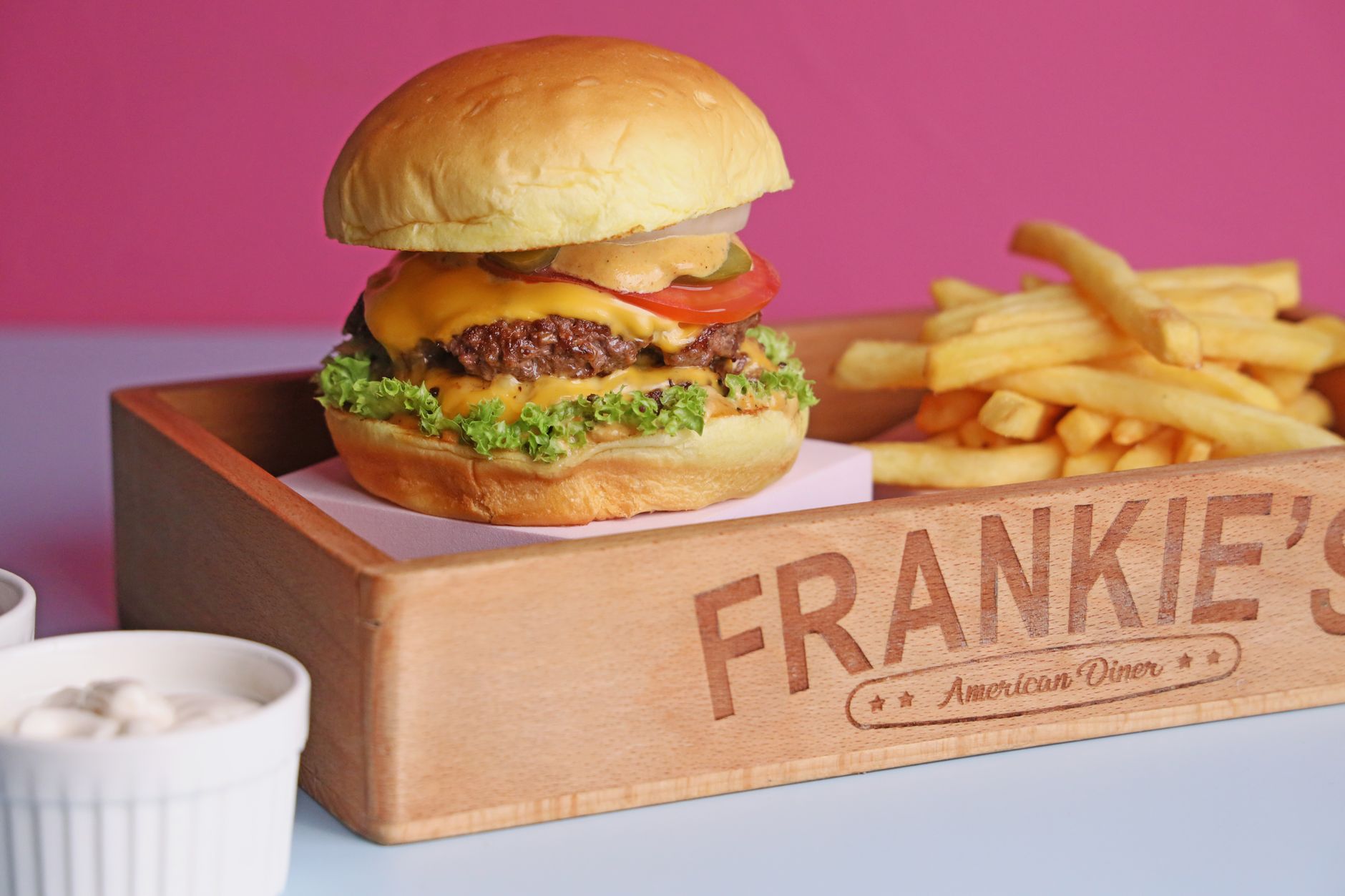
A century after Widney’s hot dogs made him famous, they remain the headline attraction, served with just about any topping a customer could want. The famous cheeseburger is a close rival. Order it “all the way,” and it arrives with lettuce, tomato and onion — plus a little chili, a Dew Drop Inn touch that sets it apart.
Chili as a burger and hot dog topping has a long history across the South, where chili dogs and “all the way” orders are part of the vocabulary at old-school drive-ins and lunch counters. What “all the way” means varies from town to town and restaurant to restaurant, which is part of the fun. At the Dew Drop Inn, the answer has stayed the same for as long as most customers can remember.
The sides cover the classics and then some:
- Coleslaw, French fries and onion rings
- Fried okra and turnip greens
- Broccoli salad, among other choices
Seafood, Plates and Po’boys
For a restaurant best known for hot dogs, the Dew Drop Inn’s seafood menu is impressive. Fried shrimp, oysters, catfish and swai are all on offer, along with a crabmeat omelet and a seafood platter piled with an assortment of fried fish and oysters.
The dinner menu includes vegetable plates, roast beef, chicken salad, chicken tenders, a fried pork cutlet, a fried pork chop and a hamburger steak, each served with two sides. There is also a selection of salads and a stuffed tomato.
The sandwich and po’boy menu offers more than a dozen options, including a crabmeat omelet sandwich and roast turkey, and every sandwich on the menu can be ordered as a po’boy. Children’s plates include shrimp, oysters, chicken tenders, grilled cheese, corn dogs, hot dogs, hamburgers and cheeseburgers.
That range reflects the kind of menu that has defined Gulf Coast lunch counters and neighborhood restaurants for generations: a blend of all-American diner staples, Southern meat-and-three plates and locally caught seafood, served without fuss.
The po’boy itself is a Gulf Coast icon. The sandwich is most often traced to New Orleans in 1929, when brothers Bennie and Clovis Martin, former streetcar conductors who ran a sandwich shop, fed striking streetcar workers for free and called the men “poor boys.” Served on crusty French bread and filled with fried seafood, roast beef or nearly anything else, the po’boy spread along the coast, and today no Mobile lunch menu feels complete without one. Swai, one of the fried fish options, is a mild white fish related to catfish that has become a common, affordable choice on Southern seafood menus.
Don’t Skip the Gumbo
Regulars say the item newcomers most often miss is the gumbo. Powell Hamlin makes it from his mother’s recipe and has not changed a thing, in keeping with the restaurant’s long-standing motto. It is known for its depth of flavor and is served with the rice on the side, the way many diners prefer it.
Gumbo holds a special place in Mobile’s food culture. The dish, built on a roux and a mix of seafood, meats and vegetables, reflects the French, African, Spanish and Native American influences that have shaped cooking along the central Gulf Coast for centuries. Mobile, founded by the French in 1702, shares much of that culinary heritage with New Orleans, and family gumbo recipes are guarded and passed down across the region. A restaurant gumbo made from a family recipe is part of that long tradition.
Why It Has Lasted a Century
Restaurants rarely survive a decade, let alone a century. The Dew Drop Inn has made it through the Great Depression, World War II, decades of changing dining habits, the arrival of national fast-food chains, a long list of Gulf Coast hurricanes, economic downturns and the COVID-19 pandemic. Its formula has been consistency: familiar food, a familiar room and staff who know the menu inside and out.
During a visit in early 2026, server Alisa’s warm smile and well-timed attention stood out, along with her thorough knowledge of the menu — the kind of service that keeps regulars coming back for decades. The dining room feels like home, and many customers say that from the moment they walk in, they know they are somewhere special.
The restaurant’s longevity also mirrors the history of its neighborhood. Old Shell Road is one of Mobile’s oldest thoroughfares, running west from downtown through midtown’s historic neighborhoods toward Spring Hill. Midtown’s neighborhoods grew up largely in the late 19th and early 20th centuries as Mobile expanded westward from its riverfront downtown, and by the time the Dew Drop Inn arrived in 1937 the corridor was lined with homes, churches and neighborhood businesses. Today midtown is again one of Mobile’s most sought-after areas, with its tree-lined streets, historic homes and local businesses, and the Dew Drop Inn remains one of its best-known landmarks.
Plan Your Visit
As of March 2026, the Dew Drop Inn was open Monday through Saturday from 10 a.m. to 3 p.m. — so plan on breakfast-to-lunch timing rather than a late dinner.
- Address: 1808 Old Shell Road, Mobile.
- Hours (as of March 2026): Monday through Saturday, 10 a.m. to 3 p.m.
- Must-tries: A hot dog, a cheeseburger “all the way” and a cup of the gumbo.
- Tip: Hours can change, so check with the restaurant before making a special trip.
More than a hundred years after the “Hot Dog King” introduced Mobile to a new kind of sandwich, the Dew Drop Inn is still following the best advice it ever got: don’t change a thing. For generations of Mobilians, that promise is the reason they keep coming back.