

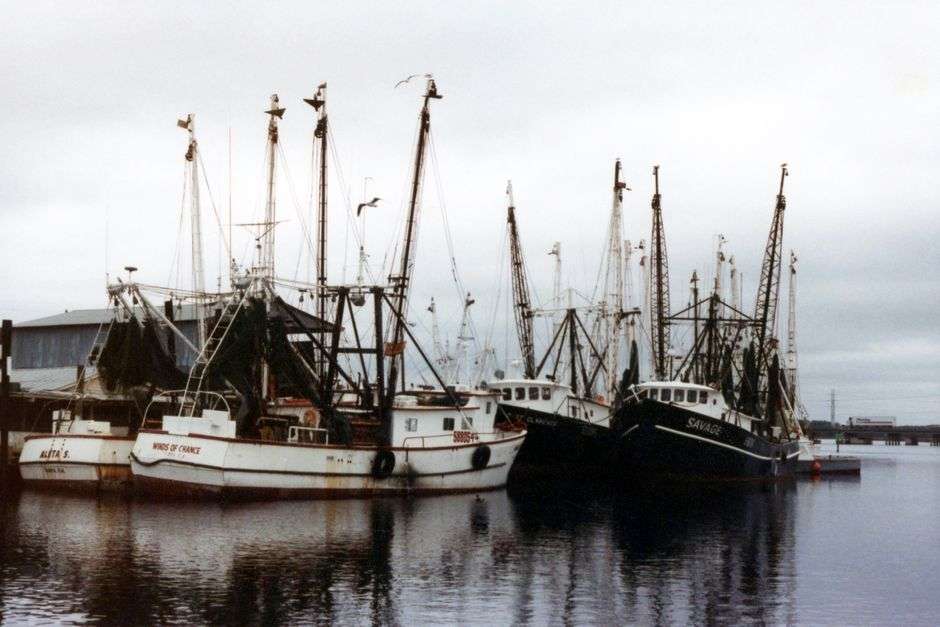
There is a stretch of Mobile County’s coastline, west of the city, where the landscape flattens into bayou country and the pace drops to the speed of a shrimp boat idling at the dock. A day spent wandering from Bayou La Batre to Coden to Grand Bay is one of the best in coastal Alabama — a route of hole-in-the-wall seafood joints, working waterfronts, family farms and roadside markets that most visitors, and plenty of locals, have never properly explored.
It is also a route best navigated with someone who knows it. Locals will tell you there is a special quality to the evening light around Coden and Bayou La Batre that is “just different than anywhere else.” They will tell you where to find the best fried shrimp on the Gulf Coast. And they will tell you, with a straight face, that the politics down here are their own — a story for another day.
Start with lunch: a seafood joint with a bulletin-board menu
Any honest tour of the area starts at Bayou Seafood, a genuine hole-in-the-wall in Bayou La Batre that keeps its entire menu stapled to a bulletin board, daily specials included. This is an authentic seafood operation run by people who know how to fry the perfect shrimp, fish and oysters — and, in season, soft-shell crabs straight out of Portersville Bay.
The fried shrimp are the stuff of local legend, but the soft-shell crab deserves equal billing, and a cup of the house gumbo — dense with crab claw meat and large shrimp — is the correct way to open the meal. Portions are generous, the tea is sweet, and nobody is in a hurry. That is the point.
The working waterfront
After lunch, the thing to do is simply drive. Bayou La Batre and neighboring Coden make up one of the last fully working waterfronts on the northern Gulf Coast, and the scenery tells the story: shrimp boats stacked bow to stern in the bayous, boats under construction in the boatyards, and the low industrial hum of a seafood economy that has fed the region for generations.
Veterans of the local seafood industry read the harbor like a stock ticker. When the bayous fill with docked boats — more of them idle than anyone likes to see — it usually means shrimp prices are cheap and fuel is expensive, a combination that squeezes the fleet. Resourceful as ever, Bayou La Batre’s watermen pivot with the seasons, turning to oyster tonging and crabbing when the shrimp market turns against them.
Rain matters here too. A dry stretch keeps the rivers and creeks from diluting the bay, and the right salinity makes for a delicious oyster crop. The rhythm of weather, water and catch is the local calendar.
History along the shore
The drive carries history with it. Coden was once a desirable vacation destination, connected to Mobile in the late 1800s by the Mobile and Bay Shore Railroad, which delivered tourists to its shores. After the Vietnam War, Vietnamese fishermen and their families resettled in the area and became a backbone of the local seafood industry, a community whose influence on the harbor is everywhere once you know to look.
The roads along the waterfront — including Shell Belt Road, which traces the shoreline and backwaters — pass boatyards, oyster houses and the occasional curiosity, like the strange-looking Russian submarine that sits in the area and has its own story, which locals will tell you is, appropriately, a story for another day.
Sessions Farm Market: the farm stand worth the drive
Continue west to Grand Bay, near the Mississippi line, and the destination is Sessions Farm Market, a thriving family operation stocked with fresh produce, citrus, jellies, jams, peanuts, shelled peas and beans, and freezers full of specialty items. Pumpkins take over the place in the fall, inside and out.
The Sessions family has farmed in the area since the 1940s and today works roughly 1,800 acres. In the fields: tomatoes, cucumbers, squash, potatoes, peaches, plums, watermelons, turnips, satsumas, oranges, lemons and grapefruit, along with several hundred acres of pecan trees and the cotton and peanut crops that anchor Alabama agriculture. The family hedges every forecast the way farmers always have — a hot, dry summer “should” make a decent cotton crop, a drought “may” take a bite out of the peanuts — but the citrus season between Thanksgiving and Christmas is reliably the busiest stretch, when families stream in for satsumas and holiday baking supplies.
The market’s shelves lean deliberately local. Alongside the farm’s own produce you will find ice cream from Haven’s Down Home Creamery in Lucedale, cakes from Dean’s in Andalusia, and bread from Chef Rob’s Bread Man Bakery in Semmes. “We buy as local as we can,” the family says — and the shelves prove it.
A farm, a state senator, and 1,800 acres
What makes a stop at Sessions memorable is who you meet. The market is a family affair run by the third generation, with cousins and uncles walking in from the fields to talk crops. One of them, David Sessions, represents District 35 in the Alabama State Senate — a farmer-legislator whose ties to the land are the family business, not a campaign line.
Conversations drift from cotton weather to pecan harvests — the family counts several hundred acres of pecan trees in a good year — to the infrastructure needs of rural Mobile County. In other words, the farm stand doubles as an unofficial town hall, which is about as Grand Bay as it gets.
Why this day trip works
The route — Bayou La Batre to Coden to Grand Bay — is barely 20 miles end to end, but it delivers a cross-section of coastal Alabama that no beach road can match: a seafood lunch worth the drive, a working harbor that has fed the region for a century, backroads shaded with Spanish moss, and a farm stand that tastes like the county’s agricultural roots.
Go on a weekday if you can, when the working waterfront is fully at work. Time the drive toward the coast for the late-afternoon light around Coden — the one locals promise is different from anywhere else. And leave room in the car: a cooler for seafood, and a trunk for satsumas, peanut brittle, and a crawfish pie you will regret not buying two of.
West Mobile County does not advertise itself. The seafood joint does not advertise, the farm market does not need to, and the submarine’s story stays untold. That is the charm. In a region that markets itself on white sand, this quiet corner of Mobile County is proof that the best Gulf Coast day trips run through shrimp boats and farm stands — and that the road less traveled ends, more often than not, with a fried shrimp platter and a bag of citrus for the road.