

The gatekeeper at the gateway to America’s Amazon
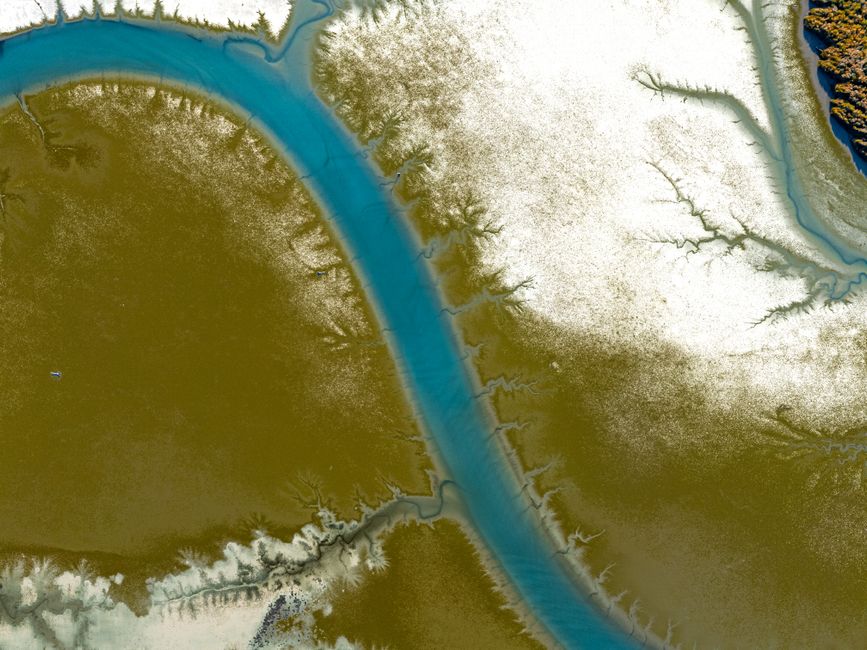
The Mobile-Tensaw Delta has been called America’s Amazon, and the nickname is not marketing. More than 200,000 acres of rivers, bayous, bottomland hardwood forest and marsh pour into Mobile Bay through a labyrinth that scientists rank among the most biodiverse places on Earth. The gateway to all of it is the Causeway — the old Bankhead Highway corridor that crosses the delta’s mouth — and sitting at the gate since 2008 has been the 5 Rivers Delta Resource Center, the state’s showcase for the delta’s ecology, conservation education, and stewardship.
For most of the past year, though, travelers crossing the Causeway passed a facility with an uncertain future. A little over a year ago, the Alabama Department of Conservation and Natural Resources put the 75-acre campus up for auction — a lease with an option to purchase — leaving one of the coast’s most important educational assets in limbo.
That chapter is closed. In June 2025, the state finalized a lease agreement with the Alabama Wildlife Federation, and in April the campus officially reopened as the AWF Delta and Bay Conservation Center at Five Rivers. The new director is Scott Bannon, and if his name sounds familiar, there is a good reason: for the last eight years, as director of the ADCNR’s Marine Resources Division, he was the public face of Alabama’s saltwater fisheries management — the man who stood in front of rooms full of frustrated oystermen and delivered the honest news about reduced harvests, season after season, without flinching.
Twenty-eight years protecting Alabama’s waters
Bannon spent 28 years with the ADCNR. A Kentucky native, he joined the Coast Guard after high school and was stationed in Mobile — and never left. When his Coast Guard contract ended, he walked straight into the Marine Resources Division as an enforcement officer and climbed the ladder for the next two decades, working to protect and conserve Alabama’s marine resources for current and future generations.
By the time he became eligible for state retirement, he had run the Marine Resources Division through some of the most contentious chapters in recent memory: oyster harvest closures, snapper seasons, the endless negotiation between science and the people whose livelihoods depend on the resource. There are videos on YouTube of Bannon facing packed rooms of oystermen angry about reduced harvest limits, and in each one he holds his ground and explains the state of the resource plainly. It earned him a reputation for candor on both sides of the aisle.
So when the Alabama Wildlife Federation came calling, he took what he describes as his second dream job — a conservation education role that, in an unexpected way, closes a circle that opened 46 years ago. As a child, Bannon attended a conservation camp, and he believes that experience set his whole trajectory. Now he runs the place where thousands of Alabama children will have their own version of that moment.
The right organization for the job
The Alabama Wildlife Federation is, by its own description, the oldest and largest nonprofit conservation organization in Alabama, established by sportsmen in 1935 to promote the conservation and wise use of the state’s wildlife and natural resources. One of those founders was Fred T. Stimpson, a Mobile native and relative of former Mobile mayor Sandy Stimpson, and the organization has kept close ties to the lower part of the state ever since.
Its record in the delta is substantial. In 1999, the AWF, the Alabama Forever Wild Land Trust, and the ADCNR worked together to purchase 50,000 acres in the Mobile-Tensaw Delta, with the AWF buying 12,000 of those acres on behalf of Forever Wild. More recently, the federation partnered with private entities to distribute 29 artificial near-shore reefs in Alabama waters in 2020 and 2021, and in 2022 it set aside $250,000 for oyster restoration in Mobile Bay and the Mississippi Sound, working with the Marine Resources Division to identify the specific projects. Its very first official act, back in 1935, was to back a bill requiring a one-dollar annual fishing license whose proceeds would fund the state’s fisheries work — the beginning of a close working relationship with the ADCNR that has lasted ninety years.
Bannon tells a story that captures the difference between the two organizations. Someone once called him with several sections of six-foot-diameter pipe and a simple pitch: wouldn’t this make a great artificial reef? Yes, Bannon said — but government paperwork takes longer than a week. Let’s call the AWF, he joked. Within two days, he says, trucks were lined up and barges were being loaded with the pipe.
What was at stake in the auction
The uncertainty at 5 Rivers was worth pausing on, because the campus is more than a building. Opened by the ADCNR in 2008 at the meeting of the Mobile, Spanish, Tensaw, Apalachee and Blakeley rivers — the five rivers that give the site its name — the center was designed as the public’s front door to the delta: exhibit halls, meeting spaces, boardwalks, boat tours and trails, all a few minutes’ drive from both Mobile and the Eastern Shore. Its stated purpose from the beginning was to showcase the ecological diversity of the Mobile-Tensaw Delta, provide conservation education, and promote stewardship.
When the state put the 75-acre lease up for auction with an option to purchase, coastal conservationists watched closely. A facility of that scale, on that site, does not have an obvious second life — and if it had gone dark, the delta would have lost its most accessible classroom. The June 2025 lease with the Alabama Wildlife Federation resolved the question with about the best answer available: an organization with ninety years of conservation history in the state, a working model nature center in Millbrook, and deep roots in Mobile.
A model that already works in Millbrook
The AWF is not starting from scratch. Based in Millbrook, the federation has operated the Alabama Nature Center since 2007 — the Natureplex, a 350-acre outdoor classroom that teaches children and adults about the wise use and responsible stewardship of wildlife and natural resources. The Delta and Bay Conservation Center will follow that model, with a stated purpose of providing planned outdoor education field trips for public, private, and homeschool groups, summer and holiday day camps for youth, weekday and weekend programming for the general public, and rental opportunities for meetings when they do not conflict with the primary educational mission.
The renovation work is already visible. Decking has been replaced. Overgrowth has been cleared, and the hiking trails have been revamped. Monitors and kitchenettes have been installed, and floor plans have been reworked to make the indoor space functional for groups of all sizes. The campus that had drifted into uncertainty is being put back to work.
What the children will find
Bannon has assembled his team largely from the staff of the Alabama Nature Center, plus a few recruits, and his management philosophy is the opposite of grand. God had a plan, he says, because he couldn’t build this team again. His own job, as he describes it, is to make sure the team has every piece of equipment they need — so that when the buses roll in, everyone knows it is going to be a good day. He moves the lunches out to the picnic tables. He cleans the bathrooms. If somebody needs something, he makes it happen.
He tells a story about asking one of his staffers what she thought her purpose was at the new center. I’m going to have the opportunity to meet a child and change her life, she said. It’s more than that, Bannon replied — you are going to meet thousands and thousands of kids, and you are going to impact hundreds, if not thousands, of lives over some little thing you said on the trail, or something some little girl watched you do.
That is the bet the Alabama Wildlife Federation is making at the gateway to America’s Amazon: that a delta best understood from its water trails and boardwalks will produce the next generation of people willing to protect it. The Mobile-Tensaw Delta supports more species than almost anywhere in North America — historic forests of cypress and tupelo, more species of freshwater fish, turtles, mussels and snails than comparable systems anywhere on the continent — and it sits within a short bus ride of school districts in Mobile and Baldwin counties.
The changing of the guard on the Causeway brings fresh eyes and fresh faces to a place that has always mattered more than its low profile suggested. The 5 Rivers campus has a new name, a proven operator, a director who spent a career on the water, and a mission that starts with school buses. If the Causeway is the gateway and the center is the gatekeeper, the people holding the keys appear to be the right ones.