Africatown Heritage House Opens in Mobile With a Day of Ceremonies Honoring the Clotilda’s 110
Mobile's Africatown Heritage House opened with a day of ceremonies honoring the 110 people brought aboard the Clotilda 163 years ago.
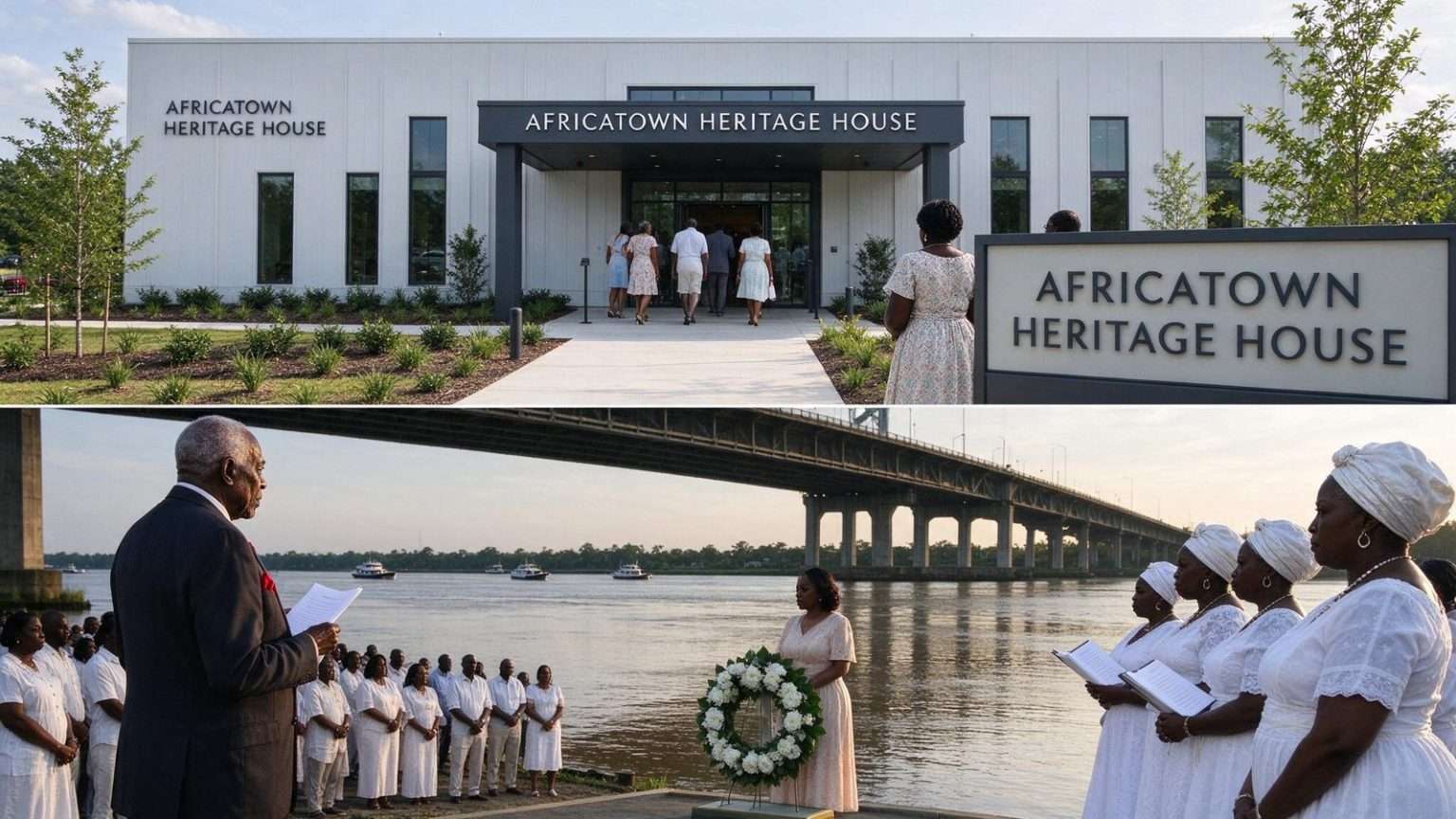
One hundred sixty-three years to the day after the survivors of the Clotilda landed in Mobile as enslaved people, the community built to carry their story forward opened its doors. The Africatown Heritage House welcomed visitors for the first time Saturday, capping a full day of ceremonies paying tribute to the 110 men, women and children taken from their homeland in West Africa aboard the final slave ship to reach American shores.
The opening marked the culmination of years of planning by the City of Mobile, the History Museum of Mobile and the Africatown community itself, whose elders had preserved the story for generations even when the wider city preferred not to hear it. The museum sits in the heart of Africatown, the neighborhood north of downtown Mobile founded by survivors of the voyage after emancipation, where they reunited with family members and built churches, schools and businesses of their own.
The day began before dawn with the annual Landing Ceremony beneath the Africatown Bridge, where dozens gathered near the water. Descendants shared stories and memories of their ancestors before closing the ceremony with a wreath tossed into the river.
“It is important that the world never forget their bravery, their resilience, their survival,” said William Green of the Clotilda Descendants Association. “They were born free and they came to this country and were enslaved.”
A Story Kept Alive for Generations
The Clotilda arrived in Mobile in 1860, more than half a century after the international slave trade had been outlawed in the United States. The voyage was a wager by a Mobile shipyard investor that he could defy the federal ban and get away with it. After the survivors were brought ashore, the ship was burned and scuttled in the waters north of Mobile Bay to hide the evidence, and those responsible escaped punishment. With no legal record of the crime, the story survived only because the survivors themselves refused to let it die — telling their children and grandchildren in the close-knit community they built north of the city.
An hour after the Landing Ceremony, a crowd waited outside for its turn inside the bright new museum next door to the Mobile County Training School, one of the historic anchors of the Africatown community. For descendants whose families passed the story down in whispers for generations — a story long hidden because the illegal voyage’s organizers were never punished — seeing it told in a dedicated exhibit carried special weight.
“For a long time, their story was withheld. They couldn’t tell their story. So now we’re seeing that there’s a whole museum dedicated to their story,” said Jessica Fairley, manager of the Africatown Heritage House. “And this is not just the story of the one group from the Clotilda. This is also the story of the town of Africatown.”
What Visitors Will Find Inside
The Heritage House exhibit traces the journey of the 110 from their West African homelands, across the Atlantic aboard the Clotilda, and through the decades of slavery, emancipation and community-building that followed. Displays built in collaboration with descendants present individual stories, family names and the founding of Africatown itself, along with the neighborhood’s later struggles through industrial encroachment and economic decline.
Dr. Meg Fowler of the History Museum of Mobile said she hopes visitors take away more than history. “Not just learn a history of incredible and remarkable people, the remarkable community they created,” she said. “But I hope that they also come away knowing that the past is very much present.”
Fowler’s point about the present is one Africatown residents have made for years. The neighborhood’s residents still live beside heavy industry along the Mobile River corridor, and community organizations have pressed for decades for improvements to housing, infrastructure and environmental conditions. The museum, its backers hope, will anchor wider investment in the community while giving the world a faithful account of what happened there.
The Discovery That Reignited the Story
National and international attention returned to Africatown in recent years after researchers confirmed the discovery of the Clotilda’s remains in the muddy waters of the Mobile-Tensaw delta, exactly where the story had always said it lay. The confirmation, following earlier candidate wrecks that proved to be other vessels, validated what descendants had been told for more than 150 years and created fresh momentum for a permanent place to tell the story. A coalition of city, county, museum and community leaders ultimately brought the Heritage House from concept to construction, with input from the Clotilda Descendants Association and other family groups shaping the content.
The timing of the opening carried its own meaning. Rather than choosing a convenient weekend date, organizers set the doors to open 163 years to the day after the survivors’ landing — tying the museum’s debut directly to the community’s most important date on the calendar, which it marks each year with the riverside ceremony beneath the Africatown Bridge.
Descendants Come Home From Far Away
The opening drew descendants from far beyond Alabama. Dannielle Moore traveled from Cincinnati to honor her ancestors Sally and Billy Smith. “To be a part of the heritage was very important for me to kind of understand where I came from and how everything’s all going moving forward,” Moore said.
Moore’s journey reflects a pattern that has grown with each Clotilda milestone: descendants scattered by the Great Migration and the decades since are making their way back to Mobile, some for the first time, to walk the ground their ancestors settled. Community leaders say each such homecoming strengthens the network of families who carry the story forward and supports their long-standing goals for the neighborhood itself — from restoring the historic cemetery where survivors are buried to improving the schools and streets of Africatown today.
What Comes Next for the Museum
With opening day behind it, the Heritage House steps into its longer-term role as a permanent interpretive center for the community. Operators anticipate a steady flow of school groups from Mobile County and beyond, tourists following the growing interest in African American heritage travel across the South, and researchers drawing on the exhibit’s documentation of the community’s founding families.
The site also joins a broader map of Clotilda-related places across Mobile that visitors can explore — from the riverfront where the ship slipped up the Mobile River at night, to the Africatown Cemetery, to Union Baptist Church and the other institutions the founders established. Local officials have described heritage tourism as a potential economic engine for the neighborhood, one whose benefits residents hope will flow to the community that preserved the story when few others would.
For the descendants who gathered Saturday beneath the bridge and later inside the museum’s bright galleries, the day held both grief and pride. The 110 who survived the Clotilda endured the unthinkable, built a town and raised families whose members now span the country. The Heritage House ensures that what they built — and what was taken from them — will be told in their own community, in their own words, for generations to come.
The museum’s location beside the Mobile County Training School is no accident. The school has stood at the center of Africatown life for generations, educating the descendants of the Clotilda survivors and anchoring community gatherings long before the Heritage House rose next door. Placing the new facility on that same ground ties the exhibit directly to the living neighborhood rather than setting it apart as a standalone attraction, and visitors walking between the two buildings pass through streets that the founders themselves helped shape.
The Community Behind the Project
Bringing the Heritage House to opening day required years of coordination among institutions that do not always move at the same pace. The City of Mobile committed funding and staff support, the History Museum of Mobile led curation and operations planning, and county leaders backed the project as both a cultural landmark and an economic driver for north Mobile. Most importantly, descendants and neighborhood residents sat at the table throughout, reviewing exhibit plans and insisting that the story be told with the community’s own voice rather than imposed from outside.
That collaboration produced an exhibit designed to do several things at once: document the voyage and the crime behind it, honor the survivors’ resilience, explain how Africatown came to be, and confront the environmental and economic pressures the neighborhood has faced in the century and a half since. Visitors move through that arc in sequence, emerging with an understanding of Africatown not as a single event but as an ongoing story of a community that survived.
Heritage Tourism’s Growing Reach
The opening comes as communities across the South invest in sites tied to African American history, and Mobile now stands among the destinations drawing that attention. The Clotilda’s story is unusual among such sites for a simple reason: it is fully documented from both ends, from the West African shores the captives left to the Alabama community their descendants built, with living family lines connecting the two. Historians have described the surviving body of firsthand testimony from the survivors — collected in interviews late in their lives — as among the most valuable records of the American slave trade’s final act.
For Mobile, the museum adds a significant stop to a waterfront already rich with attractions, and city officials have expressed hope that visitors drawn by the Clotilda story will spend time in the broader community — supporting north Mobile businesses and seeing the neighborhood as it is today, not merely as a chapter of the past.
Saturday’s ceremonies closed with the museum’s first visitors stepping inside, exactly 163 years after their ancestors stepped ashore. The community that kept the story alive now has a building built to keep telling it.