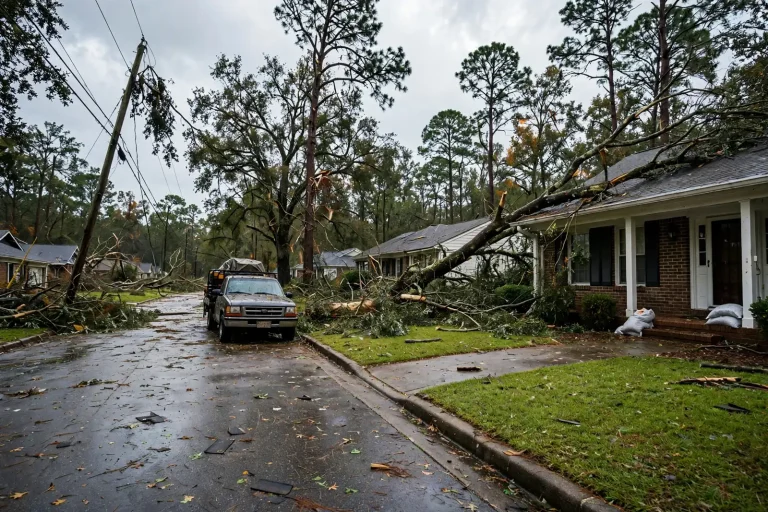
Feeding the Gulf Coast Hands Out Nearly 350,000 Pounds of Food as Isaias Outages Spoil Groceries
Feeding the Gulf Coast says it has delivered nearly 350,000 pounds of food and emergency supplies to families dealing with long power outages, spoiled groceries and property damage after Hurricane Isaias.
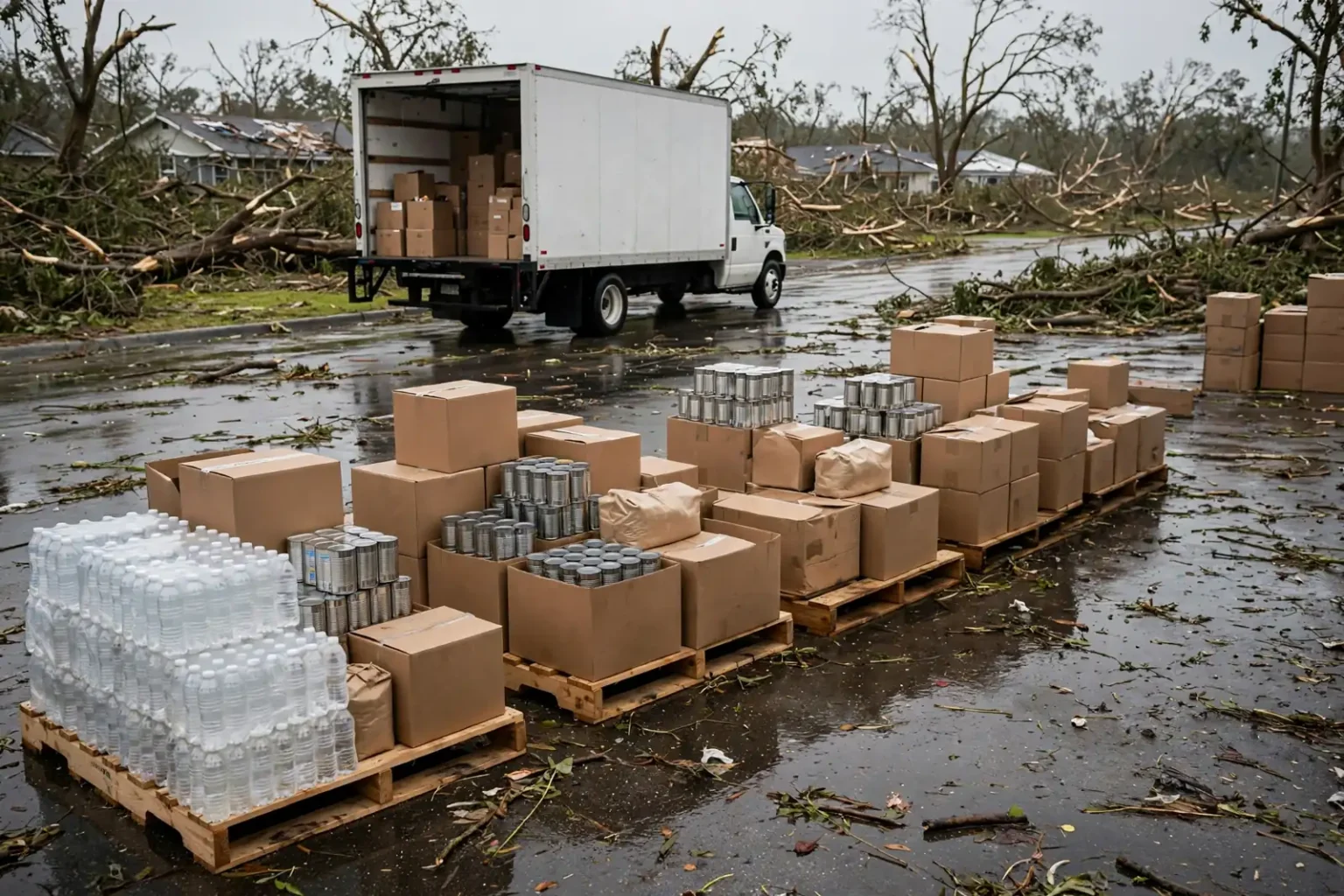
MOBILE, Ala. — Feeding the Gulf Coast has delivered nearly 350,000 pounds of food and emergency aid to families across the region since Hurricane Isaias, the food bank said, as households deal with prolonged power outages, refrigerators full of spoiled groceries and damage to their homes.
The food bank is working through its network of community partners and emergency responders, including Wonders of the Word Christian Ministries, to get food and water into neighborhoods that were hit hardest by the storm.
Why food is a top need after Isaias
Hurricane Isaias made landfall near Destin, Florida, on the night of Friday, Oct. 9, as a Category 2 hurricane and swept across south Alabama with damaging winds. At the peak, more than 300,000 Alabama utility customers were without power, and some communities, especially inland areas such as Brewton, were still waiting for electricity to return days later.
Long outages create a food emergency of their own. Refrigerated food that stays above 40 degrees for more than two hours should be thrown out, according to federal food safety guidance, and a full freezer generally holds a safe temperature for only about 48 hours if the door stays closed. For families already living paycheck to paycheck, replacing a refrigerator and freezer full of groceries can be a serious financial blow, often at the same time they are paying for cleanup, repairs or lost work hours.
Shelf-stable food and bottled water also become critical when boil-water notices are in effect, stores are closed or short on supplies, and roads are blocked by downed trees.
About Feeding the Gulf Coast
Feeding the Gulf Coast, formerly known as the Bay Area Food Bank, is headquartered in Theodore in south Mobile County and is a member of Feeding America, the national network of food banks. It serves 24 counties across south Alabama, south Mississippi and the Florida Panhandle, distributing food through a network of partner agencies such as church pantries, shelters, soup kitchens and community groups.
During normal times, the food bank supplies those partners and runs programs aimed at children, seniors and working families who struggle to afford enough to eat. After disasters, it shifts into emergency mode, moving truckloads of water, nonperishable food and other supplies into affected communities, often in partnership with churches and nonprofits that already know which neighborhoods need help most.
Feeding the Gulf Coast is also among the partners named by United Way of Southwest Alabama in its Isaias relief effort, which includes 2-1-1 help lines and a community relief fund.
How partners stretch the reach
Food banks rarely hand food to every family directly. Instead, they depend on local partners, such as Wonders of the Word Christian Ministries, to host distributions, recruit volunteers and connect with residents who may not have transportation or know where to turn. That model lets a regional food bank put supplies into dozens of neighborhoods at once, especially in the first days after a storm when needs are spread across a wide area.
How to get help
- Call 2-1-1. United Way’s 2-1-1 line can connect residents with food distributions, shelters and other recovery resources near them.
- Check with local churches and community groups. Many are serving as distribution sites for food and water.
- Follow official channels. Feeding the Gulf Coast, city governments and county emergency management agencies post distribution times and locations on their websites and social media.
- Apply for replacement benefits if eligible. SNAP recipients who lost food because of the storm may be able to request replacement benefits through the Alabama Department of Human Resources.
How to help
Food banks say cash donations usually go furthest after a disaster, because they can buy food in bulk and pay for fuel and transportation. Volunteers are also needed to sort, pack and distribute supplies. Anyone who wants to give or volunteer can contact Feeding the Gulf Coast directly, and donors are encouraged to give to established organizations and verify any unfamiliar charity before sending money.
Food safety reminders after a power outage
- Discard perishable food, including meat, poultry, seafood, milk and leftovers, that has been above 40 degrees for two hours or more.
- Throw away any food that may have touched floodwater, including canned goods with damaged or bulging cans.
- Never taste food to decide whether it is safe. When in doubt, throw it out.
- Use bottled water or boiled water for drinking, cooking and making baby formula if a boil-water notice is in effect.
As power is restored and cleanup continues, the food bank and its partners are expected to keep distributing food and water to neighborhoods still working to recover from Isaias.