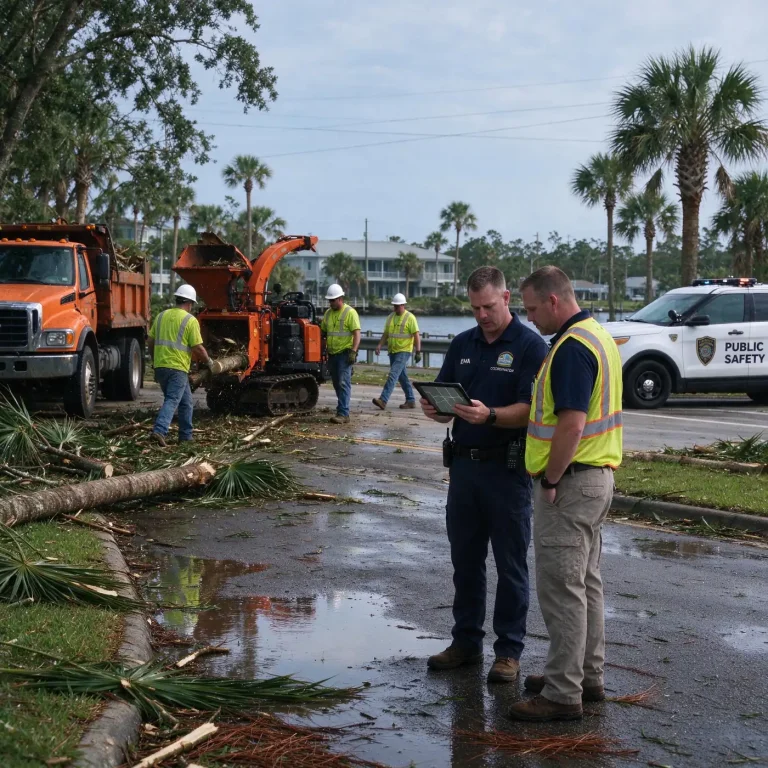
Agreement Signed to Deepen and Widen Port of Mobile
Alabama and the U.S. Army Corps of Engineers signed a $365.7 million agreement to deepen and widen the Port of Mobile federal channel to 50 feet.
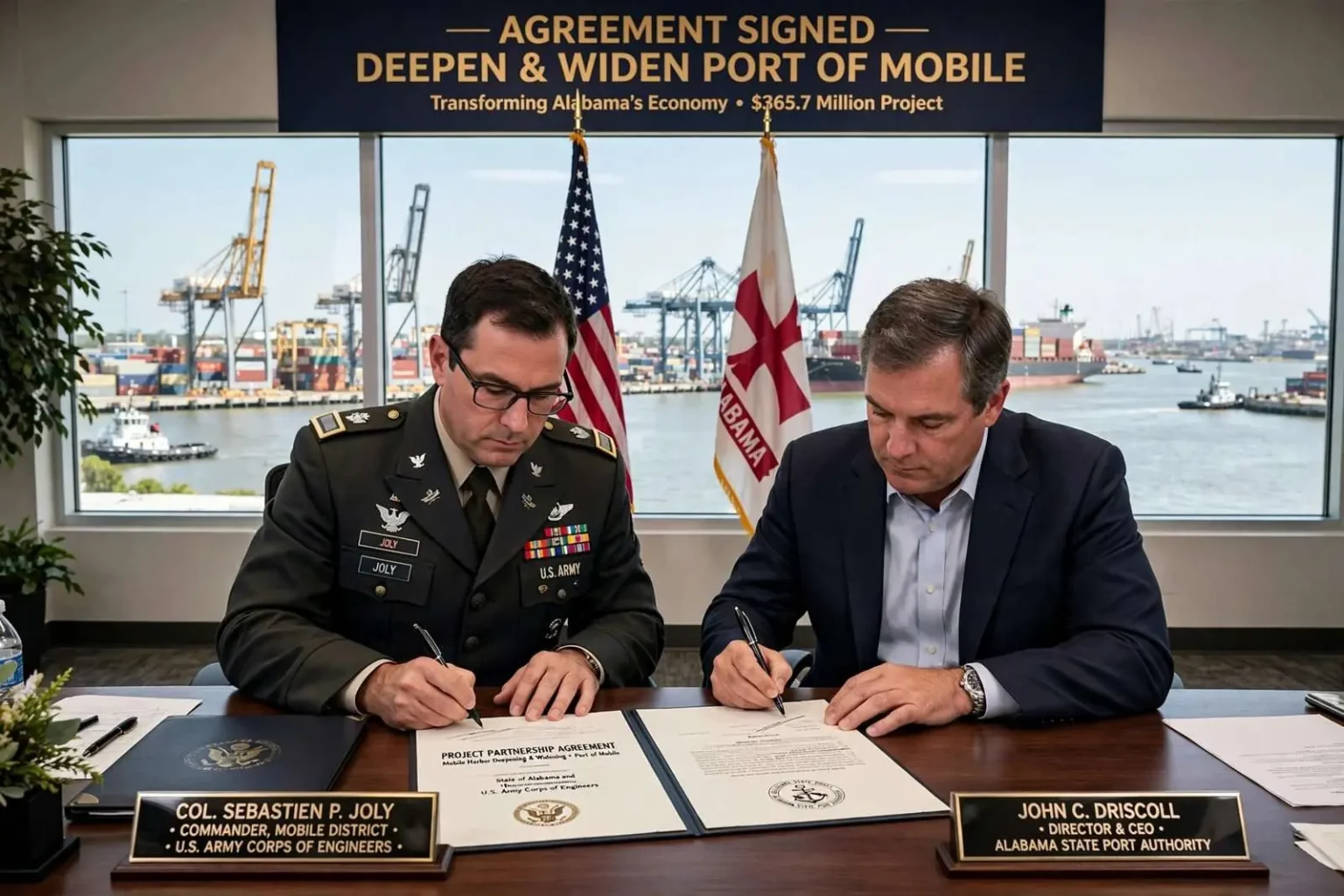
The State of Alabama and the U.S. Army Corps of Engineers have signed a Project Partnership Agreement to deepen and widen the Port of Mobile, clearing the way for construction to begin on the approximately $365.7 million project that state and federal leaders describe as transformative for Alabama’s economy.
Colonel Sebastien P. Joly, Commander of the Corps’ Mobile District, and John C. Driscoll, Director and Chief Executive Officer of the Alabama State Port Authority, signed the agreement, which allows the Corps to move into contracting and construction phases. The project will take the port’s federal channel to a depth of 50 feet, with completion targeted for late 2024 or early 2025.
Why 50 Feet Matters
The deepening is aimed squarely at the economics of modern shipping. The largest container vessels calling at Gulf and East Coast ports draw more water than Mobile’s existing channel could accommodate fully loaded, forcing ships to wait for high tide, lighten their cargo or bypass the port entirely. A 50-foot channel removes that constraint, allowing the port to receive the biggest ships afloat at any tide — and, just as importantly, to load export cargo to full capacity before those vessels depart.
Widening the channel serves the same goal from another direction. Wider passage means two-way traffic for large vessels, shorter delays at the port’s entrance, and safer navigation for the mix of container ships, bulk carriers, tankers and tug traffic that shares Mobile Bay. Every hour of delay a port can eliminate is an hour the shipping lines notice when they choose where to route cargo.
Federal and State Funding Secured
The Mobile Harbor modernization program received full federal funding in February 2020 following passage of the Energy and Water Development and Related Agencies Act, which made approximately $377.6 million available to qualifying projects in Alabama and two other Gulf states. That appropriation capped a years-long effort to move the project from study to construction at a pace unusual for Corps infrastructure work.
Alabama’s cost-share commitment was secured in March 2019 when the Legislature passed and Governor Kay Ivey signed the Rebuild Alabama Act, allocating a portion of state fuel-tax proceeds to support roughly $150 million in bonds for the harbor project. The financing structure — state bonds backed by the fuel tax, paired with federal construction dollars — became a model that other states studying their own harbor deepenings would examine closely.
The project received its Record of Decision in September 2019 following a four-year environmental impact and economic feasibility study. That study cleared the federal requirements for construction and documented the project’s benefits to the national economy, the standard the Corps applies to commercially justified navigation improvements.
State and Federal Leaders Hail the Milestone
U.S. Senator Richard Shelby, who championed the project for years, called the signing a milestone that would transform Alabama, expanding economic opportunities throughout the state and the region and increasing U.S. competitiveness in the global market. As a senior member — and longtime chairman — of the Senate Appropriations Committee, Shelby steered the federal funding that made full construction possible, and the Mobile Harbor project became one of the signature infrastructure achievements of his tenure.
Governor Ivey said the Port of Mobile is poised to become a major hub for export activity and described it as a giant step forward in supporting industries in the Americas and beyond. Her emphasis on exports reflected the port’s economic profile: Alabama’s exports — automobiles, aerospace components, chemicals, agricultural products, wood products and more — move through Mobile on their way to world markets, and every additional foot of channel depth lets a departing vessel carry more of them.
For the Corps’ Mobile District, the agreement represented the culmination of a review and planning process that began years earlier. The district manages navigation infrastructure across the Gulf Coast region, and the Mobile Harbor project ranks among its largest modernization efforts, involving dredging of the bay and river channels to depths and widths never before engineered there.
The Port’s Economic Footprint
The stakes are measured in jobs and dollars. In calendar year 2019, the public seaport terminals generated over 150,000 jobs and $25.4 billion in economic value to the state, according to the Alabama State Port Authority. Those figures count not only the direct work of stevedores, terminal operators and vessel agents but the manufacturing, agriculture and forestry jobs that depend on moving goods through the port.
Mobile’s advantages as a deepwater port are geographic and structural. The port sits at the head of Mobile Bay on the Mobile River, connected by rail and interstate highway to the industrial heartland of the Southeast, and it is the closest major U.S. port by water distance to the Panama Canal’s trade lanes serving Asia and South America. The harbor deepening was designed to capitalize on that position as larger vessels increasingly dominate global shipping.
The container terminal at the port has grown steadily as ocean carriers consolidate their Gulf services, and the channel project was the single most important constraint-relief available. Firms that site warehouses and distribution centers around a port do so partly on the certainty of vessel access — the kind of certainty a 50-foot federal channel provides.
From Study to Shovels
The path from feasibility study to construction agreement moved faster than typical Corps timelines, a pace advocates attributed to the alignment of state, federal and port leadership behind the project. The four-year environmental and economic study, the 2019 Record of Decision, the Rebuild Alabama funding in the same year, and the federal appropriation in early 2020 followed one another in quick succession. The Project Partnership Agreement then fixed the responsibilities of each partner: the Corps executes construction with federal dollars, and the state and port authority meet their cost-share obligations under the terms of the deal.
With the agreement signed, attention shifted to the dredging itself — cutting the channel deeper and wider through Mobile Bay and up the river to the port’s terminals, with the beneficial use of dredged material as a companion priority. Completion, targeted for late 2024 or early 2025, would give Alabama a harbor built for the next generation of ships, and give the state’s exporters and manufacturers a decisive edge in reaching their customers.
What the Project Means for Alabama Industries
The harbor deepening reaches into nearly every corner of the state’s economy. Alabama’s automotive industry, anchored by the major assembly plants in the central and western parts of the state, exports a growing share of its production through Mobile, and the port’s container services carry vehicles and parts to markets in Latin America, Europe and Asia. Aerospace suppliers, chemical manufacturers, paper and wood products companies and agricultural shippers all rely on the same channel.
The calculus for each of those industries is similar: shipping costs and delivery reliability often determine whether an Alabama-made product can compete overseas. A vessel that cannot load to full draft sails with unsold capacity, which raises the per-unit freight cost for every exporter on board. Deep water lets departing ships fill every container, and it lets arriving ships bring in the raw materials — steel, machinery, chemicals — that feed the state’s factories.
The wider channel also matters to the energy and bulk trades that have historically defined the port. Coal, aggregates, ores and project cargo move through Mobile in vessels whose size has grown steadily over the decades, and two-way navigation reduces the scheduling conflicts that can stack ships at anchorage during peak periods.
A Model of State-Federal Partnership
The financing structure behind the project drew attention beyond Alabama’s borders. Traditionally, harbor deepenings crawl through multi-year federal budget cycles, with local sponsors scrambling to fund their shares. Mobile’s approach — a state legislature committing fuel-tax-backed bonds, a governor who made the port a priority, and a congressional delegation that secured a full federal appropriation in a single appropriations act — compressed that timeline dramatically.
The Rebuild Alabama Act that funded the state’s share is itself notable: the 2019 law raised the state’s fuel tax for the first time in decades and directed proceeds to infrastructure across highways, bridges, ports and airports. Allocating a portion of those revenues to the harbor project tied the state’s road-funding commitment directly to its freight economy, on the logic that every truck hauling an export container depends on both.
Senator Shelby’s role in the federal component illustrates how appropriations strategy works for navigation projects. By securing the Energy and Water Development funding that made approximately $377.6 million available across the three qualifying Gulf states, Alabama’s delegation ensured that the Corps could award construction contracts without waiting through additional budget rounds — a certainty that contractors and dredging companies needed before mobilizing.
The Bay and the Communities Around It
A project of this scale inevitably touches the environment and communities of Mobile Bay, and the environmental impact statement that produced the 2019 Record of Decision examined those effects in detail over four years of study. Dredging in the bay and river channels is managed under federal and state permits, with material placement plans designed to minimize harm to the bay’s fisheries, wetlands and water quality — resources that support the region’s seafood industry and recreational economy alongside the port’s.
For the city of Mobile and the smaller communities ringing the bay, the deeper harbor represents both opportunity and change: more vessel calls, more port-related jobs, more truck and rail traffic moving cargo inland. Civic and business leaders across the region have framed the project as the keystone of a broader strategy that includes terminal expansion, intermodal rail improvements and industrial development along the waterways that connect to the port.
With the Project Partnership Agreement in place, the work ahead is physical: dredges cutting the channel to 50 feet, contracts awarded in phases, and a completion date in late 2024 or early 2025 that will mark the moment Alabama’s port becomes, in the words of its champions, a harbor ready for the biggest ships the world’s shipping lines sail.