

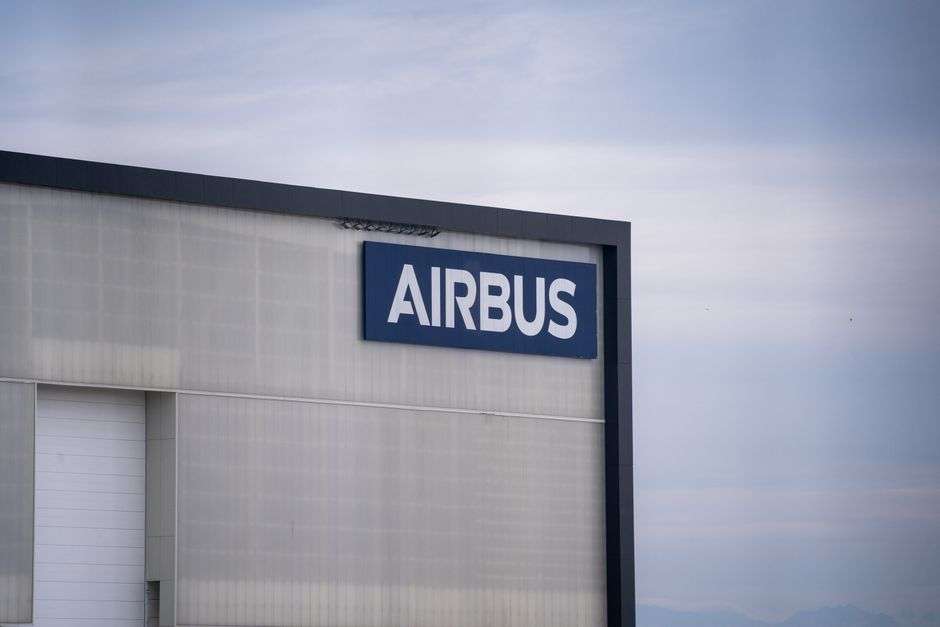
Airbus has selected HPM as program manager for the design and construction of a new A220 final assembly line at its Mobile manufacturing campus, a milestone in the company’s expansion at Brookley Aeroplex. The announcement cemented Mobile’s role in Airbus’s North American strategy and put one of Alabama’s most established construction management firms at the center of the state’s signature aerospace project.
A second assembly line for Mobile
The Birmingham-based firm will also oversee work to expand Airbus’ existing A320 family production facilities on the site to handle increased output. As program manager, HPM will coordinate procurement of construction service providers and supplies alongside the Mobile Airport Authority and Airbus. In practical terms, HPM becomes the coordinating hand across every contractor, supplier, and schedule on a project that must deliver highly specialized industrial buildings — clean, precise, climate-controlled hangar-scale spaces where commercial jets are assembled — without disrupting the aircraft production already running next door.
Site work tied to both the A320 expansion and the new A220 line is already underway, with construction of the main A220 flow line building expected to begin in 2019. The schedule reflects the urgency behind Airbus’s decision: demand for the A220 family, the former Bombardier C Series jets that Airbus took a controlling stake in, has outpaced the capacity of the program’s original Canadian and European assembly sites, and a U.S. line gives Airbus both room to grow and insulation from trade disputes that had made transatlantic production politically complicated.
Daryl Taylor, vice president and general manager of the Airbus U.S. Manufacturing Facility, said the company is ready to move forward on its next major U.S. industrial project. “We are ready to begin construction on Airbus’ next industrial facility in the U.S., and expand our current operations in Mobile,” Taylor said. “It will be a pleasure to work with HPM again as we continue to grow in Mobile.”
Bringing the A220 to American customers
Florent Massou, head of the A220 program, said the announcement marks another step toward bringing A220 production to the United States. “This is great news and an important next step in bringing A220 production to the U.S. for our U.S.-based customers,” Massou said. “We are on track to deliver our first aircraft from Mobile in 2020.”
The A220 is a narrow-body jet designed for the 100-to-150-seat market, a segment Airbus had not previously covered, and its entry into the Mobile campus means Alabama will build the full range of Airbus’s single-aisle lineup. For U.S. airlines — among the largest customers for both the A220 and the A320 family — having final assembly on American soil carries logistical and political weight, echoing the promise Airbus made when it opened its first U.S. assembly line in Mobile in 2015.
That first line transformed Mobile’s economy. The Brookley Aeroplex, the former Air Force base the city converted into an industrial airport complex, went from post-military decline to hosting a billion-dollar aerospace campus whose suppliers, training centers, and engineering offices have multiplied across the region. Auburn University, coastal community colleges, and local workforce programs built training pipelines around the plant, and every expansion announcement ripples into hiring across the Gulf Coast.
A decade of partnership with HPM
HPM President Mike Lanier said the firm’s relationship with Airbus in Mobile has grown considerably over the past decade. “Our continued commitment to Airbus and Mobile has expanded significantly in the last decade, and we look forward to again representing our client in Alabama’s growing aerospace sector,” Lanier said. “As the conduit between the owner and various project teams, our HPM team will serve as the point for all inquiries as it relates to opportunities to participate in design and construction.”
HPM has offices in Birmingham, Huntsville, Auburn, Mobile, Atlanta and more, positioning the firm across Alabama’s major economic corridors. Founded in 1938, the company has spent decades managing industrial, healthcare, education, and aerospace construction across the Southeast, and its prior work with Airbus on the original Mobile campus made it a natural choice for the expansion. Program management of this kind is a distinct discipline: the program manager does not swing hammers, but owns the schedule, the budget, and the coordination between owner, architects, engineers, and dozens of trade contractors — a role whose value grows with every subcontractor on a project of this scale.
The subcontracting pipeline matters to Mobile as much as the headline facility. Lanier’s pledge that HPM will serve as the point for inquiries about participating in design and construction is an open door for regional contractors, suppliers, and skilled trades to plug into the project, extending the economic reach of Airbus’s investment well beyond the plant floor. From site preparation crews to the specialists who install the overhead cranes that lift jet fuselages into position, the A220 line will employ hundreds of Alabama construction workers before a single aircraft rolls out.
For Mobile, the selection of a program manager is the administrative milestone that precedes the visible ones — the steel rising at Brookley, the first A220 fuselages arriving by ship and road, and, if the 2020 schedule holds, the delivery of the first Alabama-built A220 to a waiting airline. The city that rebuilt a shuttered Air Force base into one of America’s newest aerospace hubs now watches its second Airbus line take shape, with a homegrown firm keeping the blueprint on schedule.
Brookley’s transformation
The A220 announcement is best understood against the history of the ground it sits on. Brookley Aeroplex occupies the site of Brookley Air Force Base, a World War II-era installation that was for decades one of Mobile’s largest employers until the Pentagon closed it in the 1960s. The city spent half a century repurposing the airfield as an industrial complex, hosting aerospace suppliers, aviation services, and light manufacturing, and courting exactly the kind of anchor tenant that finally arrived when Airbus chose Mobile for its first U.S. assembly line.
That 2015 opening — the FAL, or final assembly line, where A320-family jets are assembled from fuselages, wings, and tails shipped in from Europe — proved the model. Aircraft receiving their wings in Mobile now fly for airlines across the country, and the campus’s growth into a second assembly line required little persuasion: the airport authority had land, the workforce pipelines existed, and the state had demonstrated its commitment with incentives and training investment. Adding the A220 to the same campus concentrates expertise, allowing workers, engineers, and suppliers to support both programs from one Gulf Coast location.
What the expansion builds
The physical work under HPM’s management spans two fronts. Expanding the existing A320 facilities increases the rate at which the campus can deliver the world’s best-selling jet family — a response to backlog figures that stretch years into the future. Building the new A220 flow line is a larger undertaking: a complete final assembly building with the specialized infrastructure that modern jet assembly requires, from the moving flow line on which aircraft advance through stations, to test and paint hangars, to the logistics berths and routes that receive parts from Airbus’s global supply chain.
Mobile’s advantages in that logistics chain are unusual. The Port of Alabama’s container terminals sit minutes from Brookley, and Airbus’s existing supply routes already deliver major components to the site by water and by road. The A220’s components — built in Canada, Northern Ireland, and elsewhere — will follow adapted routes, but the campus’s established receiving infrastructure gives the program a head start that few American sites could match.
Alabama’s aerospace cluster grows
The selection of HPM, an Alabama firm, to manage the construction underscores how deep the state’s aerospace support economy has grown. Beyond Airbus, Alabama hosts aerospace and aviation operations from Huntsville’s rocket and missile industry to the Boeing and other suppliers across the state, and the university and community college systems have built aviation maintenance and advanced manufacturing programs to feed it. Each major project strengthens the case that the state’s workforce can handle the next one, a self-reinforcing loop that site recruiters call clustering.
For Mobile specifically, the A220 line deepens the city’s bet on aerospace as its industrial future. The city’s economy, historically anchored by the port, shipbuilding, chemical manufacturing, and paper, has diversified steadily since the original Airbus announcement, with suppliers and service firms establishing operations across the region and downtown’s revival drawing the engineers and managers who work at Brookley. The construction phase alone — years of work employing hundreds — brings its own economic lift, and the permanent jobs that follow are the high-wage, high-skill positions economic developers prize most.
The milestones ahead are concrete: the main A220 flow line building breaking ground in 2019, the expanded A320 facilities coming online to raise output, and the first Mobile-built A220 scheduled for delivery in 2020. Between now and then stands all the work HPM was hired to coordinate — every purchase order, every trade contract, every inspection that turns a vacant stretch of the aeroplex into a factory where American-built Airbus jets take shape. With a decade of partnership behind them and the state’s aerospace sector still growing, Airbus and HPM are, as Lanier put it, ready to build again in Mobile.