University of South Alabama Dauphin Island
The World’s Largest Fishing Tournament Returns to Dauphin Island for Its 93rd Year
The 93rd Alabama Deep Sea Fishing Rodeo runs July 17-19 on Dauphin Island, with the Roy Martin Young Anglers Tournament, a Liars' Contest and 33 categories competing for more than half a million dollars in prizes.
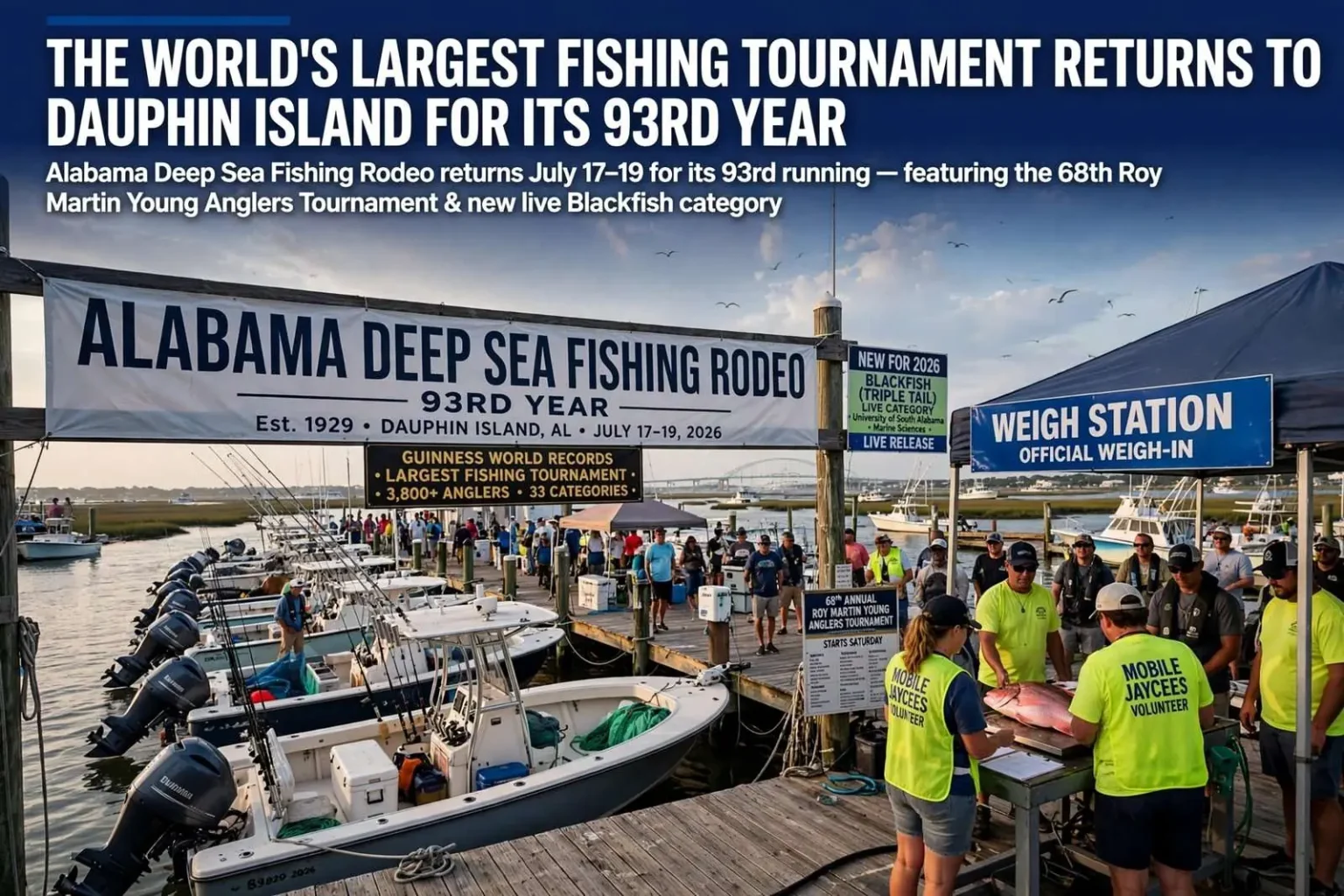
The Alabama Deep Sea Fishing Rodeo — recognized by Guinness World Records in 2011 as the largest fishing tournament on the planet — returns to Dauphin Island this week for its 93rd running.
The main event takes place Friday, July 17, through Sunday, July 19. But the action on the island actually begins earlier, with the 68th annual Roy Martin Young Anglers Tournament getting underway on Saturday.
By the Numbers
In a typical year the rodeo draws more than 3,800 anglers competing across 33 categories for over half a million dollars in cash and prizes. It is not a niche event with a grandiose title — it is genuinely the largest tournament of its kind anywhere, and it has been held nearly every year since 1929.
The event is a project of the Mobile Jaycees, and it runs on volunteer labor. There are currently 55 members donating their time to make it happen.
It Starts With a Lying Contest
Festivities kick off at the rodeo site on Thursday, July 16, at 6 p.m. with the Liars’ Contest presented by Columbia PFG. Rodeo ticket holders can step up and tell their best — or worst — fish tale, with a panel of invited judges determining the winners. It is difficult to think of a more fitting way to open a fishing tournament.
New This Year
Two additions join the lineup for 2026: the Mediterranean Sandwich Company’s Swordfish Jackpot, and a Blackfish (Triple Tail) Live category presented by the University of South Alabama’s Marine Sciences department.
That second one is quietly significant. A “live” category means fish are brought to the scales alive rather than iced, which allows university researchers to collect data on a species and, in many cases, release the animal afterward. It reflects a broader shift in tournament fishing toward pairing competition with marine science — the rodeo has long served as an enormous, unplanned data collection event for scientists studying Gulf fisheries.
Why the Rodeo Matters Here
William “Cody” Ward, in his 11th year working with the rodeo and currently vice president of publicity, has held nearly every post the organization has: VP of sales and marketing, VP of finance, VP of weights and measures, VP of ways and means and assistant VP of security. Asked why the rodeo means so much to the Jaycees, his answer had nothing to do with prize money.
“This project is special because it allows the local community to come together over something that most all of us here have grown up our entire lives doing — fishing,” Ward said. “Many families go out together every year just to fish the ADSFR. The memories the community makes while fishing and spending time together is what makes the ADSFR so special.”
Practical Notes for Attendees
Ward had one piece of advice about the weigh station, and it is the kind of advice earned over 11 years: be patient.
“Nothing much new this year for the weigh station,” he said. “Just remember, we get backed up on the busy days. So, be patient, and we will make sure your fish gets weighed in the correct order.”
Anglers should also stop by the site or check online for cash prize tickets. Sponsors this year include Buffalo Rock–Pepsi, with the Roy Martin Young Anglers Tournament presented by Piggly Wiggly.
Getting There
The rodeo site sits on Dauphin Island, reachable via the Dauphin Island Parkway and the bridge across the bay. Traffic onto the island builds substantially on rodeo weekend, and visitors planning to watch the weigh-ins — which are free to spectators and, for anyone who has never seen a 500-pound fish come off a boat, genuinely worth the trip — should build in extra time.