Alabama State Government Dauphin Island
Sunday Is Last Day to Keep Red Snapper as Alabama’s 2026 Private Angler Season Ends
Alabama's private angler red snapper season closes at 12:01 a.m. Monday, Nov. 16, to keep the harvest within the state's 664,552-pound federal allocation.
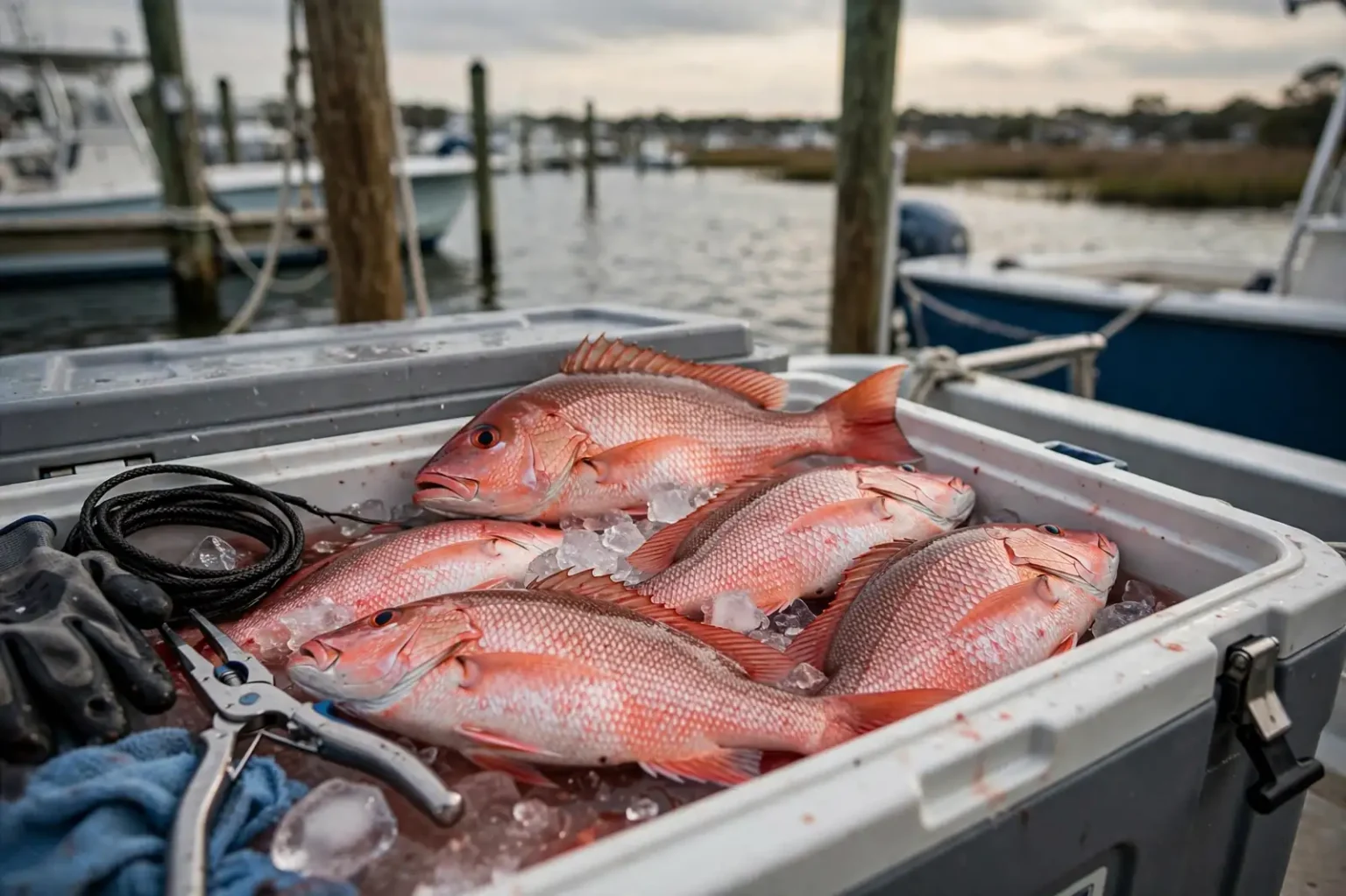
DAUPHIN ISLAND, Ala. — Private anglers hoping to put one more red snapper in the cooler this year are down to their final weekend. Alabama’s 2026 private angler red snapper season shuts down at 12:01 a.m. Monday, Nov. 16, which makes Sunday, Nov. 15, the last day to keep the popular reef fish.
The Alabama Department of Conservation and Natural Resources’ Marine Resources Division (MRD) set the closure so the private angler catch does not go over the 664,552 pounds the state was allotted under federal management for 2026.
Key dates and numbers
- Season closes: 12:01 a.m. Monday, Nov. 16
- Last day to harvest: Sunday, Nov. 15
- 2026 private angler allocation: 664,552 pounds
- Expected 2027 allocation: Unchanged at 664,552 pounds, provided the final 2026 estimate stays within the limit
- 2027 season dates: To be announced by MRD in the spring
- Federal for-hire charter season: Closed Oct. 26; no reopening date announced
Who the closure affects
The private angler season is broader than the name suggests. It applies to:
- Anglers fishing from private, non-chartered boats
- Anglers fishing from the shore
- Anglers fishing from piers
- State-licensed charter vessels that do not hold a federal reef fish permit
Charter boats that carry a federal reef fish permit fall under a separate federal for-hire season. That season ended Oct. 26, and NOAA Fisheries has not announced whether or when it will reopen.
Once the private season closes, any red snapper caught by anglers in these groups must be released.
A season shaped by a seven-day format
This was the second year Alabama ran the private season seven days a week instead of a schedule built mostly around weekends. MRD’s director said the extra access, combined with good weather through much of the season, led to more fishing trips than in 2025.
The fish themselves were also a bit heavier. Red snapper sampled from private boats this year averaged about three-quarters of a pound more than those measured in 2025, according to the division.
The director said that finding matched what many anglers reported: the snapper they kept were somewhat larger than last year, though generally still smaller than what they would like to take home. He said the division will keep working to make sure residents and visitors continue to have access to the red snapper fishery off the Alabama coast.
Why the season ends when it does
Red snapper in the Gulf are managed under a quota system. Each year, the federal government sets a recreational catch limit for the Gulf and divides the private angler share among the five Gulf states. In recent years, the states have been allowed to set their own private angler seasons, as long as each stays within its poundage allocation.
That arrangement makes accurate harvest tracking essential. Alabama monitors how many pounds of red snapper private anglers bring in over the course of the season, and when the estimated harvest approaches the allocation, the state closes the fishery. If a state exceeds its allocation, the overage can reduce what it receives the following year, which is why MRD noted that the 2027 allocation is expected to hold at 664,552 pounds only if the final 2026 estimate stays within this year’s limit.
Snapper Check reporting
Alabama requires anglers who land red snapper in the state to report their harvest through its Snapper Check program, which can be completed through the state’s Outdoor Alabama mobile app or online. Those reports, along with dockside sampling by MRD biologists, help the state estimate the total catch and the average size of the fish being kept.
Releasing snapper after the closure
Red snapper live around reefs, wrecks and other structure, often in deep water. When a fish is pulled up quickly from depth, the change in pressure can cause barotrauma, in which gases expand inside its body. Signs include a bulging stomach pushed out of the mouth, bulging eyes and a fish that floats on the surface and cannot swim down.
Anglers who keep fishing for other species after the closure are likely to hook red snapper they must release. A few practices can improve those fish’s chances of survival:
- Use a descending device. These tools carry a fish back down to depth, where the pressure helps it recover, and then release it.
- Know how to vent. A venting tool can release built-up gas, but it must be used correctly and only in the right spot on the fish.
- Work quickly. Keep the fish out of the water as briefly as possible.
- Handle with care. Use wet hands or gloves and avoid holding the fish by the eyes or gills.
- Consider circle hooks. They tend to hook fish in the mouth rather than deeper, making release easier.
Anglers should also check current state and federal rules for any other reef fish they plan to target, since seasons, size limits and gear requirements vary by species.
Looking ahead to 2027
MRD plans to announce the 2027 private angler season in the spring. Based on the current outlook, the state expects to receive the same 664,552-pound allocation next year, provided the final estimate for 2026 does not exceed this year’s limit.
Red snapper fishing is a major draw for the Alabama coast. Anglers from across the region run offshore from Orange Beach, Gulf Shores, Dauphin Island and other ports to fish the state’s extensive network of artificial reefs, and the season brings business to marinas, bait and tackle shops, fuel docks, restaurants and lodging along the coast.
For now, the message for private anglers is simple: Sunday is the last day to keep red snapper in 2026.