Alabama Red Snapper Season Opens May 26 for Private Anglers
Alabama's 2023 red snapper season opens Friday, May 26 for private and state-licensed charter anglers, running four-day weekends until the quota is met.
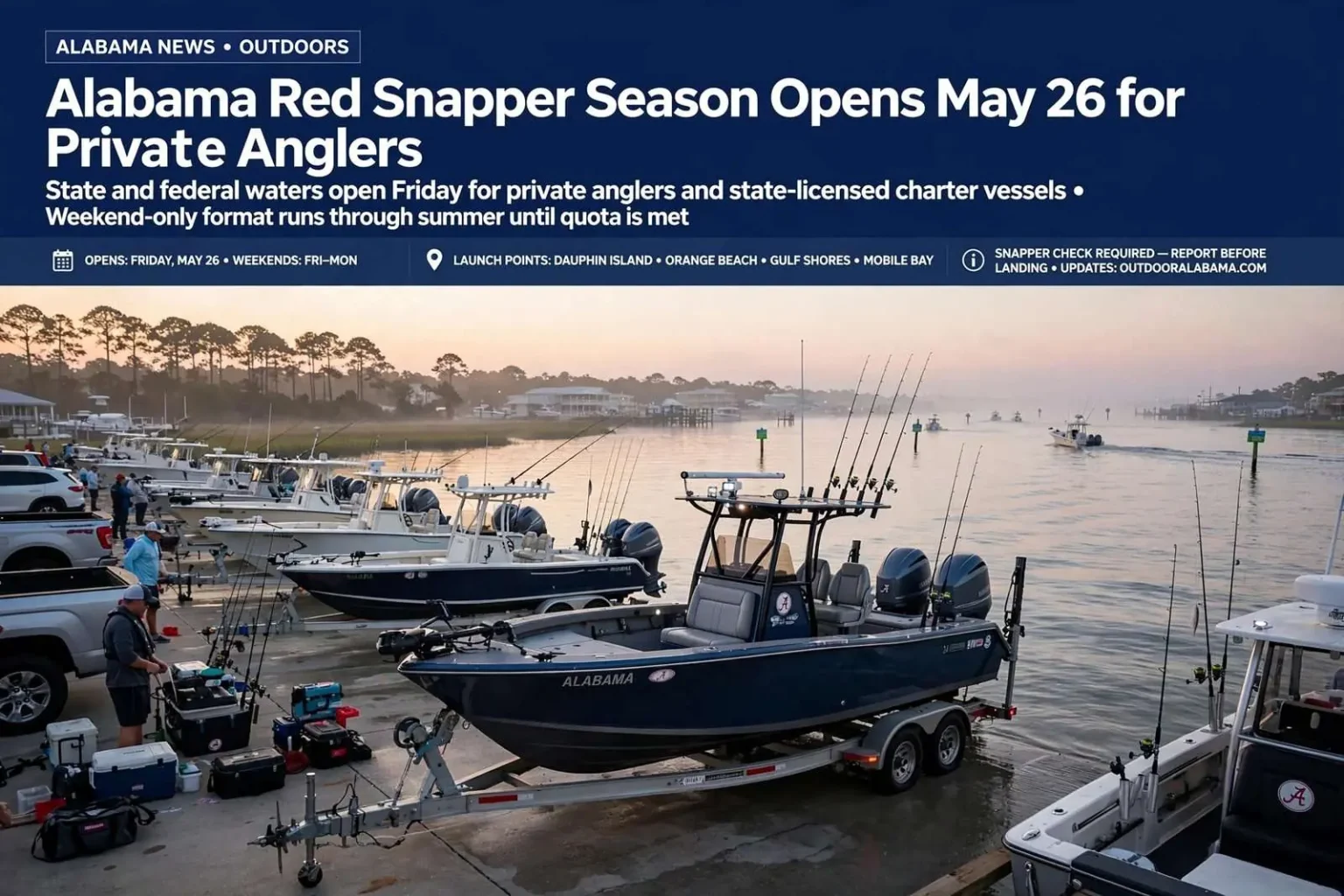
Alabama’s state and federal waters will open to red snapper harvest for private anglers and state-licensed charter vessels on Friday, May 26, the state’s Marine Resources Division has announced. The opening, which lands on the Friday of Memorial Day weekend, sets in motion the most closely watched recreational fishing season on the Alabama Gulf Coast, one that thousands of anglers plan their summers around.
The season follows a four-day weekend format, running Friday through Monday each week, and will continue until the private angler quota is projected to be met. That structure has become the standard arrangement for Alabama’s private angler red snapper season in recent years, allowing the state to stretch a limited harvest allocation across as much of the summer as possible rather than concentrating it into a single short window. Because the season closes based on projected quota landings rather than a fixed calendar date, the number of open weekends varies from year to year depending on how quickly anglers catch their share.
The schedule applies to shore-based anglers, private recreational vessels and state-licensed commercial party boats that do not hold federal for-hire permits. That covers the vast majority of fishing activity aimed at red snapper in Alabama, from families casting off public piers and beachfront to private boat owners running out of Orange Beach, Gulf Shores, Dauphin Island, and the bayous around Mobile Bay to the artificial reef systems the state has built offshore.
Charter Fleet Rules Differ
Anglers fishing aboard federally permitted for-hire vessels face a separate timeline, with season dates to be announced later by NOAA Fisheries. The federal for-hire fleet, the head boats and charter operations that hold federal permits and take paying customers offshore under federal authority, is managed under a different regulatory track than the state-licensed sector, and its seasons and quotas are set in federal rulemaking rather than by state announcement.
For customers, the practical difference matters at booking time. A family chartering a federally permitted head boat from Orange Beach may face different opening dates and different daily limits than a group fishing on a state-licensed operation, and reputable charter businesses make those distinctions clear when taking reservations. Anglers who are unsure which rules apply to their trip should ask the operator which permits the vessel holds before assuming either season applies to them.
State fisheries managers have for years argued that Alabama’s reef-building program justifies greater flexibility in the state’s red snapper allocation, pointing to the concentration of fish on the artificial reefs and the accessibility they provide to small-boat anglers. The debate over allocation between the recreational sector and the commercial sector, and between state and federal management authority, has been a running feature of Gulf fisheries politics for more than a decade, and seasons like the one now opening are the visible product of those negotiations.
Snapper Check Remains Required
Alabama will continue using its Snapper Check reporting system to track landings from shore, private vessels and state charters throughout the season. Snapper Check requires anglers to report their red snapper harvest before the fish are landed in Alabama, either through a mobile app, a website, or a phone reporting line, recording the number of fish, their approximate weights, and other trip details. The system gives managers near-real-time data on how fast the quota is being consumed, which is what allows the state to keep the season open weekend by weekend rather than closing it on a fixed, conservative date.
Reporting is not optional. Failure to file a required Snapper Check report can result in citations, and enforcement officers from the Marine Resources Division and the Alabama Department of Conservation and Natural Resources’ wildlife and freshwater police conduct dockside checks at launches and marinas throughout the season. Officers verify catch, check licenses, and confirm that reports have been filed, so anglers should complete their reporting before leaving the dock area.
The Marine Resources Division, part of the Alabama Department of Conservation and Natural Resources, will post weekly harvest updates at outdooralabama.com so anglers can follow how quickly the quota is being filled. Those updates have become essential reading for anyone planning a trip late in the season, because a projected quota closure can be announced with little advance warning once landings accelerate.
Why the Opening Draws Crowds
The Memorial Day weekend opening is one of the most anticipated dates on the Gulf Coast fishing calendar, drawing boaters to launches from Dauphin Island to Orange Beach as crews target one of the region’s most prized reef fish. Red snapper are considered among the best-eating fish in the Gulf, and a limit of snapper can anchor a family’s seafood for weeks, which explains the near-holiday atmosphere at coastal boat ramps on the first morning of the season.
The rush begins well before daylight on opening Friday. Boat ramps at Dauphin Island, the state launches along the Causeway, and the marinas of Orange Beach and Gulf Shores fill with trucks and trailers hours before sunrise, and the run offshore out of Perdido Pass and Mobile Pass becomes a procession of running lights heading toward the reef zones. Anglers who fish Alabama’s offshore waters target structure for a simple reason: red snapper hold tight to bottom features, and Alabama has more of those features within reach of small boats than anywhere else in the Gulf of Mexico.
The state’s artificial reef program, administered by the Marine Resources Division, has deployed thousands of structures across a dedicated reef zone off the Alabama coast over the past several decades, using materials ranging from purpose-built concrete and steel reef modules to decommissioned vessels and other approved materials. The program has made red snapper accessible to anglers in center-console boats that would need to run much farther offshore from other Gulf ports, and it is a large part of why Alabama markets itself as the red snapper capital of the Gulf.
Tips for a Smooth Opening Weekend
Experienced anglers planning a trip on the opening weekend tend to plan around a few practical realities. Ramps will be congested at first light and again in the afternoon as the fleet returns, so launching early or using less-frequented launches saves considerable time. Weather on Memorial Day weekend is generally favorable but can change quickly in late May, and captains should check marine forecasts before committing to a run beyond the islands. And because the first weekend of the season typically produces some of the heaviest landings of the year, having the Snapper Check report completed before returning to the dock avoids problems during dockside enforcement checks.
Anglers should also review the current bag and size limits before leaving the dock, as limits are set annually and can change from the previous season. The daily limit and minimum size for private anglers are published by the Marine Resources Division at the time the season is announced, and the rules for state-licensed charters can differ from those for federally permitted vessels. Keeping fish in identifiable whole condition until landed makes the enforcement officer’s dockside check straightforward.
For shore-based anglers, the opening matters as well. Public piers and beachfront access points along the Alabama coast, from the Fort Morgan peninsula to the Alabama Point area at Perdido Pass, give anglers without boats a legitimate shot at red snapper during the open weekends, particularly early and late in the day when fish move closer to accessible structure.
The Marine Resources Division will announce any closure of the private angler season once projections indicate the quota will be met, and anglers are urged to check outdooralabama.com before every trip for the latest status.
The economics of the season ripple well beyond the boat ramps. Marinas, bait shops, fuel docks, tackle dealers, and seafood restaurants across Baldwin County and Mobile County all see a surge when red snapper weekends roll around, and coastal tourism officials have long treated the season as a summer anchor on par with beach traffic. Charter captains who fish inshore for trout and redfish during closed periods often shift their bookings toward snapper trips when the season opens, and the four-day weekend format concentrates that activity into predictable windows that let businesses staff accordingly.
Local governments along the coast also feel the opening. The Dauphin Island bridge traffic, parking pressure at public launches, and demand for transient dockage all spike on opening weekends, and the town’s status as the closest launch point to much of the reef zone makes it a focal point for the fleet. Orange Beach and Gulf Shores see similar pressure out of their marinas and passes, with the Intracoastal Waterway’s canal connecting the two ends of the coast for anglers running from Mobile Bay.
The Science Behind the Quota
The quota system that governs the season rests on stock assessment work conducted by federal scientists and reviewed through the Gulf of Mexico Fishery Management Council process. Red snapper stocks in the Gulf have been the subject of intense scientific and political debate for years, with recreational anglers and state officials frequently disputing the population estimates that drive short seasons. Alabama’s ability to run its own longer state season for state-licensed vessels stems from legislative and administrative changes that gave states greater authority over the recreational harvest in state waters and state-permitted operations.
Snapper Check data feeds directly into that management picture. By requiring every landed snapper in Alabama to be reported, the state has built one of the most complete recreational harvest datasets in the Gulf, and state managers have used it to argue that anglers’ actual catch patterns are better documented than federal models had assumed. The weekly harvest updates posted during the season are the public face of that data pipeline, translating thousands of individual reports into a running tally that anglers can check before heading out.
Anglers with questions about the season, reporting requirements, or the reef zone can contact the Marine Resources Division through the Department of Conservation and Natural Resources, whose Gulf Shores and Dauphin Island offices serve as the front line for the season each year. The division’s staff also conduct much of the dockside sampling that supplements Snapper Check reports, measuring fish and collecting biological data that contribute to future assessments.