Probation Officer Whitney Maholovich Under Fire for Extreme Bias, Hostile Conduct During Presentence Interview
A court transcript shows Alabama Board of Pardons and Paroles officer Whitney Maholovich testified that a Mobile defendant made her “skin crawl” and that “nobody can convince me to feel any other way,” raising questions about impartiality in a 5-minute presentence interview.

MOBILE, Ala. — A routine presentence investigation in a high-profile criminal case devolved into a startling display of personal animus and professional misconduct, according to a recently obtained court transcript. The testimony of Alabama Board of Pardons and Paroles Officer Whitney McGill Maholovich, spanning pages 70 through 80 of the court record, reveals a probation officer who had not only formed a definitive opinion about a defendant before he was ever placed on her caseload but who openly admitted to a visceral, unshakeable bias that she declared no one could ever convince her to abandon.
The transcript paints a picture of an officer whose conduct stands in direct opposition to the fundamental principles of her profession—principles that require probation officers to serve as neutral information gatherers for the court, accountable to no one but the judge, and to act without prejudice or personal animosity. Instead, the record shows Whitney Maholovich operating as a de facto prosecutor, a hostile interrogator, and a self-appointed arbiter of the defendant’s character, all while collecting information that would directly influence the court’s sentencing decision.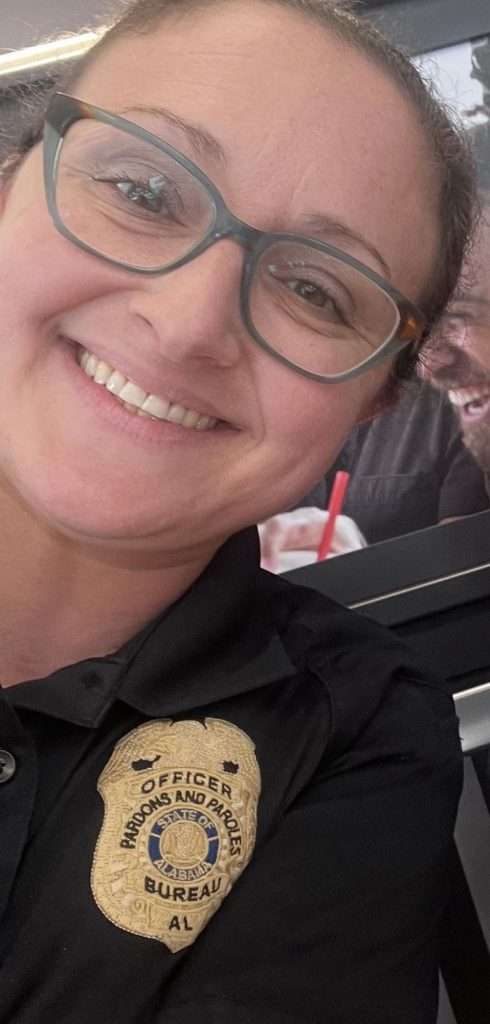
Notably, the entire presentence interview between Maholovich and the defendant lasted less than five minutes.
The Presentence Investigation: A Critical Role That Demands Objectivity
A presentence investigation is one of the most consequential stages in the criminal justice process. Conducted after a defendant has been convicted but before sentencing, the probation officer conducting the PSI is tasked with gathering comprehensive information about the defendant’s background, criminal history, personal circumstances, and any factors that might inform the judge’s sentencing decision. The resulting presentence report is often the single most influential document the court considers.
The legal standards governing this role are unambiguous. Courts have consistently held that probation officers serve as “the court’s ‘eyes and ears,’ a neutral information gatherer with loyalties to no one but the court.” The probation officer has “no fealty to either side, but remains accountable to the court for accurately reporting the facts.” The investigative and reporting processes must be “impartial, fair, factual, analytical, pertinent, and relevant,” and the investigating officer must “distinguish between fact and professional assessment, and between their own observations and those from other sources.”
The Michigan courts have gone further, explicitly stating in their Canons of Conduct for probation officers that “probation officers should strive for bias-free behavior” and should “understand and be mindful of both positive and negative bias.” The official actions of a probation officer “should not be affected or appear to be affected by kinship, rank, position, or influence of any party or person involved in the court system.”
What the transcript reveals is an officer whose conduct raises serious questions about compliance with these standards.
A Defendant Targeted Before the Interview Began
The transcript indicates that Whitney Maholovich’s hostility toward the defendant began before he even sat down for his interview. When the accused entered the probation office and passed through the metal detector, he was “being very careful with his cellphone,” moving in what she described as “almost like robot movements.” When the metal detector buzzed, the defendant was placed against the wall for a pat-down.
During this pat-down, Maholovich noticed that the defendant’s cellphone was recording—its red light was on, and the recording dial indicated he had been recording “for several minutes before I even brought him in.” She immediately confiscated the phone, citing office policy that forbids probationers from having active cellphones, particularly for recording. “Because there may be private things being discussed out in the open that [the defendant] was not privy to,” she explained.
But the tone of her testimony, read in its entirety, suggests something more personal than a simple policy enforcement. What followed was an extraordinary and sustained expression of personal disdain that permeated every subsequent interaction with the accused and raised questions about the impartiality of the presentence investigation process.
The Interview Room: “Very Disturbing”
Maholovich testified that the interview itself was “very disturbing.” Her stated reason was that the defendant—a person with no law enforcement experience—was “answering my questions as if they were being cross-examined by attorneys and by Your Honor.” She found it suspicious that a defendant would be thoughtful, measured, or legally aware during a formal legal proceeding. For a probation officer sworn to neutrality, this judgment raises a troubling question: whether a defendant who understands his rights is being unfairly viewed as deviating from acceptable behavior.
Those impressions were formed in an exchange that, from start to finish, lasted less than five minutes.
She then turned to the defendant’s personal history, specifically his reported diagnosis of post-traumatic stress disorder stemming from his arrest by the Mobile County Sheriff’s Office. When she questioned him about the PTSD diagnosis—standard procedure given her office’s policy to document mental health medications—the defendant denied having included it in his report. According to Maholovich, when she pressed him, “He told me to just put ADHD, which is something totally different than PTSD.”
This discrepancy, while notable, is precisely the kind of issue a neutral probation officer is supposed to investigate and document factually—not interpret as evidence of deception or grounds for personal animosity. Yet Maholovich’s testimony suggests that the discrepancy became another reason to distrust the accused, reinforcing a negative impression of his character.
“Nothing Makes My Skin Crawl More”
The most revealing portion of Maholovich’s testimony—and the clearest indication of potential bias—came when she was asked whether she had any concerns about the defendant being placed on probation. Her response was a sustained, unfiltered monologue of personal antipathy that raises serious questions about professional impartiality, particularly given a probation officer’s role in evaluating defendants and supporting the court’s sentencing process.
“In all of the years of supervision, murderers, rapists, you name it, nothing makes my skin crawl more than knowing what I’m hearing in the report what he did,” Maholovich testified.
Consider the gravity of that statement. A probation officer who has supervised murderers and rapists described the accused—who faced allegations of impersonating a constable and writing fake parking tickets—as the most viscerally disturbing individual she had encountered. “Nothing makes my skin crawl more.” This language expresses profound personal revulsion rather than a measured professional assessment of risk.
She then went on to describe her fears about supervising the defendant, engaging in a series of escalating hypotheticals. “If you’re recording me now, and I eventually get you on my caseload, and the thousands of home visits I’ve done over the last decade, what are you going to try to be recording when I call my buddies with the sheriff’s department or the police department to come assist me to just be standby? Are you going to be recording that too? That really bothered me.”
She continued: “Am I going to go to a home visit and he has some setup in there to where he’s watching every move that I make? Are we going to go out to his vehicle and he is going to try his best to catch me doing something wrong to try to, you know, sway people to believe I’m doing my job wrong? It just, as a law enforcement officer, it doesn’t sit well with me. And I probably can speak for the rest of them too, that—that he went to this extreme.”
These statements raise questions about whether Maholovich was conducting a neutral risk assessment or expressing personal grievances about a defendant who had recorded law enforcement officers. Her concerns centered substantially on the possibility that the accused might record her professional activities.
“I Don’t Feel Like He Can Just Put Aside… That He’s a Cop”
Maholovich then made a statement suggesting she had already reached a firm conclusion about the defendant’s character and prospects for rehabilitation—before he had ever been placed on probation, and based on her interaction with him during a presentence interview.
“I don’t feel like, with what he did—and over the course of time, who knows how long he was doing it—I don’t feel like he can just put aside the fact that he, in a way, is convinced that—that he’s a cop,” she testified. “And I’m not going to feel any other way, and nobody can convince me to feel any other way.”
This statement is striking for its candor and implications. A probation officer—whose core function includes evaluating a defendant’s capacity for rehabilitation and providing the court with a balanced assessment—declared under oath that she was unwilling to reconsider her position. “Nobody can convince me to feel any other way.” The statement raises a fundamental concern about whether personal judgment had overtaken the neutrality expected in a presentence investigation.
That conclusion was reached after a face-to-face interview that lasted less than five minutes in total—a brief encounter on which to base a judgment about a person’s character and capacity for rehabilitation.
She went on to express additional concerns about home visits: “Is he going to follow us around? Is he going to give us a hard time when we find a shell casing? Is he going to give us a hard time when we find his lair up in his attic? I don’t know too many people that are—this day and age, anyway—that are wanting to run radar on what certified law enforcement officers are doing. Who cares? That’s our job to know that. That shouldn’t be anybody else’s.”
Maholovich appeared to have investigated the defendant’s residence—or at least reviewed photographs of it—before the presentence interview, referring to his attic as a “lair.” During cross-examination, defense attorney Christine Hernandez challenged this characterization.
“You referenced his attic as a ‘lair.’ That’s just for dramatic effect, right?” Hernandez asked.
Maholovich responded: “Well, that’s what it looked like in the pictures.”
When Hernandez pointed out that Maholovich had never actually been in the attic, she doubled down: “It looks like a lair. Like a little secret lair.”
The Defense Exposes the Basis for the Concerns
Defense attorney Christine Hernandez’s cross-examination of Whitney Maholovich challenged the factual foundation for her concerns and the extent to which her opinions were based on personal perceptions rather than firsthand knowledge.
When asked whether she had ever seen video of the defendant pulling anyone over—a central allegation in the case—Maholovich admitted: “No, I didn’t.” She confirmed that her concerns were based solely on what had been said in court, not on any personal knowledge: “I don’t have personal knowledge of it.”
Hernandez also challenged Maholovich’s characterization of the defendant’s cooperation.
“He didn’t fight you when you patted him down, did he?” Hernandez asked.
“No. But he wouldn’t have had the chance,” Maholovich replied—a response that did not establish that the defendant had resisted.
When pressed on whether the defendant cursed at her, Maholovich admitted: “He didn’t say a word.” She confirmed he was “cooperative” and answered all questions, though she characterized his responses as “strictly yes, no, correct.”
Hernandez further probed Maholovich’s broader views regarding the recording of law enforcement officers.
“How many times have we had law enforcement on a bad shoot? How many times has it been in the media where law enforcement did something wrong?” Hernandez asked. “The average person is as leery of law enforcement as you are of [the defendant].”
Maholovich dismissed the comparison: “I don’t think it’s necessary to reference this because this is a different situation than that. He wasn’t shooting anybody.”
When Hernandez pointed out that public concern about law enforcement misconduct can be a legitimate reason to record interactions, Maholovich acknowledged having seen instances of misconduct: “I mean, I’ve been in law enforcement for a decade, yeah.”
A Pattern of Concern
This is not the first time Whitney Maholovich’s judgment has raised questions. Court records show that in 2015, while serving as a probation officer in a different case, she filed a letter with the circuit court regarding a defendant’s probation status. While that filing appears routine, it underscores the significant discretionary authority that probation officers exercise—a responsibility that makes impartiality especially important.
In the present case, Maholovich’s sworn statements raise questions about whether her assessment of the accused was grounded in objective professional judgment or influenced by personal feelings.
The Alabama Board of Pardons and Paroles, which employs Maholovich, has established policies governing professional conduct. The transcript raises questions about whether the conduct described warrants further review by the agency and whether appropriate safeguards exist to ensure impartiality in presentence investigations.
The Broader Implications
The case raises troubling questions about the culture within the Alabama Board of Pardons and Paroles and the supervision that probation officers receive. If a probation officer can declare under oath that “nobody can convince me to feel any other way” about a defendant, questions arise about how such statements are evaluated and whether they are consistent with the system’s commitment to fairness.
The accused faced 40 felony counts before ultimately pleading guilty to ten counts and receiving a sentence of ten years, split to serve two years, with six months in county jail and the remainder in a diversion program. The presentence report prepared by Whitney Maholovich would have been part of the sentencing process. If the report reflected the same concerns and opinions expressed in her testimony, questions may arise about whether personal animus influenced the information presented to the court.
The brevity of the underlying interview—less than five minutes in total—adds to those questions about how thoroughly the defendant’s background and circumstances were assessed before the report was prepared.
Determining whether the report affected the sentence would require examination of the report itself, the sentencing record, and the judge’s stated reasons for the sentence.
Conclusion
The transcript of Whitney McGill Maholovich’s testimony is not merely a record of one officer’s controversial comments. It raises broader questions about impartiality in a system that depends on probation officers to provide reliable information to judges making consequential sentencing decisions.
A probation officer’s role is to serve the court, not to advocate for punishment. It is to gather facts, not to allow personal opinions to displace objective assessment. It is to evaluate a defendant’s circumstances and prospects for rehabilitation while remaining open to relevant information.
Maholovich’s statement that “nobody can convince me to feel any other way” raises a serious question about whether those responsibilities were fulfilled in this case.
Whether her conduct violated applicable professional standards is a matter for appropriate review by the relevant authorities. A thorough examination of the transcript, presentence report, and applicable agency policies would help determine whether corrective action is warranted and whether additional safeguards are needed to protect the integrity of the presentence investigation process.
South AL News reached out to Whitney Maholovich for comment on her testimony and the concerns raised in this article but had not received a response at the time of publication. This article will be updated if she responds.