
Rocket Docket Sends Gethsemane Cemetery Murder Case to Grand Jury as Motive Remains Unknown
A judge sent the murder case against Deanta DuBose in the Gethsemane Cemetery shooting of Vanol Lucky to a grand jury and revoked his probation, the first high-profile test of Mobile County’s Rocket Docket.
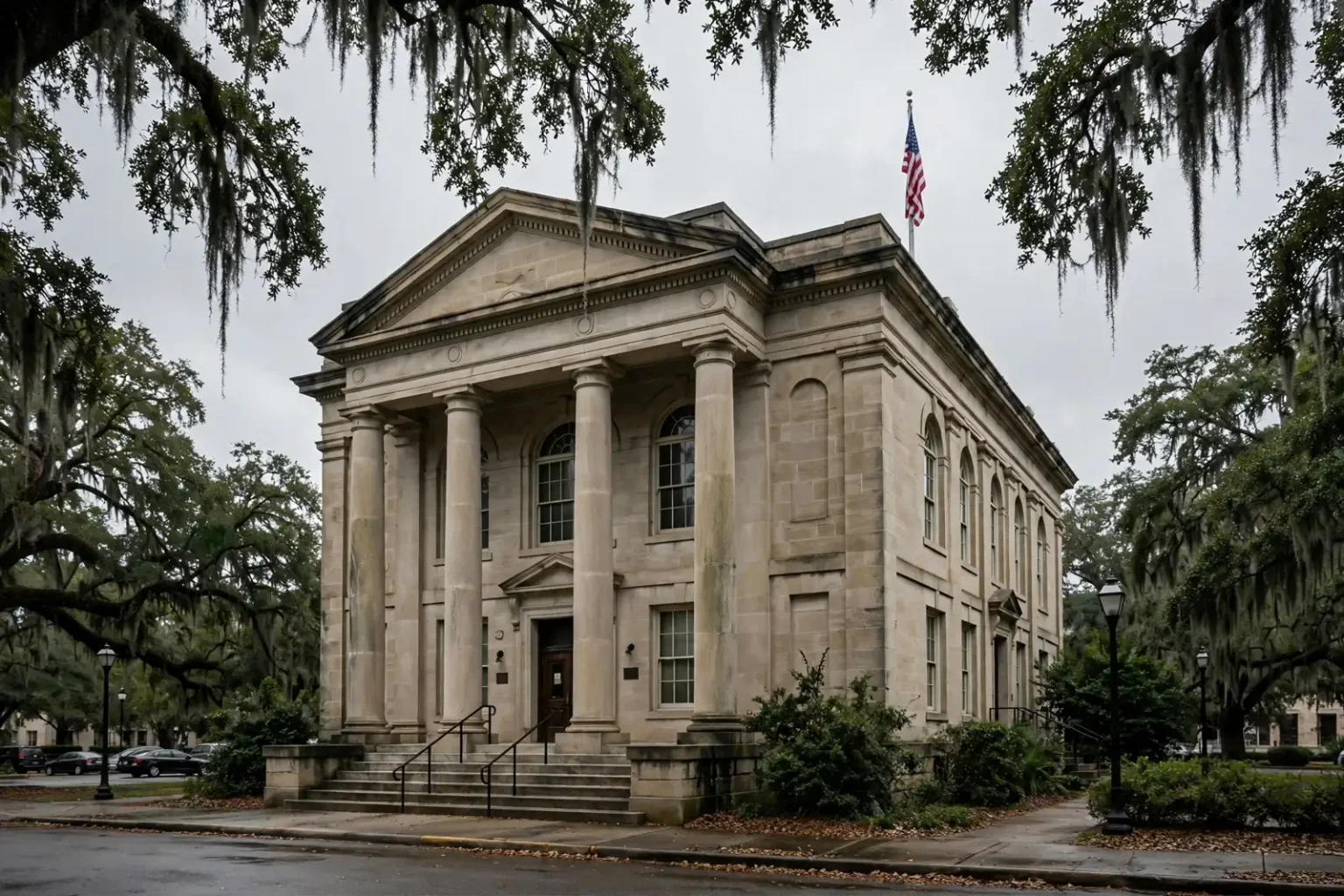
MOBILE, Ala. — The first high-profile murder case on Mobile County’s new “Rocket Docket” cleared its first courtroom hurdle Tuesday, as an eyewitness described the moments around the Sept. 3 shooting death of Vanol Lucky at Gethsemane Cemetery — but no one in the courtroom could say why it happened.
Mobile County Circuit Judge Vicki Davis ruled after a preliminary hearing on Oct. 13 that prosecutors had presented enough evidence to send the murder case against 22-year-old Deanta DuBose to a Mobile County grand jury. In the same proceeding, Davis fully revoked DuBose’s probation on an earlier attempted murder conviction and ordered him to serve the remaining 17 years of that sentence.
DuBose is charged with killing Lucky, 22, whose body was found by a groundskeeper at the cemetery on South Shelton Beach Road in the Prichard area. He has not been indicted or convicted in Lucky’s death and is presumed innocent unless and until the state proves its case.
Outside the courtroom, Lucky’s mother, Eva Kemp, said she intends to see the case through.
“No mother should have to grieve the pain. No mother,” Kemp said. “I need justice for my son. I will not stop until I get justice for my son.”
What the Eyewitness Told the Court
The state’s central witness was a young man who said he was with DuBose and Lucky on the night of the shooting. Speaking so quietly he was at times difficult to hear, he testified that he, DuBose, Lucky and a fourth man had been smoking together that evening.
According to his testimony, DuBose said at some point that he wanted to kill someone, but did not say who or why. The witness said the four men then got into his car and drove to the cemetery.
The witness testified that he was walking back toward his car when he heard a gunshot. He said he turned around and saw DuBose holding a gun. As they left, he said, DuBose told him to stay away from cameras. He also testified that DuBose later changed clothes and burned the ones he had been wearing.
Asked about the mood among the group before the shooting, the witness said there had been no arguments and that DuBose did not seem agitated. Prosecutors have described the killing as execution-style.
Investigator: Motive Is ‘Just Speculation’
Mobile County Sheriff’s Office investigator Vincent Gazzier also testified. He told the court that deputies recovered two shell casings at the cemetery after the groundskeeper reported finding Lucky’s body, and that investigators went back after interviewing the witness and found two more. No gun has been recovered, he said.
When it came to why Lucky — someone DuBose had been spending time with that night — was killed, Gazzier said any motive was “just speculation.”
That marks a contrast with how the case was first described publicly. In mid-September, Mobile County Sheriff Paul Burch characterized the killing as “basically a murder-for-hire type case.” No evidence of a payment or of anyone else arranging the shooting was presented at Tuesday’s hearing, and no one other than DuBose has been charged.
Mobile County District Attorney Keith Blackwood said after the hearing that the investigation is continuing and that prosecutors do not need to prove a motive to win a murder conviction.
“For us to have perfect evidence of motive, we would have to read somebody’s mind, and we can’t do that,” Blackwood said. “So we look at all of the attendant circumstances. That’s what we’re doing in this case, and we will go where the evidence leads. Whatever admissible evidence we uncover is what will be shown to a jury.”
Under Alabama law, motive is not an element of murder. Prosecutors must prove that a defendant intentionally caused another person’s death, among other possible theories, but jurors are not required to know why. Motive evidence is often powerful in front of a jury, however, and its absence is something defense attorneys typically emphasize.
Defense Questions the Witness’s Account
DuBose’s attorney, Jason Darley, called the circumstances strange and questioned why no one else who was in the car that night has been charged.
“No one was agitated,” Darley said, recalling the testimony. “It just really happened kind of out of the blue. … That’s what’s kind of baffling about this – you know, that they’re friends and they’re seemingly friends to the very end, and this just happens in a cemetery of all places.”
On cross-examination, Darley pressed the witness on why he let DuBose get back into his car after the shooting and why he waited until the following day to reach out to a neighbor who works as a Mobile police officer.
Darley also noted that the cemetery was very dark that night. He said his own investigator plans to visit the site to see whether the witness’s version of events can be corroborated.
The Earlier Case and the Probation Revocation
The probation portion of Tuesday’s hearing turned on DuBose’s record. He pleaded guilty in 2024 to attempted murder in connection with a March 2023 robbery at a Quick Stop store in Mobile. Court records also show a first-degree robbery conviction. He received a 20-year sentence, structured so that he would serve a portion behind bars with the rest suspended in favor of probation.
Court records show he was released from prison on May 30 — roughly three months before Lucky was killed.
DuBose’s probation officer testified that, apart from the new murder charge, DuBose missed required drug tests in July and August and had not completed court-ordered community service. Davis revoked his probation in full, which means DuBose now faces the balance of the original sentence — 17 years — regardless of how the murder case is resolved.
DuBose surrendered to authorities on Sept. 15 after the sheriff’s office publicly sought him. At the time, the sheriff’s office said he was charged with murder, first-degree theft of property and probation violations.
How the ‘Rocket Docket’ Is Supposed to Work
The case is the first high-profile test of the repeat violent offender docket, nicknamed the “Rocket Docket,” that Mobile County’s court system created in July. Presiding Circuit Judge Wesley Pipes signed the order establishing it and assigned Davis to preside.
The docket is aimed at defendants who already have a violent conviction and are charged with a new qualifying violent offense — such as murder, manslaughter, assault, kidnapping, burglary or rape — within five years of release from a sentence or while on probation or other supervised release. Instead of moving through the general criminal rotation, those cases go to one judge who handles them from the preliminary stage forward, including probation revocations. In most Alabama felony cases, preliminary hearings are handled in district court.
The stated goal is to bring each case to trial within one year of arrest. Blackwood said that process can otherwise take two to three years in Mobile County, and he believes the faster timeline is realistic.
“It’s important to get these types of offenders off the street and in prison if found guilty as soon as possible,” Blackwood said. “So, with the resources we’ve devoted to this as well as the relationships we have with the department of forensic sciences, our law enforcement partners, we feel confident this is something we can do.”
Blackwood said his office has assigned two additional prosecutors to Davis’ courtroom, and the Mobile County Sheriff’s Office is providing an investigator to help. He said the docket is modeled on an approach used in Miami, Florida.
One practical advantage, Blackwood said, is that having a firm trial date allows prosecutors to ask the Alabama Department of Forensic Sciences for expedited testing. He said cases on the docket will get priority at the state crime lab, which handles evidence analysis for law enforcement agencies across Alabama.
Forensics May Decide the Pace
Darley called the one-year goal ambitious and said the timeline will hinge on how quickly the scientific evidence comes back.
“It is going to depend on forensics,” he said. “You know, you’re talking about multiple cell phones here. You’re talking about DNA. You’re talking about, you know, what was found or clothes that were supposedly burned. You know, there’s a lot of work to assemble all of that.”
Crime lab backlogs have been a recurring concern since the docket was announced. When the first case reached Davis’ courtroom in September, a defense attorney in that matter argued that waits for forensic results, rather than courtroom scheduling, are the main reason criminal cases move slowly in Mobile County.
What a Preliminary Hearing Does — and Doesn’t — Decide
A preliminary hearing is not a trial. Under the Alabama Rules of Criminal Procedure, a defendant charged with a felony but not yet indicted can request one, and the only question before the judge is whether there is probable cause to believe a crime was committed and that the defendant committed it. That standard is far lower than the proof beyond a reasonable doubt required for a conviction, and the rules of evidence are looser.
Davis’ ruling binds the case over to a grand jury, which will decide independently whether to return an indictment. If DuBose is indicted, the case would proceed to arraignment, discovery and, eventually, trial — all on the docket’s accelerated schedule.
Probation revocation operates on a different track. A judge need only be “reasonably satisfied” that a violation occurred, there is no jury, and the hearing can be resolved well before any new charge goes to trial. That sequencing — resolving the revocation and the new case side by side — is one of the central features Blackwood has promoted since the docket was announced.
What Comes Next
The case now goes to a Mobile County grand jury. Prosecutors say they are working to keep it from spending years waiting for trial. Measured from DuBose’s Sept. 15 surrender, the docket’s one-year goal would put a trial by about mid-September 2027.
For Lucky’s family, the hearing filled in some details of the night he died while leaving the biggest question unanswered. Kemp has said since September that her son was not perfect, but that he did not deserve what happened to him.
Anyone with information about the case is asked to contact the Mobile County Sheriff’s Office at 251-574-8633.

