Seven in 10 Alabama Ballots Were Straight-Party in the Nov. 3 Election, With Escambia County Leading the Region
Unofficial numbers from the Secretary of State show more than 1.19 million Alabamians voted a straight ticket, including about 73.7% of ballots across seven Mobile-area counties.
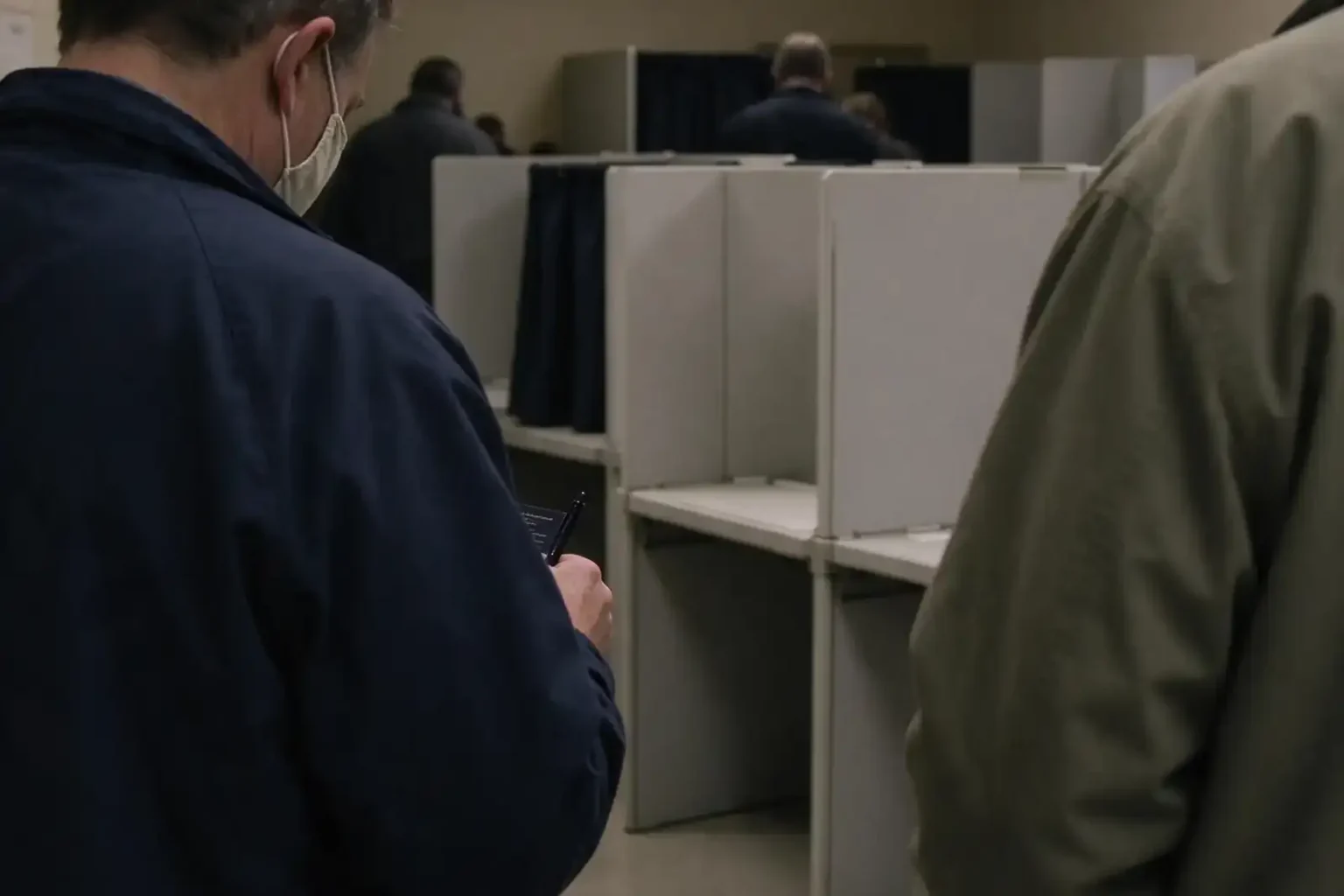
MOBILE, Ala. — Roughly seven of every 10 Alabama voters in the Nov. 3 general election marked a single party rather than choosing race by race, according to unofficial numbers released by Secretary of State Wes Allen’s office.
Statewide, 549,433 voters cast straight-party Democratic ballots and 645,002 cast straight-party Republican ballots. That is more than 1.19 million straight-ticket votes, about 70.5% of the 1,693,621 ballots cast.
The Mobile-area picture
Straight-ticket voting ran even higher in the seven-county Mobile-area region of Mobile, Baldwin, Escambia, Washington, Clarke, Conecuh and Monroe counties. There, 185,682 voters chose a straight-party ballot, 107,931 Republican and 77,751 Democratic. That is about 73.7% of the 252,001 ballots cast in those counties.
Mobile County recorded the most straight-party ballots in the region, and Democrats led there, 49,236 to 45,948. As previously reported, that marked a reversal from recent cycles in which Republicans held a clear straight-ticket advantage in the county.
Baldwin County produced the largest Republican margin in the region, with 47,419 Republican straight-party votes to 15,339 Democratic votes.
County by county
Republican straight-party votes also outnumbered Democratic votes in Escambia and Washington counties. Democratic straight-party votes led in Clarke, Conecuh and Monroe counties.
Escambia County had the highest share of straight-party voting in the region, at about 80.4% of ballots cast. Washington County had the lowest, at about 56.7%.
Turnout
The county results also show how many registered voters took part. Turnout in the region ranged from 34.47% in Escambia County to 51.54% in Clarke County. Statewide turnout was 43.96%.
Alabama is among a small number of states that still allow voters to fill in a single bubble to support all of one party’s candidates on the ballot. A voter who uses that option can still cross over in an individual race. Ballot questions, such as constitutional amendments, are not included in a straight-party vote and must be marked separately.
All of the figures are unofficial until results are certified.