Dry Flyways Could Steer More Ducks to the Mobile-Tensaw Delta as Alabama’s Split Waterfowl Season Opens Nov. 27
Drought across the lower Mississippi and Central flyways may push migrating ducks farther east toward the Mobile-Tensaw Delta and Alabama's river lakes. Here are the 2026-27 season dates, the daily bag limits and what the latest continental survey shows.
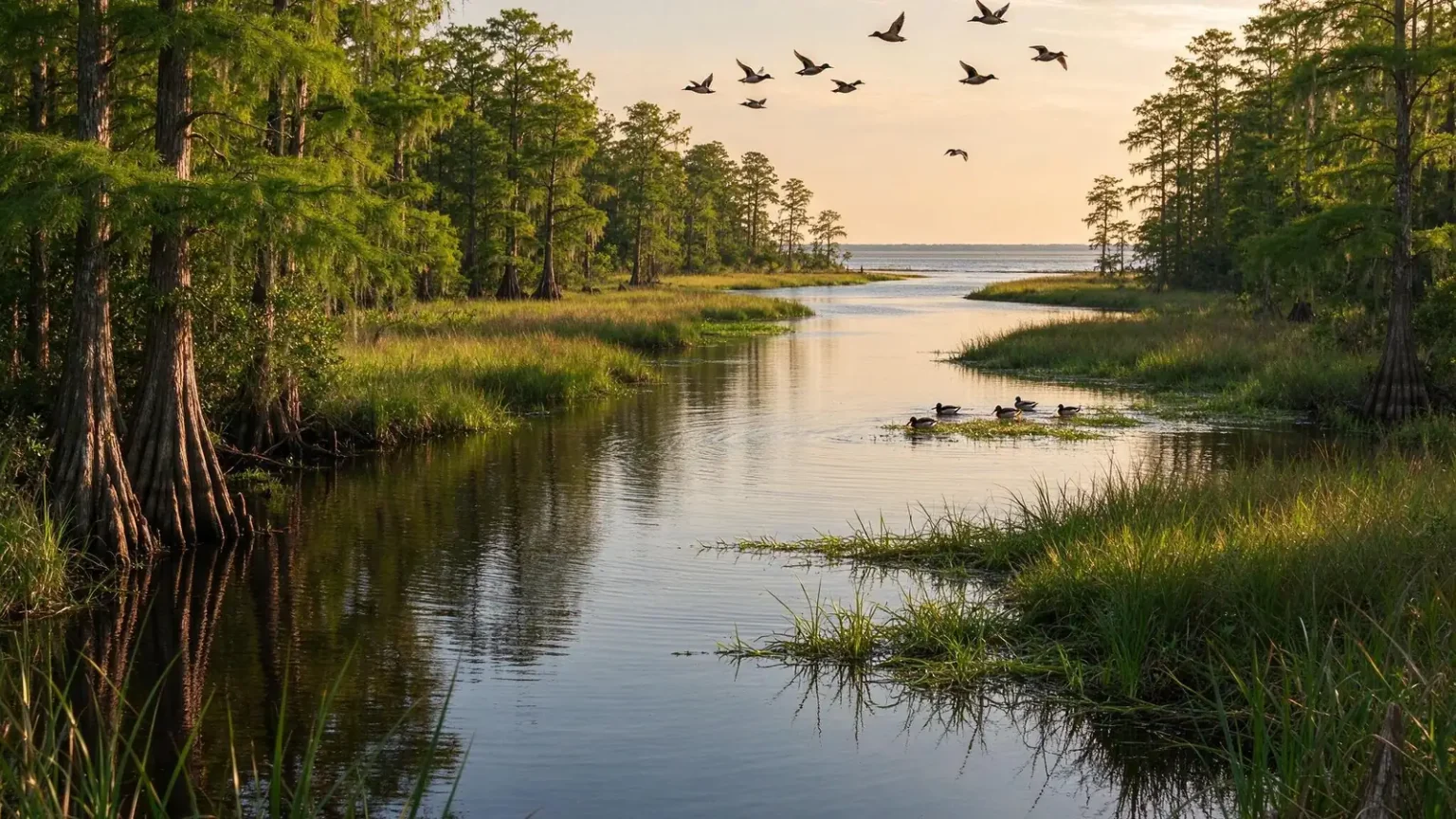
MOBILE, Ala. — Hunters who work the marshes and backwaters of the Mobile-Tensaw Delta may have an unexpected ally this winter: a stubborn drought hundreds of miles to the west. With the flooded fields and timber of the lower Mississippi and Central flyways running unusually dry, Alabama wildlife officials say migrating ducks that cannot find water in places like Arkansas are likely to keep moving until they do, and coastal Alabama sits squarely in their path.
The first segment of Alabama’s 2026-27 duck season opens Friday, Nov. 27, the day after Thanksgiving. Here is what hunters need to know about the dates, the limits and the conditions shaping the year.
Season dates and bag limits at a glance
- Ducks, coots and mergansers, first segment: Nov. 27-28, 2026
- Ducks, coots and mergansers, second segment: Dec. 5, 2026, through Jan. 31, 2027
- Geese: Same split dates as ducks
- Daily duck limit: 6 birds in total
- Species limits within the six: no more than 4 mallards (no more than 2 of them hens), 3 wood ducks, 3 pintails, 2 black ducks, 2 redheads, 2 canvasbacks, 1 mottled duck and 1 scaup
- Daily goose limit: 5 in the aggregate for dark geese (Canada, white-fronted and brant) and light geese (snow, blue and Ross’s)
The federal framework behind these limits is set for both this season and next, so hunters can expect the same daily structure in 2027-28.
Why a western drought matters on the Gulf Coast
Waterfowl migration is driven by two things above all else: cold weather that freezes birds out of northern feeding grounds, and open water where they can rest and feed on the way south. In a normal year, enormous numbers of ducks stop and stay in the rice fields, reservoirs and green-tree impoundments of eastern Arkansas, the Missouri bootheel and the Mississippi Delta. When those places are dry and landowners cannot pump water onto their fields, the birds have little reason to linger.
That shift can work in favor of areas that have seen thin duck numbers in recent seasons. State officials pointed to three Alabama destinations that could benefit:
- The Mobile-Tensaw Delta, the sprawling network of rivers, bayous and swamps that drains into the head of Mobile Bay
- The Tennessee River lakes across north Alabama, including Guntersville, Wheeler and Wilson
- The Tennessee-Tombigbee Waterway in west Alabama
Officials also noted that the birds are remarkably good at reading the landscape. Ducks migrate across the entire continent and react quickly to changing conditions, and when new water appears they find it. Weather patterns tied to El Niño are being watched closely this year for how they may influence where and when the birds move.
The dry spell has a local downside
Drought is not only a western problem. Forecast maps show western Alabama is markedly drier this year, and state biologists said that could create localized trouble for wood ducks in spots that normally hold water but do not this fall. Because many of Alabama’s wood ducks hatch and grow up here, dry swamps and beaver ponds during the summer can affect how many young birds are produced in a given area.
Even so, the overall picture for the state’s most important species is positive.
Wood ducks: Alabama’s bread-and-butter bird
No species matters more to Alabama duck hunters than the wood duck. It is by a wide margin the most harvested duck in the state, and harvest data show Alabama is not taking more of them than the population can sustain. The state supports a large resident breeding population, and its numbers are boosted each winter by migrant wood ducks that nest in northern states and travel south for the cold months.
Banding results this year offered more good news. State crews placed leg bands on 1,038 wood ducks during the 2026 banding season. Officials said that any year in which the count tops 1,000 is a sign the population is in strong shape. Banding allows biologists to track survival, movement and harvest rates when hunters report the bands they recover, and it remains one of the most valuable tools in waterfowl management.
What the continental survey shows
Each year the U.S. Fish and Wildlife Service, working with Canadian partners, flies the breeding grounds of the northern United States and Canada to estimate duck populations. This year’s results were once again mixed.
Mallards keep sliding
The mallard, which wildlife managers treat as a barometer for overall duck health, continued its decline. The survey placed mallards 11% below the previous count and 26% below the long-term average. State officials acknowledged that the mallard figures were not encouraging, but they cautioned that the survey carries a lot of year-to-year variation and that long-term trends tell a more reliable story. Those trends show duck numbers generally drifting downward over roughly the last decade, a pattern that also reflects the natural boom-and-bust cycles of the prairie breeding grounds.
Officials said there is no single cause for the mallard’s decline. They listed a combination of factors, including urban growth, changing agricultural practices on the breeding grounds and an extended dry period across the prairies. The more important question, they said, is how wildlife agencies and conservation groups respond, whether by improving how land is managed, directing conservation money toward the breeding grounds or taking a broader view of the habitat ducks need through their entire life cycle.
Why dry years are not all bad
The northern prairies are dotted with millions of shallow wetlands known as prairie potholes, which serve as the continent’s most productive duck nursery. Biologists explained that these basins actually need to dry out periodically. The drying and refilling cycle keeps the right plant communities in place and recycles nutrients, which helps the wetlands produce more food for ducks when water returns. A dry year can hurt production in the short term while still serving the long-term health of the habitat.
There was also a hopeful note: some prairie regions received decent rainfall after the survey flights were completed, which could mean this fall’s flight is somewhat better than the survey numbers alone would suggest.
Species on the rise
Several ducks are holding above their long-term averages, including:
- Gadwall
- Northern shoveler
- Green-winged teal
- Canvasback
- American wigeon
- Redhead
Officials said it is hard to pin down why some closely related dabbling ducks are faring better than others, since they rely on many of the same resources. Much of the difference likely comes down to conditions on each species’ preferred breeding habitat.
Gadwall find a winter home in Mobile Bay
The gadwall, which many Southern hunters call the gray duck, is one of the brighter stories for Alabama. More of these birds are spending the winter in the state, especially on the Tennessee River and Mobile Bay. Gadwall feed heavily on submerged aquatic vegetation, the underwater grasses that grow in shallow, clear water. Lake Guntersville has long been known for its abundant aquatic plants and has a reputation as a wintering hotspot for gadwall and other dabblers. The grass beds of Mobile Bay serve the same role on the coast, which officials described as a positive sign.
For coastal residents, the link between healthy grass beds and wintering ducks is a reminder that water quality in the bay and delta matters for more than fishing. The same underwater meadows that shelter speckled trout and shrimp also feed the ducks that arrive each winter.
A hopeful sign for pintails
The northern pintail remains well below its long-term average, but state staff came home from the summer with some optimism. Alabama wildlife workers traveled to the Dakotas to help with a cooperative banding operation and captured a large number of pintails, which officials called an encouraging sight for a species that has struggled for years.
The outlook
As always, the weather will write much of the story of Alabama’s season. The state sits near the southern end of the Mississippi Flyway, and big pushes of birds typically arrive only after cold fronts and snow to the north force ducks out of the Midwest. A mild winter up north can mean a slow season in Alabama, while a sharp freeze can fill local marshes almost overnight.
Taken together, state officials said they still expect a fairly good year. Strong wood duck numbers, a growing gadwall presence and the possibility that drought elsewhere will funnel more birds toward the delta give hunters reasons for optimism heading into the late-November opener.
Before you go
- Waterfowl hunters 16 and older need a federal duck stamp in addition to the required Alabama hunting license and state waterfowl stamp, and all migratory bird hunters must carry a Harvest Information Program (HIP) registration.
- Nontoxic shot is required for waterfowl hunting nationwide.
- Hunters should review the current regulations from the Alabama Department of Conservation and Natural Resources, including rules for wildlife management areas and shooting hours, before heading out.
- Anyone who recovers a leg band should report it, since those reports feed directly into the research that sets future seasons.