Alabama Woman Escapes Alleged Kidnapper at Mississippi Gas Station, Ex-Boyfriend Charged
An Alabama woman escaped an alleged kidnapping and sexual assault by her ex-boyfriend when she broke free at a Mississippi convenience store, deputies say.
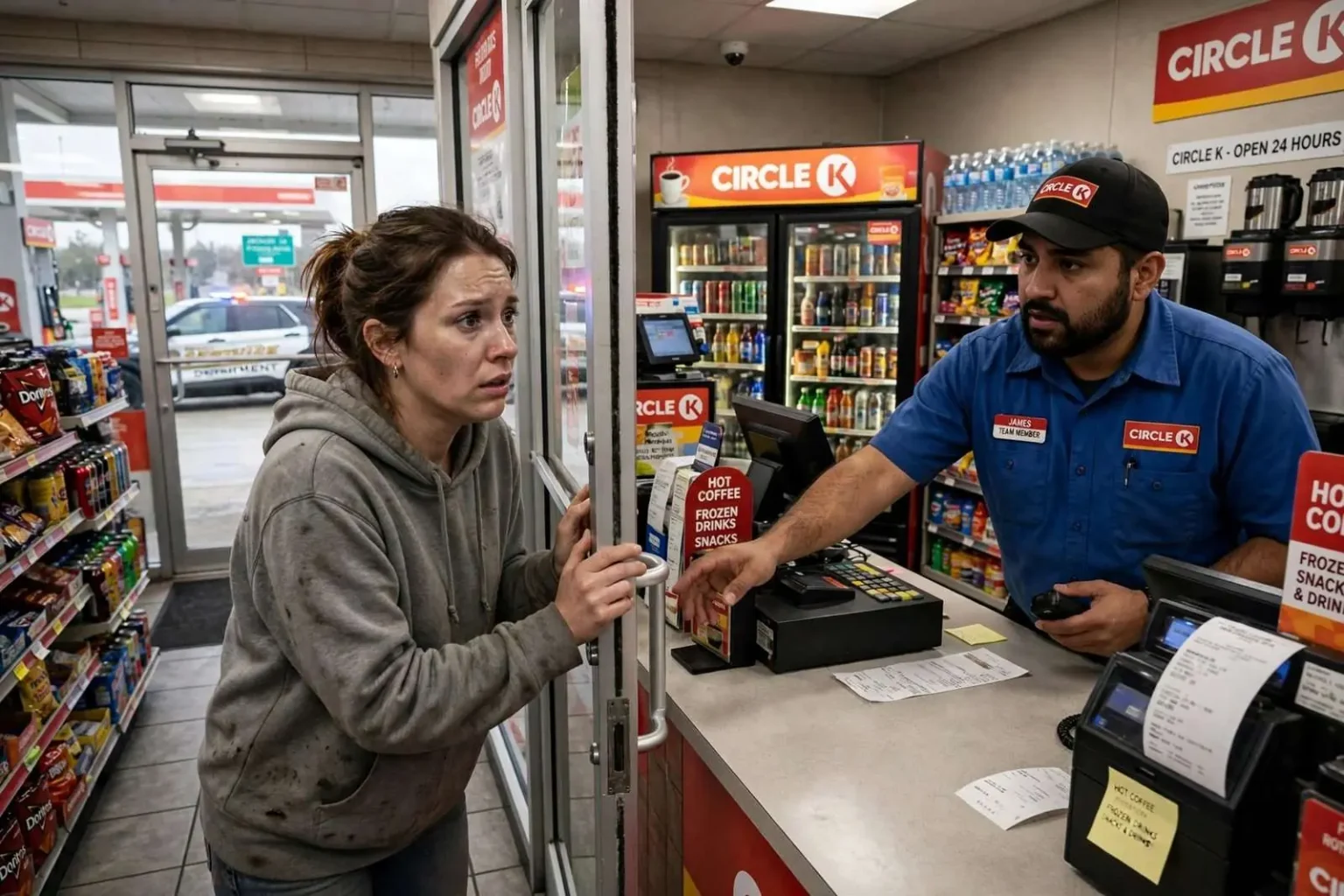
An Alabama woman broke free from a man authorities say kidnapped and sexually assaulted her by fleeing into a Mississippi convenience store, prompting his arrest and a growing list of felony charges, according to the Jackson County Sheriff’s Department. Deputies were called to a Circle K gas station in St. Martin, Mississippi, around 9 a.m. on a Thursday after employees reported a woman had run inside seeking help.
Investigators say the victim told them she had been abducted from her home in Alabama by her ex-boyfriend, identified as Melvin Hill, and sexually assaulted in more than one jurisdiction as he transported her across state lines. The woman was able to break away from Hill once they stopped at the store, running inside and alerting workers to what was happening, according to the sheriff’s department. Store employees then contacted law enforcement.
Deputies located Hill nearby as he was allegedly attempting to make his way back toward Alabama. He was taken into custody without incident, authorities said. Hill was booked into the Jackson County Sheriff’s Department’s Adult Detention Center, where he faces charges of kidnapping, motor vehicle theft and sexual battery.
A Case That Spans Two States
The sheriff’s department said additional charges are expected to be filed in neighboring jurisdictions as the investigation continues, meaning Hill could ultimately face prosecution in more than one state given the cross-border nature of the alleged crimes. Cases like this one sit at the intersection of two state court systems, and coordination between agencies becomes a central part of the process long before a trial begins.
When an alleged crime crosses a state line, prosecutors generally pursue charges in the jurisdiction where each offense occurred, and investigators must preserve evidence — witness statements, surveillance footage, forensic results — in a form that will hold up in each forum. The Interstate 10 corridor that links Mobile and Baldwin counties to the Mississippi Gulf Coast sees heavy daily traffic in both directions, and law enforcement agencies along it have long-standing channels for exactly this kind of multi-agency work, including communication between sheriffs’ offices and the district attorneys on both sides of the line.
Motor vehicle theft charges frequently accompany abduction cases in which the accused allegedly takes a car belonging to the victim or a family member, and each separate act can generate its own count. Sexual battery under Mississippi law, like its counterparts in Alabama, covers non-consensual sexual contact accomplished by force or coercion, and convictions can carry decades in prison — penalties that stack further when prosecutors in multiple states each bring their own cases.
Why Reaching a Public Place Matters
Advocates for survivors of domestic violence note that abductions by current or former intimate partners are among the most dangerous situations victims can face, and that reaching a public place — as the victim in this case did — can be a critical, lifesaving step. A busy convenience store puts staff, cameras and potential witnesses between a victim and an attacker, and in this case it appears to have done exactly that.
Safety planners who work with survivors drill a simple principle: get to people. Fire stations, hospital lobbies, retail counters and gas stations all serve as refuges because employees there are accustomed to calling 911 and because the presence of other customers raises the risk to an abuser of continuing an assault. Staff training at convenience store chains generally covers precisely this scenario, and the quick report from Circle K employees to the sheriff’s department illustrates how the system is supposed to work.
The danger in cases involving a former partner is well documented in the research on intimate partner violence. Separation is statistically one of the most volatile periods in an abusive relationship, and abductions of this kind frequently follow a breakup or an attempt to end contact. That is why advocates emphasize safety planning — varying routines, screening calls, identifying escape destinations in advance — for anyone leaving a controlling or violent partner, and why courts on both sides of the Alabama-Mississippi line treat violations of protective orders as serious offenses rather than paperwork problems.
How the Legal Process Will Unfold
The charges filed this week represent only the first step. In Mississippi, felony defendants appear before a justice court judge for an initial appearance, where bond is considered, and the district attorney later presents evidence to a grand jury to seek an indictment. Given that authorities allege the victim was also assaulted in Alabama, prosecutors there could bring parallel charges once investigators complete their work, and any disposition would have to account for cases pending in both states.
Multi-jurisdiction prosecutions also involve practical questions: where the defendant is held, how witnesses travel, and which case moves to trial first. Extradition between Alabama and Mississippi is generally routine for defendants already in custody, and mutual aid agreements allow investigators to interview witnesses across the line without duplication. For the victim, the process can be long, and victim-witness coordinators in both court systems exist to guide survivors through interviews, hearings and trial testimony.
The Jackson County Sheriff’s Department said the investigation remains active, and detectives are expected to continue collecting statements from the store’s employees, customers and others who may have seen the vehicle along the route. Anyone with additional information related to the case is encouraged to contact investigators. For residents of the Gulf Coast on both sides of the state line, the case is a stark reminder that domestic violence does not respect county borders — and that a public place, and the people inside it, can make the difference.
St. Martin sits along the Back Bay of Biloxi in Jackson County, a suburban community between Ocean Springs and Biloxi on the Mississippi Gulf Coast, and its location just off the main east-west arteries makes it a natural waypoint for traffic moving between the two states. Convenience stores along that corridor see a constant stream of travelers, which cuts both ways: it puts help close at hand for someone in danger, but it also gives an abuser the mobility to move a victim far from home in a short time.
The alleged abduction from a home in Alabama also illustrates a pattern that domestic violence response teams in Baldwin and Mobile counties work to interrupt. When a relationship ends, a victim’s home is the place where an abuser knows exactly when she will be alone. Advocates recommend, among other steps, changing locks, alerting neighbors and workplaces, and notifying the local sheriff’s office of any protective order so that responding deputies have the context they need if a call comes in. Court systems in both states allow judges to issue emergency protective orders quickly, and Alabama’s Protection From Abuse Act has served as a model cited in other states since its adoption.
For anyone in immediate danger, advocates and law enforcement repeat the same advice this case seems to bear out: do not wait for a safe moment that may never come. Get to a public place, tell the people around you what is happening, and let them call for help. Store employees who acted quickly on Thursday are being credited with putting the wheels of the justice system in motion within minutes of the woman’s escape.
Behind the courtroom mechanics, cases like this one land on a support network that stretches across the Gulf Coast. Domestic violence shelters and advocacy centers in Mobile and Baldwin counties operate crisis lines around the clock, and their counterparts in Jackson County and along the Mississippi Coast do the same. These organizations help survivors with the practical work that follows an escape — emergency housing, counseling, assistance with protective order petitions, and accompaniment to court — and they coordinate across state lines when a survivor’s case, like this one, involves both.
Law enforcement agencies in the region have also invested in specialized response over the years. Lethality screening protocols, now common in departments across both states, are short checklists officers use at the scene of a domestic incident to gauge how likely a victim is to be killed by her abuser; a high score triggers immediate contact with an advocate. The research behind those protocols grew out of the same finding that this case echoes: when an intimate partner takes a victim by force, the window for a safe outcome is narrow, and rapid intervention is everything.
The charges Hill now faces — kidnapping, motor vehicle theft and sexual battery — are each serious felonies on their own, and the allegation that crimes occurred in more than one jurisdiction means the total exposure could be substantial if he is convicted. Prosecutors have not announced a timeline, and the sheriff’s department has stressed that the investigation is ongoing, so further counts remain possible as interviews and forensic work are completed.
Until then, the details that stand out are the ones that officials say made the difference: a woman who seized a moment to run, employees who believed her and called 911 immediately, and deputies who were close enough to take a suspect into custody without incident within minutes. On a Thursday morning in a St. Martin parking lot, the chain of ordinary decisions that safety experts spend their careers trying to teach worked exactly as designed — and an Alabama woman is alive because it did.