

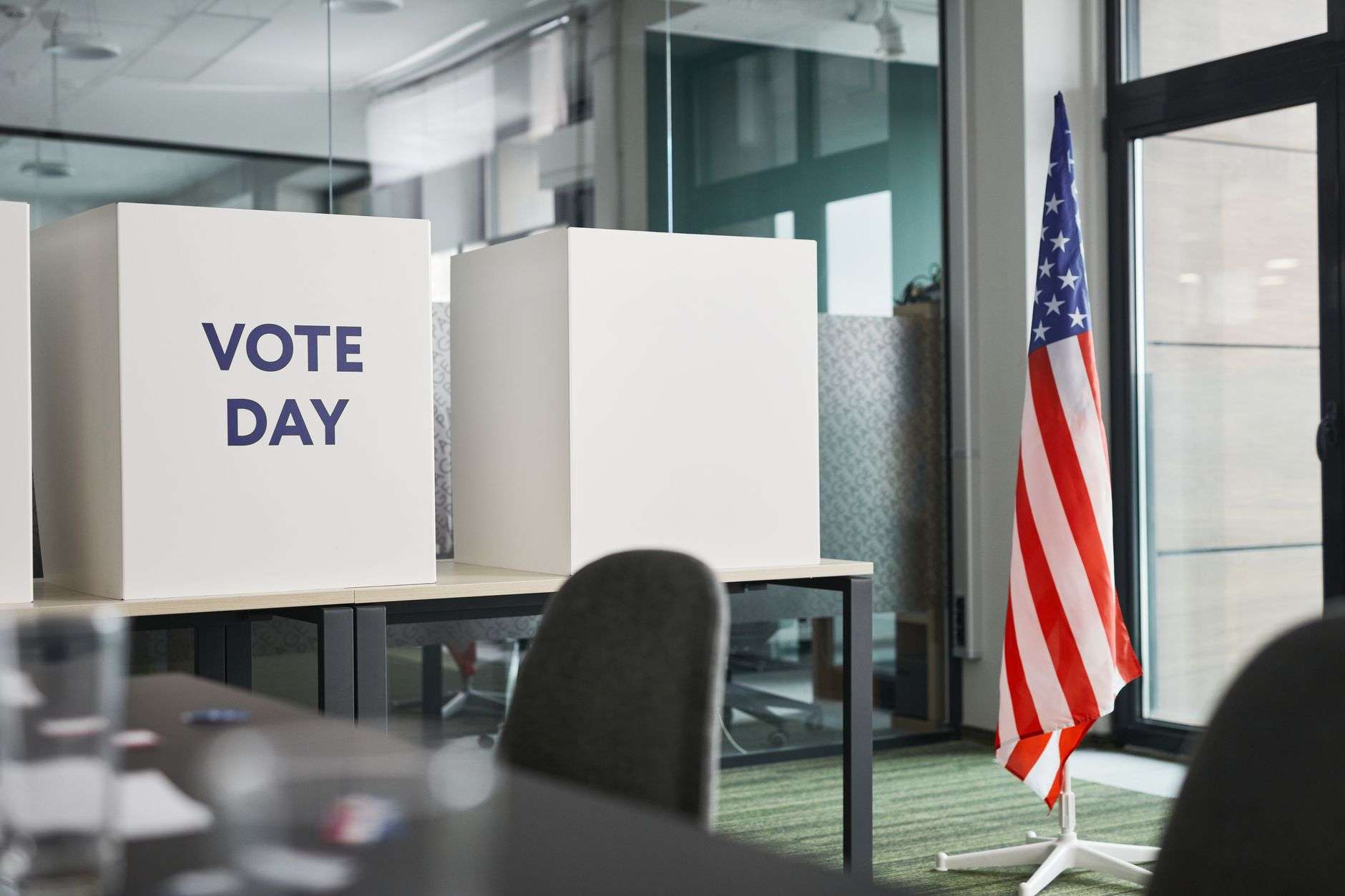
Alabama's coastal communities head to the polls next week to fill the state's only open congressional seat this year, with three Republicans squaring off in a special primary for the newly redrawn 1st Congressional District. Former U.S. Rep. Jerry Carl, former Navy pilot John Mills and former Air Force officer Austin Sidwell face each other Aug. 11 for the Republican nomination. The primary winner will face the sole Democrat in the race, Clyde W. Jones Jr., in the general election. The district, which now covers Mobile, Baldwin and Escambia counties and most of Covington County, is solidly Republican; the U.S. Supreme Court allowed Alabama to use its 2023 congressional map for this year's elections, and Donald Trump would have carried the redrawn district by 36 points in 2024.
Carl, who has picked up endorsements from President Trump and U.S. Sen. Katie Britt, is considered the likely frontrunner. He previously represented the district for two terms before losing his seat to now-U.S. Rep. Barry Moore in a 2024 Republican primary triggered by court-ordered redistricting. Before serving in Congress, Carl was a member of the Mobile County Commission. "I really enjoyed being in Congress," Carl said. "Now I get a chance to run for it again and get to get back in there and finish things that I haven't finished." The AL-1 race was actually held once before under the district's old lines, during the May 19 primary, but those results were voided after the Supreme Court restored the 2023 map.
Carl led that voided field with 40.29% of the vote, followed by state Rep. Rhett Marques, who has since moved his campaign to the neighboring 2nd Congressional District. Sidwell and Mills finished fourth and sixth, respectively, in that earlier race. Mills has leaned on his military background to make his case to voters. "In the Navy, dealing with in-flight emergencies to emergency management and the Navy giving me command twice, I know what crisis is," Mills said. "I know how to manage it, and America is in crisis, and we need to do something before we lose our constitutional republic." Sidwell, who lives in Fairhope and serves as vice president of his family's business after 12 years as a major in the U.S.
Air Force, is positioning himself as the outsider in the race. He said he decided to run because he believes elected officials aren't representing the will of the people. "I have a broad range of experiences and skill sets outside of politics," Sidwell said. "The other thing is, maybe the most obvious thing, is I'm 36. I'm bringing a different perspective, a perspective of a guy that still has a family in the home, that has a different view of where we're going.
Not necessarily looking at just problems that are facing us right this second, but also the problems facing us in the future." I-10 Bridge and Tolls All three candidates named the $3.2 billion I-10 Mobile River Bridge and Bayway project as a top priority, calling it a matter of national security and stressing the need for cooperation across federal, state and local government. The Alabama Department of Transportation has said construction on the bridge itself could begin as soon as October, with tolls expected once the bridge is complete to help fund the second phase, the Bayway project. Carl said starting construction is a step in the right direction after years of delays, but he wants to find ways to bring the project's cost down to avoid tolls altogether.
Background and Context
"Now we've got to figure out how we can either a) save money and get the price down where it's a little more affordable, or b) figure out how to come up with the money," he said. Mills said the funding question for the Bayway phase still needs to be worked out and argued that tolls shouldn't fall on commuters. "The first phase is laid out. But what about the second phase?" Mills said. "Let's talk about who pays for it. To put tolls up and putting more on the backs of people trying to commute across to work is not a solution to me." Sidwell was the most emphatic of the three in opposing tolls, arguing the project should be fully funded through existing tax revenue.
"I think it's absurd that an interstate that should be funded wholly by the federal government is being forced down not only through the state and local governments, but also to the taxpayers," Sidwell said. "Taxpayers are paying federal taxes that are going into this, state taxes and local taxes that are all going into this, and then they're going to have to pay a toll on top of that. I don't believe in that." Data Centers The candidates also weighed in on data center development, an issue drawing attention in the district as facilities are planned in northern Mobile County and Prichard, according to local media reports.
Sidwell said he opposes data centers built "without transparency" and believes residents should have a say in whether the facilities come to their communities. "We shouldn't have any level of government forcing things that our communities don't want," he said, adding that he sees a federal role in regulating the projects because of their heavy water use and strain on the electrical grid. Mills said his concern centers on transparency from the companies building the facilities, including who is funding them and what their presence means for surrounding neighborhoods.
"I'm not saying we shouldn't have new technology, but I think it needs to be we, all of us, decide what's best for us, not just somebody take backroom deals, cronyism, and all of a sudden, there's a data center being crammed down your throat, and you find out the hard way what it really costs you," Mills said. Carl said he has not settled on a position for or against data centers and plans to visit an existing facility in the state before forming an opinion. "I want to go before I make my mind up one way or the other, and I want to see one. I want to hear one," Carl said.
"I want to talk to the people actually running it." He said he recognizes the need to compete with China on artificial intelligence but also the need to protect communities' water and electricity supplies. Turning Out Voters With the district having already gone through one voided primary in May, all three candidates said turning out voters for the Aug. 11 election has been a central part of their campaigns. Carl, who has dedicated campaign resources toward voter outreach, acknowledged the challenges of an August election that falls during the start of the school year. "I can give you a half a dozen negative reasons why people aren't going to come to the polls," he said. "But when I talk to people, I try to make people understand.
Background and Context
To me, voting is something as Americans we should do. And I challenge everybody to vote." Mills said many voters he's talked to during the campaign don't realize an election is happening at all. "It seems to be a big mystery to them," he said. "That's the biggest hurdle to overcome is to make sure they know there is an election and how important it is." Sidwell said voters he's encountered on the trail are looking for change. "One of the overwhelming, positive responses we've got on the campaign trail is people are ready for a change," he said. "They're ready for someone that's outside of the establishment, someone that they feel like they can trust, and that's what we're offering.
We're offering someone that's not backed by super PACs and all these connected (venture capital) interests." Polls will be open from 7 a.m. to 7 p.m. on Aug. 11.
Wider Significance for Coastal Alabama
This story is part of a broader set of changes playing out across Mobile, Baldwin and the wider Gulf Coast region. Local residents, businesses and government agencies have been watching developments like this one closely, because decisions made in Mobile and Baldwin counties often ripple outward into neighboring communities across south Alabama, Mississippi and the Florida Panhandle. Public meetings, council work sessions and state legislative hearings have all carried echoes of the underlying concerns, with stakeholders ranging from neighborhood associations to industry groups weighing in on what the outcomes will mean for daily life along the Gulf Coast. Reporters and editors in the region have worked to document how these issues affect ordinary people, from commuters on Interstate 10 to families visiting the public libraries and parks that anchor so many of the Port City’s neighborhoods. The deeper context often emerges over months rather than days, as projects move from announcement to planning to construction, and as the people most directly affected find their voices in the public record. Continued coverage remains important, both for accountability and for the historical record, and the unfolding situation is one that warrants attention from anyone with a stake in the future of south Alabama.
Looking ahead, observers across the region expect the conversation to continue evolving. Local officials have signaled their intent to monitor outcomes closely, and community organizations have indicated they will remain engaged as new information becomes available. The intersection of state policy, local implementation and on-the-ground impact is precisely where stories like this one tend to develop their lasting significance. For Mobile and Baldwin residents, the practical effects will play out over time, in everything from tax bills and utility rates to traffic patterns and the availability of public services. Following the developments requires patience and attention to detail, but it is also a reminder of how civic life in coastal Alabama continues to be shaped by decisions that begin far from the neighborhoods they ultimately touch. Residents who want to stay informed can do so by following local government meetings, attending public hearings when significant issues arise, and reading the regional reporting that tracks how these stories progress from one phase to the next.
Local news organizations continue to follow this story closely, and updates are expected as more details emerge. The developments have generated discussion across the region, with attention from both longtime residents and newcomers who are following the issue for the first time. Community leaders have emphasized the importance of staying engaged with local government and participating in public meetings when significant decisions are being made. As the situation continues to unfold, residents are encouraged to remain informed through reliable local reporting and official city and county communications channels. The story remains active, and additional information is anticipated in the coming days and weeks as the relevant agencies and stakeholders complete their work.