

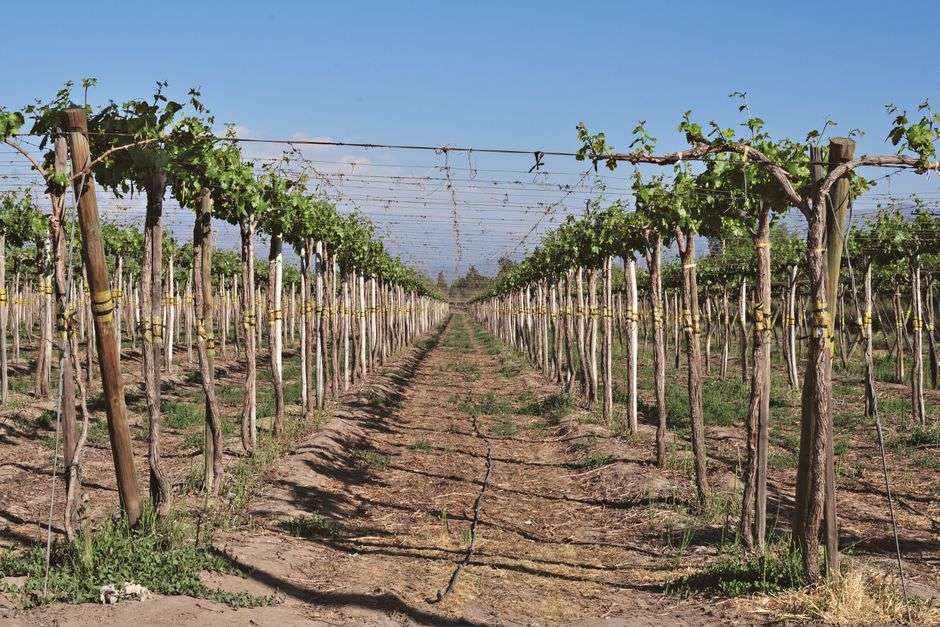
Take Interstate 65 to Exit 45 in north Baldwin County, drive a short way up County Road 47, and the landscape goes Italian: a white masonry villa with graceful arches and a red tile roof, presiding over rows of muscadine vines. This is Perdido Vineyards, Alabama’s first farm winery — and the story of how it exists at all is one of the best stories in the state’s food and drink history.
The winery’s spirit — and much of its personality — belongs to Jim Eddins, a retired Marine lieutenant colonel and engineer who died in 2021, and his wife Marianne, who preceded him by two and a half years. Without them, the winery wouldn’t exist, and neither would the landmark 1979 law that legalized their business.
How a dry white wine changed state law
Before Prohibition, Alabama had numerous wineries. After Prohibition’s repeal in 1933, the state’s Alcoholic Beverage Control Board kept a tight grip on alcohol sales — wine was available only at ABC stores, not grocers or convenience stores. There was also, remarkably, an old law on the books prohibiting the making and selling of wine from fruit grown on the same property.
Eddins had already been growing muscadine grapes for about seven years, supplying a Pensacola business called Bartel’s, when he decided to make and sell his own wine. Family lore assigns the motive to his wife’s discriminating palate. “She was originally from New York, and she loved to have a glass of dry white wine,” says longtime winery employee Lee Newton. “The problem was she had trouble finding any that she liked at the ABC stores.”
So Eddins did what trailblazers do: he went to Montgomery. When the legislature sanctioned the Baldwin County business as the state’s first farm winery in 1979, a new industry was born — and the historical marker out front today tells passersby why.
There is humor in the legacy, too. One of the winery’s semi-dry whites is named Magnolia Springs, with a label — painted by the father of current General Manager William Sangster — showing a bucolic river scene with hanging moss and magnolias. The name honors a pastor and congregation in that community who had strongly opposed allowing a winery in Baldwin County. “That was his sense of humor,” says Theresa Grundman, the winery’s business events and marketing coordinator. “He was kind of thumbing his nose at them, you might say.”
Nearly 50 products, one family’s stamp
Today Perdido Vineyards turns out nearly 50 different products. The core is a selection of about 20 wines, seven of them fortified — including the popular Bodega Mauvilla, a Port-style offering that weighs in at 19 percent alcohol. Under the separate Boogie Bottom label, the winery produces three kinds of rum, with a muscadine brandy in development. There are house pepper sauces and a line of specialty foods called Rachel’s Recipes — butters, preserves, salsas, sauces and pickled products named for Jim Eddins’ mother, made in partnership with a family-owned Arkansas company.
The sleeper hit is the sweet, pure muscadine juice, which contains no alcohol at all and tastes like it came off the vine that morning — a fresh, all-natural alternative to store-bought grape juice that customers swear by for its health benefits. The overall top seller, though, remains the straightforwardly named Sweet Muscadine Wine.
Marrianne Eddins — a biologist and chemist with sophisticated culinary interests — left her mark as well: it was her idea to add the tasting room and gift shop, and she helped develop the cooking-vinegar line made from various fruits and vegetables.
Not everything on the shelf is sweet. The semi-dry rosé Cou Rouge — French, the staff will tell you with a straight face, for “Redneck Rosé” — nods to the Gulf Shores area’s old Redneck Riviera nickname, one of many labels and names with a true story behind them. “Everything we sell here has a true story behind it, and we like to tell people those stories,” says General Manager William Sangster, whose father, a Bay Minette printer and artist, contributed significantly to the winery’s branding.
The tasting-room experience
“We are in quite a few stores, but most people want to come here for the experience, which includes our tastings and a tour of the facilities,” says Grundman. Visitors who overshoot the destination and reach the little town of Perdido — not to be confused with Perdido Key on the coast — simply backtrack to the historical marker and ease up the hill.
Tastings run through the wine list; tours wind through the production areas and the story of the state’s farm-winery law; and the gift shop sends visitors home with everything from Bodega Mauvilla to muscadine juice to Rachel’s pickled okra.
The respect the staff holds for the founder comes through in every conversation. Newton recalls Eddins’ favorite line: “He liked to say that Jesus may have turned water into wine but his miracle was that he turned wine into money.” Grundman laughs and says countless others surfaced after his death — stories about a man who navigated bureaucratic and political roadblocks to build a thriving alcohol business deep in the Bible Belt, decades before it was fashionable.
“Some people have called him a trailblazer, and I think that’s appropriate because he did forge ahead,” she says. “And when someone would tell him he couldn’t do something, he’d say, ‘Watch me,’ and he’d get it done.”
Nearly half a century after the first farm winery license, the vines are still producing, the villa is still pouring, and the story is still being told — one tasting at a time.