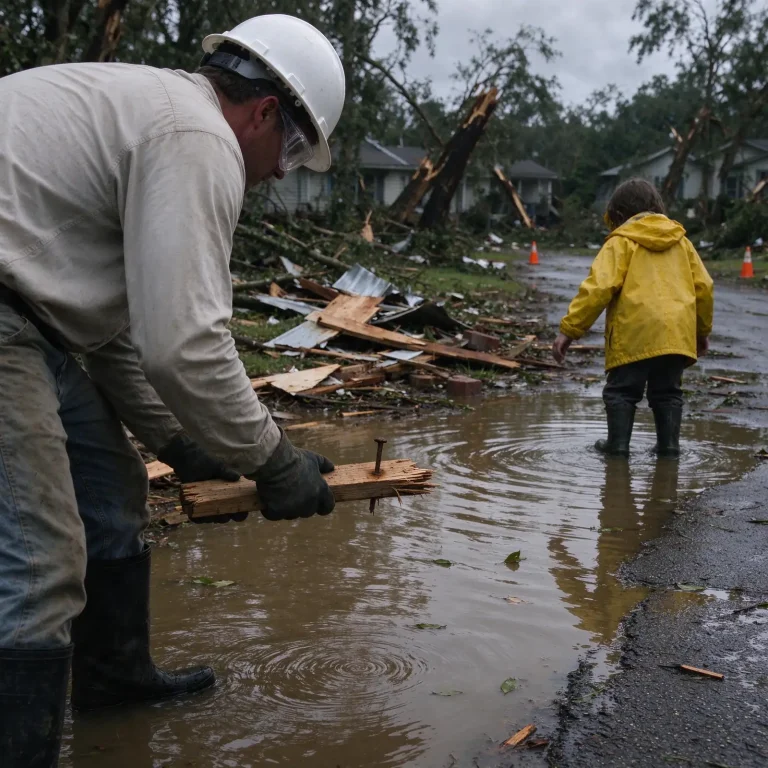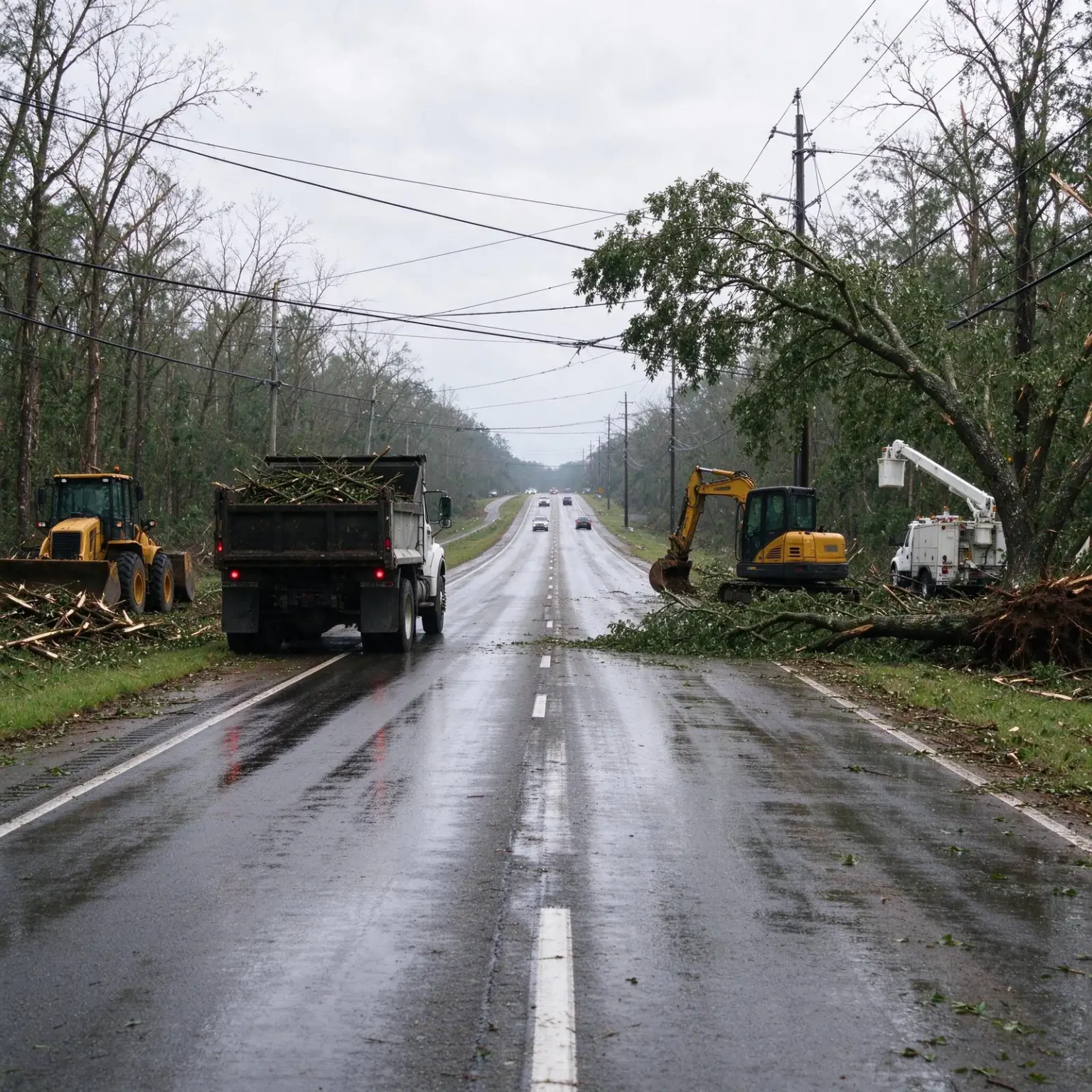
Alabama Department of Transportation crews spent Saturday clearing storm debris and downed power lines from highways after Hurricane Isaias, reopening routes from the coast to central Alabama, though the department warned that debris still lines some roads in the hardest-hit parts of South Alabama.
By late Saturday afternoon, Oct. 10, ALDOT reported that all of the roadways it maintains in the state’s Southeast Region were open to traffic. In the Southwest Region, crews were still working to clear routes in Escambia County, including U.S. 31 near Brewton, in close coordination with utility companies removing downed lines and trees.
“Over the last few days, ALDOT crews have worked around the clock preparing for Hurricane Isaias before it made landfall, then jumping into action to clear roadways impacted by storm debris and downed power lines,” the department said in its 5:30 p.m. Saturday statewide update.
Crews rest overnight, resume in the morning
As night fell Saturday and the storm moved out of Alabama, ALDOT said its crews would take some much-deserved rest and tend to any storm impacts on their own families. Personnel remain available overnight to respond to emergencies, and the recovery mission resumes in the morning.
The department said significant progress has been made restoring transportation routes, but debris remains along some highways, particularly in the hardest-hit areas of South Alabama. Motorists are urged to stay alert for roadside debris and to use caution around cleanup and emergency crews.
ALDOT also encouraged drivers to monitor weather forecasts and ALDOT traffic updates, and to check with county commissions and municipal emergency management agencies for local county and city road closures, which are handled separately from state highways.
Escambia County a focus in the Southwest Region
In its 1:45 p.m. Southwest Region update Saturday, ALDOT said crews continued to clear roads in Escambia County, including U.S. 31 near Brewton. Crews were coordinating closely with key utility partners to remove downed power lines and trees as quickly as possible.
That coordination matters because highway crews cannot safely remove trees tangled in power lines until the lines are de-energized or cleared by utility workers. In many storms, the order of operations on a blocked road is utility crews first, then highway crews with chain saws and loaders.
Escambia County sits along the Florida line northeast of Baldwin County, and Isaias’s landfall near Destin, Fla., Friday evening put much of south-central and southwest Alabama in the path of strong winds as the storm moved inland.
How the storm unfolded on Alabama roads
ALDOT’s updates through Friday and Saturday trace the storm’s path across the state:
- Friday, 1:28 p.m.: Multiple bridges in the Southwest Region closed for public safety. In Gulf Shores, the W.C. Holmes Bridge and the Alabama 161 south bridge closed at noon. Both the Alabama 161 and Alabama 59 bridges over the Intracoastal Waterway were closed, restricting access to Orange Beach, Gulf Shores and Fort Morgan to emergency services.
- Friday, 2:04 p.m.: Welcome centers and rest areas at the Interstate 10 Florida and Mississippi state lines and on Interstate 65 in Conecuh County closed, with parking lots left open. Four of eight rest areas and welcome centers in the Southeast Region were also closed.
- Friday, 3:42 p.m.: A hurricane warning was in effect for Mobile, Baldwin, Escambia, Conecuh, Covington, Coffee and Geneva counties, with a tropical storm warning reaching north to the I-22/I-20 corridor. ALDOT relayed that storm surge of 4 to 6 feet could occur along the coast and 2 to 4 feet in Mobile Bay.
- Friday, 5:16 p.m.: Reports of storm debris began arriving from the southern part of the state, and ALDOT urged people to avoid unnecessary travel as Isaias made landfall.
- Friday, 11 p.m.: Debris reports began coming in from central Alabama counties while South Alabama crews deployed to assess routes and clear roads as conditions improved.
- Saturday, 2:20 a.m. to 5 a.m.: Downed power lines closed or narrowed roads including Alabama 219 and Alabama 41 in Dallas County, U.S. 80 near Marler Road in Pike Road, and U.S. 82 near County Road 40 in Autauga County. A tree blocked U.S. 231 near Bethlehem Road in Elmore County.
- Saturday, 8:04 a.m.: Interstate 65 southbound in Greenville reopened, and U.S. 431 in Eufaula was clear.
- Saturday, 10:45 a.m. to 3:35 p.m.: Alabama 41 in Dallas County and U.S. 80 in Pike Road were cleared, and the Houston County Welcome Center was fully operational.
- Saturday, 4:38 p.m.: All ALDOT-maintained roadways in the Southeast Region were open.
Separately, the Alabama Law Enforcement Agency detoured northbound I-65 traffic at Exit 318 at Lacon to U.S. 31 northbound Saturday afternoon because of a tractor-trailer crash in north Alabama.
Rest areas and welcome centers
Power outages forced several rest stops to close during the storm. As of Saturday morning in the Southeast Region, the Florala and Ozark rest areas were fully operational, the Houston County Welcome Center was expected to reopen at noon and later did, and the Eufaula rest area on U.S. 431 remained closed because of a power outage, with parking available. The I-65 south rest area in Greenville and both I-85 rest areas in Macon County were operating, while the I-65 north rest area in Greenville was closed for construction.
ALDOT’s updates did not say when the Southwest Region welcome centers at the I-10 state lines and on I-65 in Conecuh County would reopen. Travelers should check ALDOT’s traffic information before planning a stop.
Before the storm
ALDOT said it began preparing days before landfall, monitoring the storm with the National Weather Service, the Alabama Emergency Management Agency and other partners. The department said its priority after the storm would be to safely deploy crews to assess damage, clear debris and make any necessary repairs to roads, bridges, signs and traffic signals.
Throughout the storm, ALDOT asked residents to limit travel to essential trips, both for their own safety and to keep roads clear for emergency responders and utility crews. When travel was necessary overnight, the department advised waiting for daylight and improved conditions.
Tips for driving after a hurricane
Even after highways reopen, the days following a hurricane bring hazards that are easy to underestimate. General safety guidance for drivers includes:
- Treat every downed line as live. Never drive over or under a downed power line, and stay well away from lines tangled in trees.
- Turn around at water. Do not drive through flooded roads. A small amount of moving water can sweep a vehicle away, and floodwater can hide washed-out pavement.
- Treat dark signals as four-way stops. Come to a full stop at any intersection where the traffic signal is out, and proceed only when it is safe.
- Slow down in work zones. Give road crews, utility workers and emergency responders plenty of room.
- Watch the shoulder. Debris piles, broken limbs and displaced signs may still sit along roadsides and in ditches.
- Check local closures. County and city roads are maintained separately from state highways, so check with local governments and emergency management agencies before heading out.
Drivers can follow ALDOT’s traffic updates through the department’s ALGO Traffic website and app for the latest information on closures and reopenings across the state.