Jerry Carl vs. Clyde Jones: Where the 1st District Candidates Stand on the Issues
Republican Jerry Carl and Democrat Clyde Jones offer voters in Alabama's 1st Congressional District sharply different priorities on immigration, spending, health care, insurance and more ahead of the Nov. 3 election.
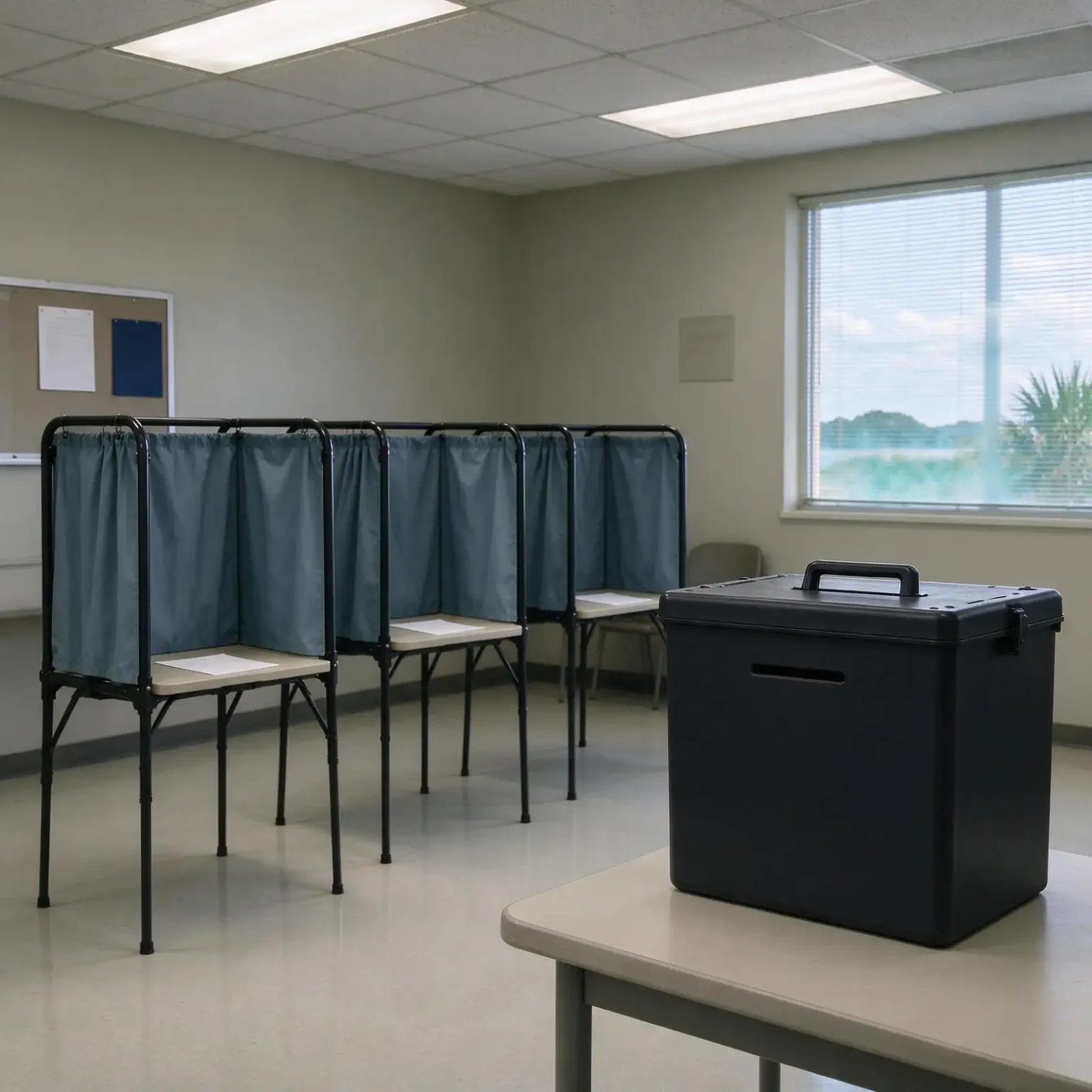
The two 1st District candidates on Alabama’s Nov. 3 ballot bring very different backgrounds and very different lists of priorities to the race for the congressional seat covering the state’s Gulf Coast. Republican Jerry Carl, a Mobile businessman and former congressman, wants to return to the seat he held for four years. Democrat Clyde Jones, a retired Army first sergeant from the Daphne area, is making his first run for the U.S. House.
A side-by-side look at the two campaigns’ published platforms and biographies shows the candidates disagree on several issues. Just as often, though, they focus on different problems altogether. One candidate spends a lot of time on a subject the other barely mentions. This guide explains where Carl and Jones stand, based on their own campaign materials, so residents can compare them before Election Day.
The District and the Race
The 1st District includes Mobile, Baldwin and Escambia counties and most of Covington County. That covers Alabama’s only seaport, the fast-growing Eastern Shore and beach communities of Baldwin County, and the rural farm and timber country farther inland. The district has been redrawn twice in three years. That has made for an unusual election calendar, including a special primary in August after the ballots cast in the May primary were voided.
Carl won the Republican nomination in the Aug. 11 special primary over three challengers with about three-quarters of the vote, according to unofficial returns. Jones was unopposed for the Democratic nomination. Carl represented the district from January 2021 to January 2025. He lost the seat after the district was reconfigured to include Wiregrass counties, which put him in a race against fellow Republican Barry Moore.
Who the Candidates Are
Jerry Carl
Carl served on the Mobile County Commission from 2012 through 2020 before going to Congress. His campaign says he has more than 40 years of business experience and has started more than 10 companies in fields that include real estate, health care, timber and manufacturing. His pitch rests heavily on that experience: he has already served in Congress and in county government, and he has spent decades in private business.
Clyde Jones
Jones’s campaign says he spent 21 years in the Army Signal Corps, served during Operation Desert Storm and Operation Iraqi Freedom II, and received the Bronze Star Medal. He moved to South Alabama in 2013 to work for DuPont. He retired from FMC Corporation in May 2024, where he was a process safety management coordinator. He is also an associate minister at Macedonia Missionary Baptist Church. His campaign presents his military and industrial-safety work as preparation for public service.
Immigration
Immigration is one of the few issues near the top of both platforms, and the two candidates approach it very differently.
Carl: His campaign lists immigration enforcement among his top priorities. It says he supports President Donald Trump’s immigration agenda, building a border wall and removing immigrants who are in the country illegally. It also points to his past votes in Congress for legislation that included more Border Patrol agents and money for the border wall.
Jones: His campaign says secure borders are necessary but argues that current Immigration and Customs Enforcement tactics have gone too far. It says law-abiding immigrants should not be targeted to meet arrest quotas. A longer platform statement from Jones calls for suspending enforcement tactics that, according to the campaign, target documented workers, and for reviving bipartisan immigration reform legislation.
Cost of Living and Federal Spending
Both candidates talk about affordability, but they explain the problem differently and offer different solutions.
Carl: His campaign ties inflation and affordability mainly to federal spending. He supports a constitutional balanced-budget amendment and says members of Congress should go without pay until the federal government balances its budget. His campaign also highlights his record of voting against spending he considered wasteful. Earlier in the campaign, Carl called affordability the biggest issue facing the district. He said he would try to bring down fuel, utility and food costs by recruiting companies that pay higher wages to South Alabama.
Jones: Affordability is one of the main themes of the Jones campaign, which points to gasoline, health insurance premiums, rent and grocery prices. He has focused in particular on homeowners insurance along the Gulf Coast. Jones says his own insurance costs rose sharply after his carrier left the coast. He supports federal regulation aimed at keeping insurance costs from pricing families out of their homes.
Homeowners insurance is a major concern in coastal Mobile and Baldwin counties, where wind and hurricane coverage makes up a large part of household costs. Hurricane Isaias, which made landfall near Destin, Fla., this weekend, is a fresh reminder of the storm risk behind those premiums.
Health Care
Jones: His campaign calls for restoring Affordable Care Act provisions, closing Alabama’s health coverage gap and adding resources in areas short on medical and maternity care. It says too many Alabamians earn too much to qualify for Medicaid but cannot afford private insurance. That group is often called the coverage gap. It exists in states that have not expanded Medicaid eligibility under the ACA, and Alabama is one of them.
Carl: His current issues page does not include a comparably broad health care proposal. On health care, it focuses mainly on veterans. Carl promises to push for better access to veterans’ care and to challenge federal bureaucracy when he believes it gets in the way of that care.
Congress, Ethics and the White House
The candidates also see Congress’s relationship with the presidency differently.
Jones: His campaign makes changing Congress itself a major theme. He supports congressional term limits, a ban on members of Congress trading stocks, and a five-year waiting period before former lawmakers can become lobbyists. Jones also says Congress should use its constitutional checks on presidential power more aggressively. His campaign says he accepts no corporate PAC money.
Carl: His campaign stresses working with President Trump rather than putting distance between Congress and the White House. It describes him as a supporter of Trump’s “America First” agenda and says he would work with the administration in Congress.
Guns, Abortion and Social Issues
Carl: His campaign puts strong emphasis on Second Amendment rights. It says he opposes new restrictions on gun ownership and points to his past support from gun-rights groups. Carl opposes abortion and the use of federal tax dollars to pay for abortions. His campaign says he supported the U.S. Supreme Court decision that overturned Roe v. Wade. It also supports restrictions on transgender athletes competing in women’s sports and says parents should have more control over what their children are taught in school.
Jones: His current campaign materials give much less attention to guns, abortion and these social issues. His published platform centers on affordability, health care, immigration and congressional reform.
Workers and Wages
Jones: His campaign says the federal minimum wage of $7.25 an hour is inadequate and calls for a living wage. It connects wages to housing, arguing that workers increasingly struggle to pay rent, save for emergencies and buy homes.
Carl: His campaign takes a different approach to the economy. It stresses restrained government spending and private business, along with policies it says encourage economic growth and job creation. That matches his plan to recruit higher-paying employers to the region.
Farming and Forestry
Carl’s campaign names farming and forestry as important parts of South Alabama’s economy and says he would advocate for farmers in Congress. Agriculture and timber are major employers in the district’s inland areas, including parts of Baldwin, Escambia and Covington counties. These industries get less emphasis in Jones’s published platform.
Mobile Bay and the Environment
Jones: His campaign addresses environmental issues affecting Mobile Bay directly. It says the federal government should act on the coal ash stored at Alabama Power’s Barry Steam Plant and argues that Washington has a responsibility to protect Mobile Bay and the regional economy that depends on it.
Carl: His current issues page does not include a comparable Mobile Bay environmental proposal. In earlier campaign comments on the Plant Barry coal ash, Carl said the company had done everything the U.S. Environmental Protection Agency told it to do. Speaking about the utility’s plan to cap the ash in place, he said, “If both sides can live with it, I can live with it.”
Plant Barry sits along the Mobile River north of Mobile. How its stored coal ash is handled has been a long-running issue for environmental groups, the utility and regulators.
Law Enforcement and Foreign Policy
Carl: His campaign strongly supports law enforcement and opposes efforts to reduce police funding. On foreign policy, it emphasizes support for Israel and a tougher U.S. stance toward China and Iran. It says Carl believes American strength is necessary to deter adversaries.
Jones: These subjects are not among the major issues in Jones’s current campaign materials or his detailed platform statement.
Comparing the Two Platforms
Here is a summary of what each campaign emphasizes most:
- Carl: prior service in Congress and county government; support for President Trump; stricter immigration enforcement and a border wall; lower federal spending and a balanced-budget amendment; gun rights; opposition to abortion; support for law enforcement; conservative positions on social issues; farming, forestry and veterans’ care; a firm stance toward China and Iran.
- Jones: affordability, including Gulf Coast homeowners insurance; health care access and closing the coverage gap; a living wage; bipartisan immigration reform and limits on certain enforcement tactics; Mobile Bay and the Plant Barry coal ash; term limits, a stock-trading ban and other congressional ethics measures; stronger congressional oversight of the executive branch.
On some issues, such as immigration, the candidates take clearly opposing positions. On many others, the bigger difference is which problems each one chooses to highlight. Carl’s materials say little about the coverage gap or Mobile Bay, and Jones’s say little about guns, foreign policy or forestry. Those choices give voters a sense of where each candidate would likely focus his time in Washington.
What Voters Should Know Before Nov. 3
- Election Day: Tuesday, Nov. 3. Polls in Alabama are open from 7 a.m. to 7 p.m.
- Check your registration and polling place: The Alabama Secretary of State’s website lets voters confirm their registration status and polling location. That is especially important this year because district lines have changed more than once.
- Bring photo ID: Alabama requires voters to show an acceptable photo ID at the polls.
- Absentee voting: Voters who qualify to vote absentee can apply through their county absentee election manager. Deadlines apply.
- Do your own reading: Both candidates publish issue statements and biographies. Reading them directly is the best way to compare positions in the candidates’ own words.
This comparison is based mainly on Carl’s current campaign issues and biography materials and on Jones’s campaign materials, biography and detailed platform statement. It also draws on the candidates’ public comments reported earlier in the campaign.