Asphalt Coming to Florida Street Within Three Weeks as $1.8 Million Drainage Project Nears Finish
Mayor Sandy Stimpson says asphalt is coming to Florida Street within weeks as Mobile's $1.8 million drainage project wraps up by November 2019.
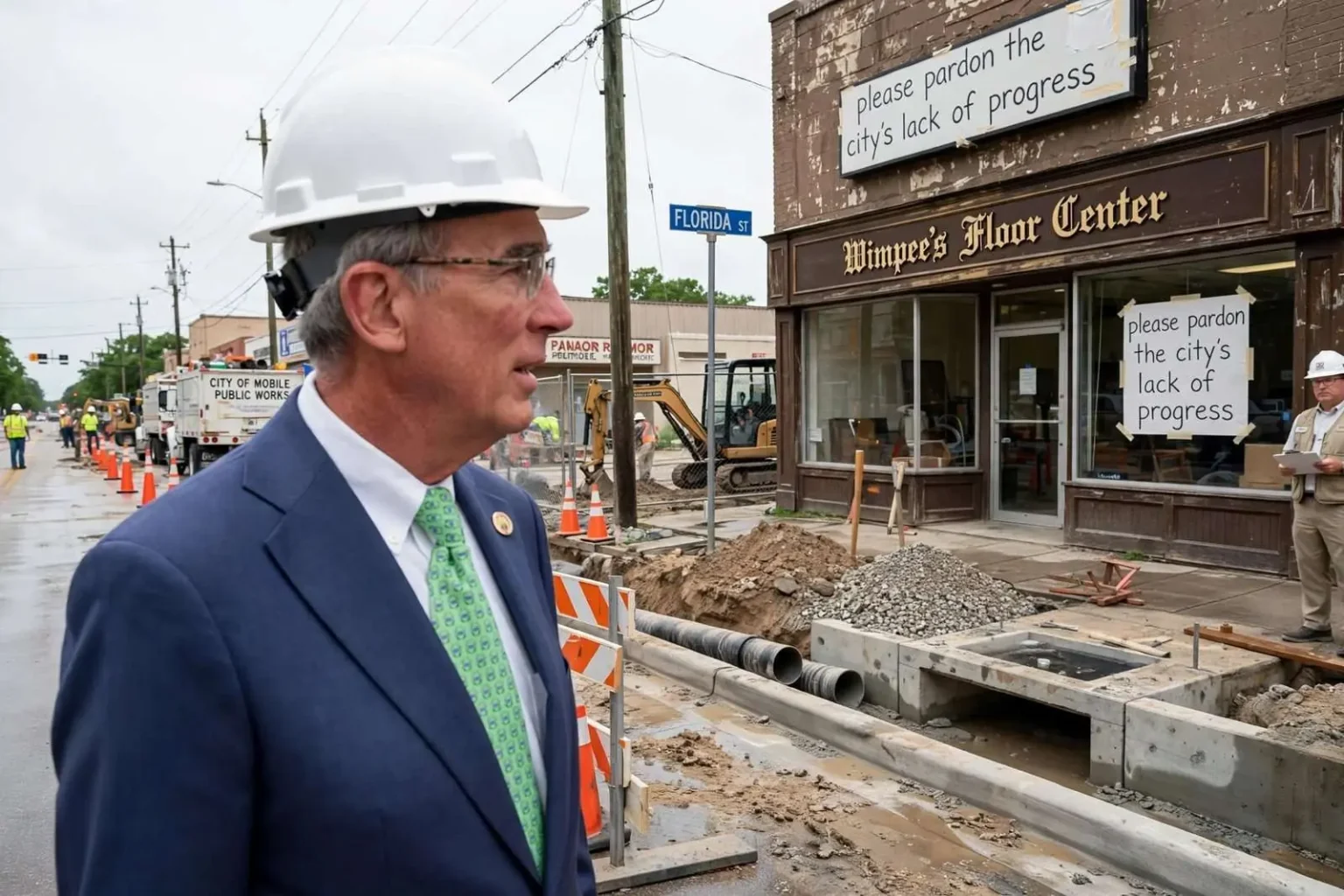
MOBILE, Ala. — Mayor Sandy Stimpson said in July 2019 that asphalt would be laid on Florida Street within about three weeks, with the remaining work on the long-running drainage project — sidewalks and curbs included — expected to wrap up by November.
Stimpson toured the construction site on a Monday morning, a day after the remnants of Hurricane Barry put the project’s new drainage system to its first real test. The mayor said the system performed well: Florida Street did not flood.
Construction on the $1.8 million in drainage improvements began the previous October. Progress moved slower than many nearby business owners wanted, and frustration along the corridor was visible — one shop, Wimpee’s Floor Center, hung a sign outside reading “please pardon the city’s lack of progress.”
What the Project Includes
The improvements along Florida Street center on drainage: a rebuilt system designed to carry stormwater off a corridor that has historically taken on water in heavy rain. The new system passed a significant test when the remnants of Hurricane Barry swept through the Gulf Coast, dropping heavy rain across Mobile the day before the mayor’s tour — and the street stayed dry.
Beyond the underground work, the project brings new sidewalks and curbs to the corridor, part of the expected completion by November. The asphalt planned within three weeks of the mayor’s July announcement will cap the construction and restore the roadway that businesses along the street depend on for customer access.
The Frustration Along the Corridor
“That’s part of progress. We get that,” said Ellen Maxime, COO of Adcock Properties, which manages property in the area. “But it’s the days and days of no operation.”
Maxime’s comment captured the sentiment of business owners who have worked around construction since the previous October. For shops along Florida Street, a day without accessible parking and open sidewalks is a day of lost customers, and the accumulated weeks of disruption were reflected in the sign at Wimpee’s Floor Center asking pardon for the city’s lack of progress.
The $1.8 million project’s pace has been the sticking point: begun the previous October, it was still months from completion when the mayor toured in July, with asphalt, sidewalks and curbs remaining to be finished by November.
The Mayor’s Response
The mayor acknowledged the delays and said the city viewed the project as a learning experience. He suggested the city could provide incentives for contractors to finish work early, noted that officials were in the process of hiring a new Public Works director, and said he would work with the Mobile City Council to find ways to make future projects less disruptive for business owners and drivers.
The commitment to incentives marks a shift in how the city thinks about construction timelines — paying for speed rather than accepting slow schedules as the default. The incoming Public Works director will inherit both the Florida Street finish and the broader task of managing the capital projects that follow.
Why Florida Street Flooded
Florida Street’s drainage problem is a familiar one in Mobile, a city built around water. The corridor sits in a part of the city where stormwater has historically pooled during heavy rain, and aging infrastructure struggled to move it out. The $1.8 million improvement project is designed to change that by rebuilding the system beneath the street so that water from Gulf storms moves quickly and reliably away.
The timing of the test could hardly have been more direct. The remnants of Hurricane Barry moved through the region in mid-July, and the new system absorbed the rainfall without letting the street flood — the performance the mayor highlighted as evidence the construction, for all its disruption, is delivering what it promised.
For the businesses along the street, functional drainage is not a cosmetic matter. A corridor that floods loses customers in every heavy storm, and repeated flooding shortens the commercial life of buildings along the route.
Mobile’s Broader Drainage Push
The Florida Street project sits within the city’s wider effort to modernize drainage across flood-prone neighborhoods, a program the Stimpson administration has made a capital priority. Mobile’s low elevation, high water table and hurricane exposure make stormwater capacity a core municipal service, and the city has repeatedly pointed to projects like this one as the model: rebuild the underground system, then restore the surface with new pavement, sidewalks and curbs.
The November completion target for the remaining work — sidewalks, curbs and the asphalt promised within three weeks of July — would close out a project that began the previous October and ran through a full Gulf Coast storm season.
What Businesses Are Watching
The corridor’s owners and managers are watching two things: the pace of the finish and the city’s follow-through on the lessons Stimpson described. Ellen Maxime’s point — that “days and days of no operation” are the real cost — applies to every phase still ahead, and the mayor’s suggestions of contractor incentives are aimed at compressing exactly that timeline.
The planned hire of a new Public Works director adds another layer: leadership of the department that schedules and supervises street construction across the city, with authority over how future projects are staged to keep businesses accessible while work proceeds.
By November, the corridor is expected to have everything the project promised: a drainage system proven against a tropical system’s remnants, new asphalt, new sidewalks and new curbs — and an end to the construction that has defined Florida Street for a year.
The finished project will also stand as a reference point for the city’s drainage program as a whole. A corridor that stayed dry through the remnants of a hurricane is the clearest evidence the city can offer that the $1.8 million was spent on capacity that works, and it gives residents of other flood-prone streets a concrete example of what the rebuilt systems are meant to do when the next Gulf storm arrives.
Lessons for Future Projects
The mayor’s framing of the project as a learning experience is a public acknowledgment that a $1.8 million drainage upgrade taking more than nine months — from the previous October through a projected November finish — tested the patience of the businesses it was meant to protect. The lessons he outlined point to changes in how the city stages its work.
Contractor incentives for early completion would put a financial reward on speed, giving contractors a reason to compress schedules rather than stretch them. The new Public Works director will carry responsibility for making those mechanisms routine, and the promised work with the Mobile City Council aims at the policy side: finding ways to make future projects less disruptive for business owners and drivers.
For merchants, the measure of those reforms will be the next corridor that gets rebuilt, and whether the sign like the one outside Wimpee’s Floor Center — asking pardon for the city’s lack of progress — becomes a relic rather than a template.
Florida Street’s Place in Midtown Mobile
Florida Street runs through a working commercial corridor whose shops, including longtime businesses like Wimpee’s Floor Center, serve residents of the surrounding neighborhoods. Property managers such as Adcock Properties, where Ellen Maxime serves as COO, keep buildings along the street occupied and operating, which is why the management side of the corridor was so vocal during construction.
The corridor’s importance is also why the city committed the investment: a functioning drainage system and rebuilt roadway protect the businesses and homes that line the street, and the improvements are intended to serve the corridor long after the construction equipment leaves.
The visibility of the frustration — a public sign, quoted comments from property managers, a mayor touring the site a day after a storm — is itself part of the story. Projects of this size generate inconvenience that neighborhoods absorb, and when the absorption runs long, the complaints move into the open. Mobile’s response, in the form of the mayor’s July tour and commitments, was aimed as much at the corridor’s business community as at the construction schedule itself.
The Road to November
The sequence from the mayor’s July visit forward is straightforward: asphalt on Florida Street within about three weeks, then the remaining sidewalks and curbs, with full completion expected by November. The drainage system beneath is already in and already proven, having taken the remnants of Hurricane Barry without letting the street flood.
What remains is the surface — and the reopening of a corridor that businesses along it will be glad to see finished. From the October start through the summer of disruption to the promised fall finish, the project’s final accounting will be written in the customers who can once again reach the shops along Florida Street without dodging construction.
Between now and then, the city has said its piece: the street will be paved within weeks, the work will be done by November, and the lessons of this project will shape the next one.