Baldwin County School Bus Drivers Complete Summer Training Ahead of New Year
Baldwin County school bus drivers completed summer safety and technical training ahead of the new school year, transportation officials say.
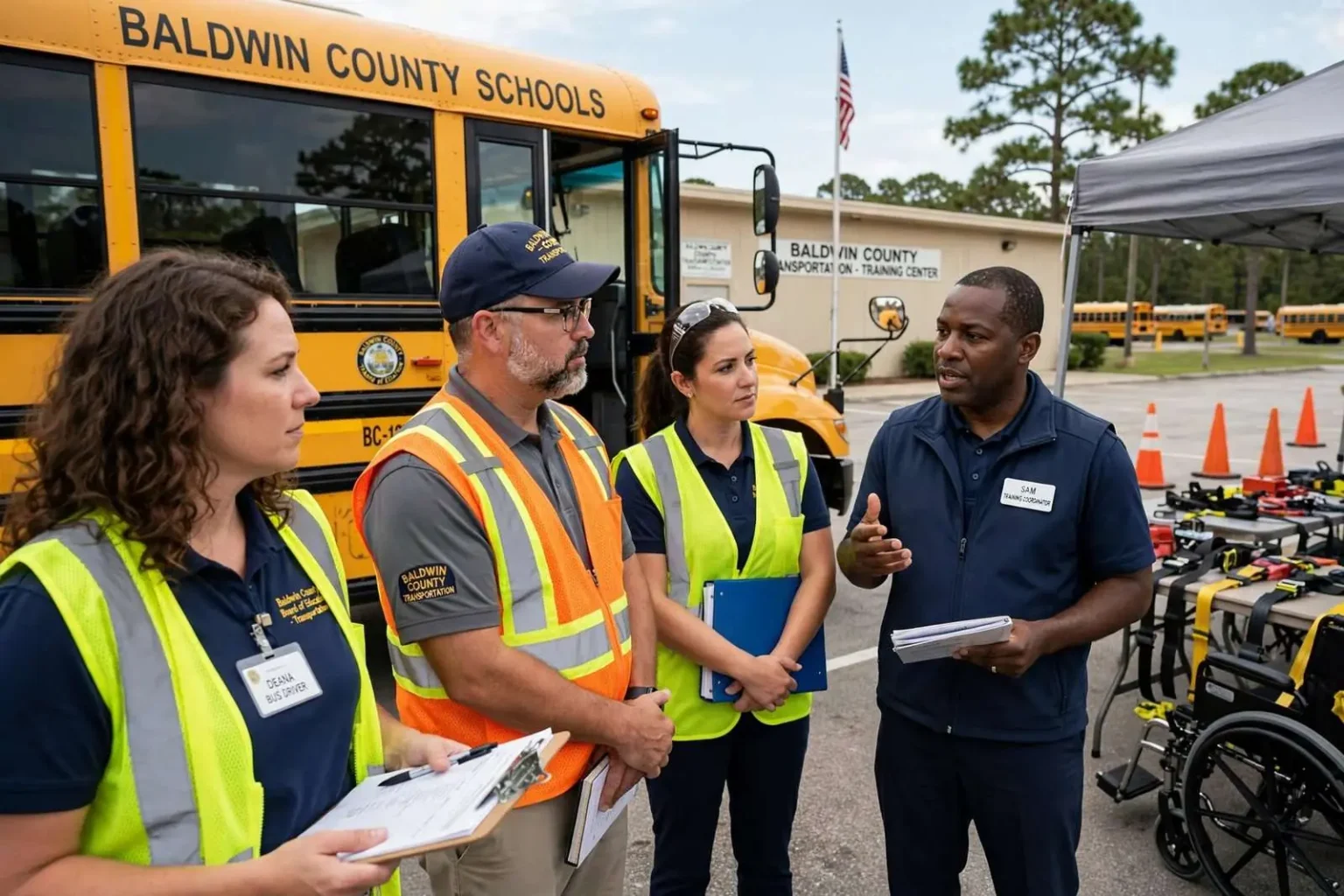
BALDWIN COUNTY, Ala. — School buses are back on Baldwin County roads after drivers spent the final weeks of summer completing required training before returning to the wheel. Every bus driver, new and returning, must complete summer training before driving a route, with safety as the primary focus of the sessions.
The annual requirement reflects the scale of the operation behind Baldwin County’s school transportation system. The county is the largest in Alabama by land area, stretching from the Mobile Bay shoreline to the Florida state line, and its school system runs one of the biggest student transportation networks in the state. Every morning of the school year, drivers fan out across communities from Fairhope and Daphne to Foley, Gulf Shores, Bay Minette and the county’s rural northern stretches, covering routes that can run long distances between homes and campuses.
“The safer we are, the better [the] school year we have,” said fourth-year bus driver Deana Gill, explaining why the annual training matters for both new and veteran drivers. Baldwin County Board of Education Transportation Coordinator Sam Ellis said the training goes beyond a refresher on safety basics. “We’re learning how to make sure that our students stay safe on the bus and make sure that as drivers we have the ability and the knowledge to know that we can drive safely and make sure kids get to and from school safely,” Gill said of the sessions’ focus.
What the Training Covers
Ellis said drivers also work through technical skills during training. “Drivers are getting refreshed on their procedures…how to properly load and unload students, railroad crossings procedures, [and] driving safety. We have different drivers coming in working on student securement devices, making sure that they know how to properly secure wheelchairs and equipment on buses,” Ellis said.
Each of those skills carries its own weight in a county like Baldwin. Loading and unloading remains the most dangerous part of a student’s bus ride, which is why procedures around the bus’s warning lights, mirrors and stop arm are drilled until they become automatic. Railroad crossing procedures are practiced because Baldwin County’s routes cross dozens of active rail lines, including the freight corridors that run through the county’s industrial areas, and federal and state rules require drivers to stop, look and listen at every crossing regardless of whether signals are present.
Student securement training has grown in importance as the system serves more students with special needs. Securing a wheelchair properly involves docking stations, lap and shoulder belts and checks of the equipment itself, and drivers who serve special-needs routes complete additional instruction to make sure every student rides safely and reaches the right classroom on arrival.
A Reminder for Every Motorist
For households without a child or grandchild in school, the return of buses, school zones and bus stops is a good reminder to adjust driving habits. The Baldwin County Transportation Department is asking drivers to slow down as soon as amber lights begin flashing on a school bus, and to stop behind a bus once its stop sign is extended.
Alabama law backs those requests with real penalties. Motorists who pass a stopped school bus with its stop arm extended and red lights flashing commit a violation that carries fines and license points, and drivers who pass on the side where children are loading or unloading face the possibility of far more serious consequences. The law requires traffic in both directions to stop on undivided roads, and officials remind drivers that the only exception applies on highways divided by a physical barrier, where oncoming traffic may proceed with caution.
Drivers are also asked to expect active school zones on weekdays roughly from 7 to 8 a.m. and again from 2 to 4 p.m. School zone speed limits in Baldwin County’s municipalities drop sharply during those windows, with fines doubled in many jurisdictions for violations posted in an active zone. The county’s growth has added new campuses and new school zone locations in recent years, meaning even long-time residents can encounter zones they have not driven through before.
The transportation department is asking drivers to watch for students walking along roadsides, including those who may dart into the street unexpectedly. Many Baldwin County students live along rural roads without sidewalks, waiting for buses at the ends of driveways or at designated stops along highway shoulders, and early-morning darkness in the first weeks of the school year makes them harder to see. Officials urge commuters to add a few minutes to their routes and approach bus stops and school zones at reduced speeds.
Working With Parents
Ellis is encouraging parents to review bus safety rules with their children and reminding families that parents are not permitted to board a school bus without permission. The rule protects student safety and keeps drivers focused on the road, but transportation officials say it also prevents confusion at stops, where an unexpected adult boarding a bus can create delays and safety concerns for everyone aboard.
Parents play a role on the ground as well. Transportation officials recommend that families establish a safe waiting spot at least a few steps back from the roadway, set morning routines that leave time for children to arrive at the stop early and teach students to wait for the driver’s signal before crossing in front of the bus. Those habits, drilled at home during the first weeks of school, carry through the rest of the year.
He also asked for patience from the public as bus drivers, students and parents adjust to new routes in the early weeks of the school year. Route timing is refined in the opening days as actual loads and road conditions become clear, and officials say the first weeks always involve adjustments as families confirm ridership and drivers learn new schedules.
The training season that preceded the school year is part of a larger cycle that continues throughout the year in Baldwin County. Drivers must maintain commercial driver’s licenses, complete periodic recertification and attend safety meetings during the school year, and the transportation department runs mechanics’ operations and route planning alongside its driver training. The county’s rapid residential growth keeps that work in constant motion, with new subdivisions generating new stops and shifting route maps from year to year.
Drivers themselves often describe the work as a public service that goes beyond transportation. A bus driver is frequently the first school employee a child sees in the morning and the last one they see in the afternoon, and experienced drivers across Baldwin County speak about learning their riders’ names, watching for changes in a student’s mood and serving as an extra set of adult eyes in a child’s day.
For commuters, the department’s message as the year begins is straightforward: expect buses, expect stops and expect school zones, and build the extra minutes into the morning routine rather than into a faster foot on the accelerator. Every driver on the road shares responsibility for the safety of the students waiting at the curb, transportation officials say, and a season that starts with careful habits is far more likely to end with a clean safety record.
The Baldwin County Transportation Department says it will continue monitoring routes, reviewing driver performance and working with municipal police and the Baldwin County Sheriff’s Office on enforcement around school zones and bus stops throughout the year. Families with questions about routes, stops or bus rules are encouraged to contact the transportation department through the Baldwin County Board of Education.
The Scale of Baldwin County Transportation
Operating a school transportation system across Alabama’s largest county is a year-round logistics effort. Baldwin County’s school campuses are spread across municipalities that include Daphne, Fairhope, Spanish Fort, Foley, Gulf Shores, Orange Beach, Robertsdale, Bay Minette, Loxley, Silverhill, Summerdale, Elberta and more, with rural routes in the northern county running along farm roads and state highways that see no other congestion most of the year. The district’s growth — among the fastest of any school system in Alabama — means the transportation department revises routes regularly to absorb new neighborhoods and new schools.
The training requirement for every driver, veteran or new, is designed around that scale. Sessions held in the final weeks of summer bring drivers together at centralized locations for classroom refreshers and hands-on practice with the buses they will drive, covering regulatory updates, district procedures and the specific hazards that come with the county’s road network. New drivers complete more extensive certification before they are cleared to take a route, including behind-the-wheel instruction and licensing requirements set by the state.
Behind the drivers stands a support operation that includes mechanics, routing specialists and dispatch staff who monitor the fleet from before the first pickup until the last student is delivered. Summer training weeks double as preparation for that support staff, as routes are finalized, stop lists are confirmed and buses are inspected from brakes to warning lights before the first day of school.
Safety as a Shared Job
The return of school buses changes the rhythm of Baldwin County traffic for every driver on the road. Morning routes bring buses onto highways like Alabama 59, 181 and 104 and through the county’s growing residential corridors, and officials note that most close calls around buses involve impatient motorists rather than the students or drivers themselves.
Law enforcement agencies across the county, including municipal police departments and the Baldwin County Sheriff’s Office, step up patrol presence around schools and bus stops in the opening weeks, watching for violations of school zone speed limits and stop-arm laws. Officials say the visible enforcement is meant to reset driver habits after a summer of uncongested roads, and citations issued in the first weeks send a message that carries through the year.
For the drivers who completed their summer training, the payoff is a school year that begins the way Gill described: safely, with drivers confident in their procedures and students protected from the curb to the classroom door. The county’s transportation officials say that same focus will carry through the year in recertifications, safety meetings and the daily discipline of a job where the cargo is the community’s children.