Historical crime report, published from archived local news coverage.
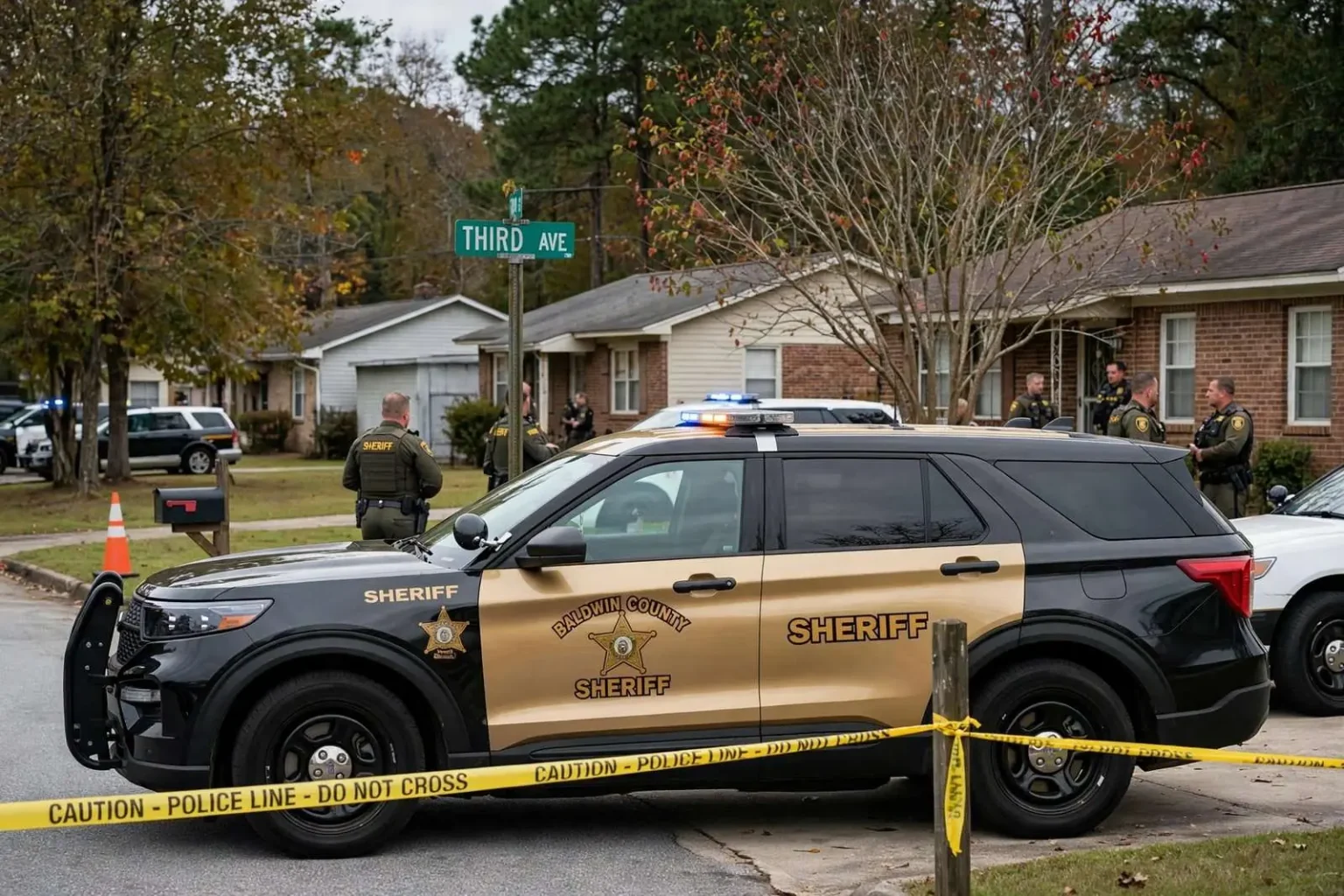
An undercover drug operation in Baldwin County led to the arrest of 18 suspected street-level dealers in 2007, according to an archived local news report. Six of the arrests were in Daphne, including four in the Third Avenue area. The report said neighbors had complained about suspected drug activity and welcomed the enforcement action, while also expressing concern that the activity could return. The Baldwin County sheriff said about 30 street-level dealers had been arrested to that point in the investigation and that more arrests were expected. This article reflects police allegations and arrests reported at the time; it does not establish guilt or report later case outcomes.
The arrests were the visible result of a longer, quieter phase of police work. Undercover drug investigations of this kind typically run for months before any arrests are made, with officers or informants making controlled purchases, documenting transactions, and building files that prosecutors can present to a grand jury. Agencies stagger the arrests so that each target does not learn of the investigation before the evidence is complete, which is why a single operation can produce a wave of arrests at once, as it did in Baldwin County in 2007.
Street-Level Enforcement on the Eastern Shore
Daphne, one of the principal cities of the Eastern Shore of Mobile Bay, was among the communities where the arrests occurred, with six of the eighteen in the city and four of those in the Third Avenue area. Street-level dealers, the target of this phase of the operation, occupy the bottom rung of the drug trade, selling small quantities directly to users. Enforcement aimed at that level is resource-intensive, since each arrest removes one seller rather than an organization, but it is also the enforcement most visible to the neighborhoods where the dealing happens.
That visibility shaped how residents responded. The report said neighbors had complained about suspected drug activity and welcomed the enforcement action, a common dynamic in communities where residents know something is wrong but may be reluctant to come forward out of fear of retaliation. Complaints from residents frequently provide the starting point for undercover work, giving investigators both a reason to direct resources to an area and a sense of the patterns they should be documenting. The same neighbors, however, expressed concern that the activity could return, reflecting the hard-won understanding that arrests alone rarely end a problem permanently.
The sheriff’s office approach reflected that reality. By the time the report was published, about 30 street-level dealers had been arrested in the investigation, with the Baldwin County sheriff saying more arrests were expected. A rolling series of arrests, announced in phases as indictments came down, allowed investigators to keep working cases while showing the public that their complaints were producing results. It also spread the message through the affected neighborhoods that the enforcement effort was continuing rather than finished.
How an Undercover Operation Works
Operations like the one described in 2007 depend on patience and paperwork. Investigators first identify suspected sellers through complaints, surveillance, and informants. Undercover officers or cooperating witnesses then make purchases that are recorded and documented, often with marked buy money whose serial numbers are logged beforehand. Each transaction becomes an individual charge, so a suspect who sold to an undercover buyer several times faces several counts. Once investigators believe they have sufficient evidence, the cases go to a grand jury, and arrest warrants are issued in bulk.
The coordination required is considerable. Baldwin County covers a large geographic area, from the fairhope and Daphne communities along Mobile Bay to the farming towns of the northern county and the resort communities of the Gulf shore, and its sheriff’s office operates with the staffing of a mid-sized agency while policing one of Alabama’s fastest-growing populations. Undercover drug work pulls deputies from other duties for extended stretches, and the agencies typically coordinate with municipal police departments, such as the Daphne force, whose officers know the neighborhoods where activity has been reported.
The announcements that follow such an operation serve several purposes at once. They inform the public that the complaints were heard and acted upon, they warn remaining sellers that the investigation is not over, and they document the work for the funding and public-support decisions that law enforcement agencies depend on. The detail in the 2007 report, including the count of arrests and the sheriff’s statement that more were expected, followed the standard pattern of such announcements.
What Arrests Do and Do Not Change
The caution voiced by Daphne residents, that the activity could return, reflects a consistent finding of drug enforcement experience. Street-level dealing responds to demand that enforcement cannot arrest away, and a neighborhood’s open-air drug activity often returns after a period of pressure unless underlying conditions change. That is why community policing programs, prosecution of the cases through the courts, landlord cooperation, and neighborhood watch organization tend to accompany the arrests that make headlines.
For the residents of the Third Avenue area and the other affected neighborhoods, the arrests brought a period of relief and an opportunity. Enforcement windows like the one opened in 2007 give communities a chance to reorganize: residents who had stayed quiet feel safer reporting new activity, property owners address problem tenants, and churches and community groups claim public space that had felt unsafe. Whether that consolidation holds depends on continued attention after the news coverage moves on.
Baldwin County in Context
The operation also fit Baldwin County’s particular circumstances in the 2000s. The county’s population was growing rapidly, drawing new residents from Mobile and beyond along the I-10 and Highway 98 corridors, and growth of that kind changes drug markets as it changes everything else. Law enforcement across the county was dealing with increased traffic flow, new apartment complexes and subdivisions where anonymity is easier, and the ordinary expansion of an economy that sits on the interstate routes connecting Mobile to the Florida panhandle.
Drug enforcement in Alabama operates within a legal framework that treats street-level sales as felony offenses, with penalties that escalate based on the substance involved and prior record. Cases built through undercover operations generally proceed through the district attorney’s office, with many defendants resolving their cases through plea agreements and others going to trial. The outcomes in the 2007 Baldwin County cases unfolded in the months and years after the arrests and are not covered by the archived report.
This article reflects police allegations and arrests reported at the time; it does not establish guilt, and the people arrested in the operation were presumed innocent unless and until convicted in court. It does not report later case outcomes, which are part of the separate record of the courts. What the 2007 report preserves is a picture of a county law enforcement effort moving from the quiet accumulation of evidence to public enforcement, a sheriff’s office signaling that its investigation was ongoing, and an Eastern Shore neighborhood welcoming the arrests while refusing to assume the problem was solved.
The Role of Community Complaints
Every undercover operation of this kind begins with information, and in residential neighborhoods that information almost always comes from the people who live there. Reports from neighbors described in the 2007 coverage follow a pattern familiar to police departments everywhere: residents notice repeated visitors at odd hours, transactions on street corners or in parking lots, and the general deterioration of a block’s sense of safety. Many callers ask to remain anonymous, and departments treat those complaints as leads to verify rather than evidence in themselves, which is why the verification phase of an investigation runs so long.
The willingness of residents to complain, and then to speak to reporters when arrests were announced, matters beyond a single case. Communities where residents consistently report suspicious activity are harder markets for street-level dealing, because the risk of being observed is constant. Enforcement agencies know this and invest in the relationships that produce those calls, through neighborhood meetings, school programs, and visible patrol presence between major operations. The concern residents expressed that the activity could return was, in that sense, also a commitment to keep watching.
The four arrests concentrated in the Third Avenue area illustrate how enforcement maps onto a neighborhood rather than a whole city. Drug activity clusters around particular streets, properties, and corners, and the six Daphne arrests were part of a countywide total of eighteen that also reached other communities. The sheriff’s office phased announcements kept each community’s residents informed about what had happened where they lived, and the concentration of arrests in a single area of Daphne told residents precisely which blocks had been the focus.
After the Arrests: Courts and Follow-Through
Once suspects were in custody, the cases left the hands of the investigators and entered the court system. Defendants arrested in an undercover sweep are typically arraigned quickly, with bond amounts set according to the charges and records, and prosecutors from the district attorney’s office begin preparing the files built during the investigation. Each documented transaction gives prosecutors a discrete count to prove, and the recordings, buy money, and laboratory analyses from controlled purchases form the core of the state’s evidence. Cases from a single operation can take months or longer to resolve, running through motion practice, plea negotiations, and trials.
For the neighborhoods, the court process is where the enforcement effort either holds or dissipates. Residents sometimes serve as witnesses, and the visibility of prosecutions reinforces the message that complaints lead to consequences. Agencies also follow major operations with continued patrols in the affected areas, precisely because the first weeks after arrests are when dealers elsewhere test whether the market has reopened. The sheriff’s statement that more arrests were expected served notice during exactly that window, warning that the net was still out.
The 2007 operation thus offers a compact picture of how drug enforcement actually unfolds in a growing Alabama county: complaints verified over months, controlled purchases documented transaction by transaction, indictments secured quietly, arrests made in a coordinated wave, and a public announcement timed to reassure residents while the work continued. The numbers in the report, eighteen arrests in the first announced group, six of them in Daphne, roughly thirty in the investigation overall, and more expected, were the fingerprints of that process, and the neighborhood reaction, gratitude mixed with realism, was its measure of success.