Contractor Larry Knight Pleads Guilty in Prichard Water Board Fraud Case; Sentencing Set for February
Contractor Larry Knight, owner of K&M Quality Paint Company, pleaded guilty to three federal charges in the Prichard Water Works and Sewer Board fraud case and will be sentenced Feb. 4, 2027.
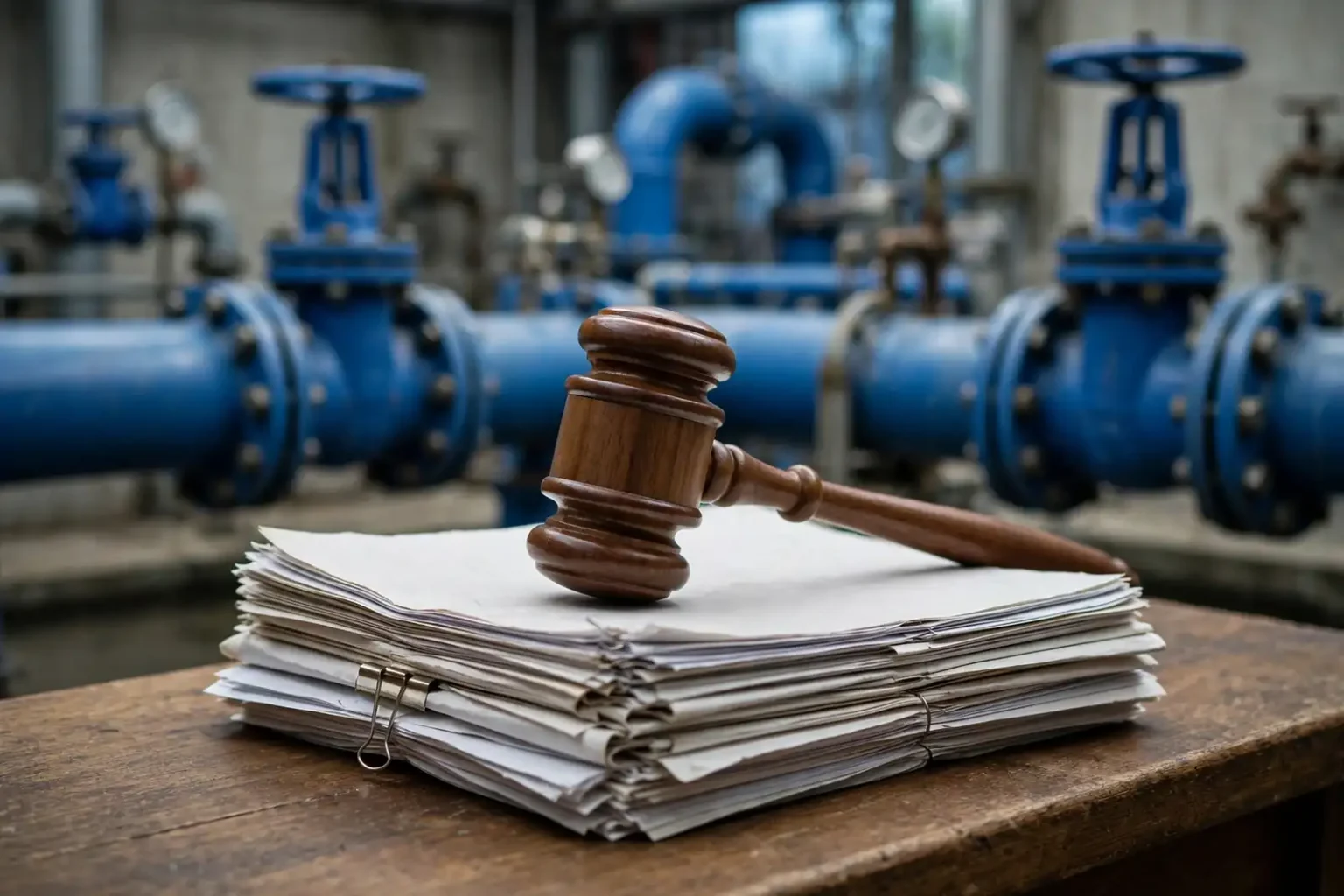
PRICHARD, Ala. — Larry Knight, a contractor charged in the federal fraud case involving the Prichard Water Works and Sewer Board, has pleaded guilty to three federal charges, admitting that he and his company were paid for repairs that were never completed and did nothing for the struggling utility.
Knight’s guilty plea, laid out in a plea agreement filed Sept. 30 in federal court in Mobile, covers conspiracy to commit mail, wire and bank fraud; bank fraud; and aiding and assisting in the preparation of a false tax return.
Knight owned K&M Quality Paint Company, which did work for the water board. In a factual statement filed with the agreement, he acknowledged that he and the company received fraudulent payments for work that was never done and did not benefit the utility, while also doing some legitimate work for the board.
Disputed loss figures left for sentencing
Prosecutors put the loss attributable to Knight and his company at $370,216.51, according to the agreement. Knight disputes that figure, and the agreement allows both sides to present evidence at sentencing so the court can decide the amount.
The agreement also says Knight failed to report $604,917 in income that the water board paid him for work in 2021. Prosecutors estimate the resulting unpaid taxes at $175,692. That figure, too, is subject to further evidence at sentencing.
The loss and tax figures are significant because, under federal sentencing guidelines, the amount of financial loss in a fraud case is one of the main factors judges consider in calculating a recommended sentence. The final numbers can also affect how much restitution a defendant is ordered to repay.
Sentencing set for February
The court scheduled Knight’s sentencing for Feb. 4, 2027, at 10:30 a.m. He will remain free on conditions of release until then.
Key dates in the case:
- Dec. 31, 2026: Presentence investigation report due
- Jan. 21, 2027: Deadline for both sides to file sentencing positions
- Feb. 4, 2027, 10:30 a.m.: Sentencing hearing
The presentence report, prepared by the U.S. Probation Office, typically summarizes a defendant’s background, the facts of the offense and the calculation of the advisory sentencing guideline range. Both prosecutors and defense attorneys can object to its findings before the judge imposes a sentence.
According to the court, the maximum prison term is 30 years each for the conspiracy and bank fraud counts and three years for the false tax return count. If the terms were imposed one after another, the combined maximum would be 63 years. Those maximums are set by statute; the actual sentence will depend on the judge’s application of the federal guidelines and other factors.
A multimillion-dollar scheme at the utility
Knight was one of seven people charged in connection with a scheme that federal prosecutors say defrauded the water board of more than $2.4 million between 2018 and 2022. A 32-count indictment unsealed in April 2025 described a fraudulent contractor scheme involving outside contractors, utility employees and board members.
According to federal prosecutors, the scheme relied on a fictitious business and false invoices to justify unlawful payments. Prosecutors alleged that board members falsified payment authorizations and took kickbacks, and that participants used coded messages and destroyed evidence. Prosecutors also alleged that about $960,000 in unlawful payments was laundered, including through a business owned by former operations manager Nia Bradley and utility employee Randy Burden.
The investigation was conducted by the FBI, IRS Criminal Investigation and the U.S. Postal Inspection Service, with help from the Mobile County District Attorney’s Office and the Mobile County Sheriff’s Office.
Where the other defendants stand
- Nia Bradley, the utility’s former operations manager, has pleaded guilty. Her sentencing hearing, which had been scheduled for Monday, has been reset to Dec. 17.
- Randy Burden, who worked under Bradley, pleaded guilty in January, admitting he conspired with her to falsify business records and receive kickbacks.
- Steve Jones, owner of Unlimited Automotive Repairs, pleaded guilty in January to his role in the scheme.
- Ayanna Payton, a former water board member, and Stephanie Hunn, who prosecutors said created a fictitious business, pleaded guilty before the indictment was unsealed and were awaiting sentencing.
- Dejuan Lamar, owner of Lamar Custom Millwork, is the only defendant named in the indictment who has not pleaded guilty, according to recent reports. Prosecutors have alleged he received $90,000. He is presumed innocent unless proven guilty.
The indictment also referred to an uncharged co-conspirator who was a water board member, but prosecutors did not name that person.
Years of investigation
The case traces back to February 2022, when federal agents and other law enforcement officers raided the water board’s headquarters and carried out boxes of records and computer equipment. Bradley was arrested by Mobile County authorities the following day on state charges involving alleged personal spending on a utility-issued credit card, and a state grand jury later indicted her and others.
When the federal indictment was announced in April 2025, U.S. Attorney Sean Costello described the state and federal investigations as related but separate, saying the federal case involved much different conduct and reached the level of board members.
A utility under financial strain
The Prichard Water Works and Sewer Board serves homes and businesses in Prichard and Chickasaw. The fraud case unfolded as the utility struggled with aging pipes, high water loss and a shrinking customer base.
The board defaulted on $55.78 million in bonds it issued in 2019 after failing to fully fund an account used to pay bondholders. A judge stripped the board of its authority and appointed an outside receiver, John S. Young Jr., to run the system. The receiver has warned of a potential public health emergency and recommended that the Mobile Area Water and Sewer System take over the utility, a proposal that has drawn opposition from some Prichard leaders.
For the customers who rely on the system, the criminal case is a reminder of how money meant to maintain pipes, pumps and treatment facilities was diverted during a period when the utility could least afford it. Any restitution ordered at sentencing could return some of that money to the board.