Fairhope Pier Bomb Threat Was a Swatting Hoax, Police Say After Early-Morning Evacuation
A 911 caller claimed a bomb was in a vehicle near the Fairhope Municipal Pier early Friday. After an evacuation and sweep by several agencies, police found no danger and called it a swatting hoax.
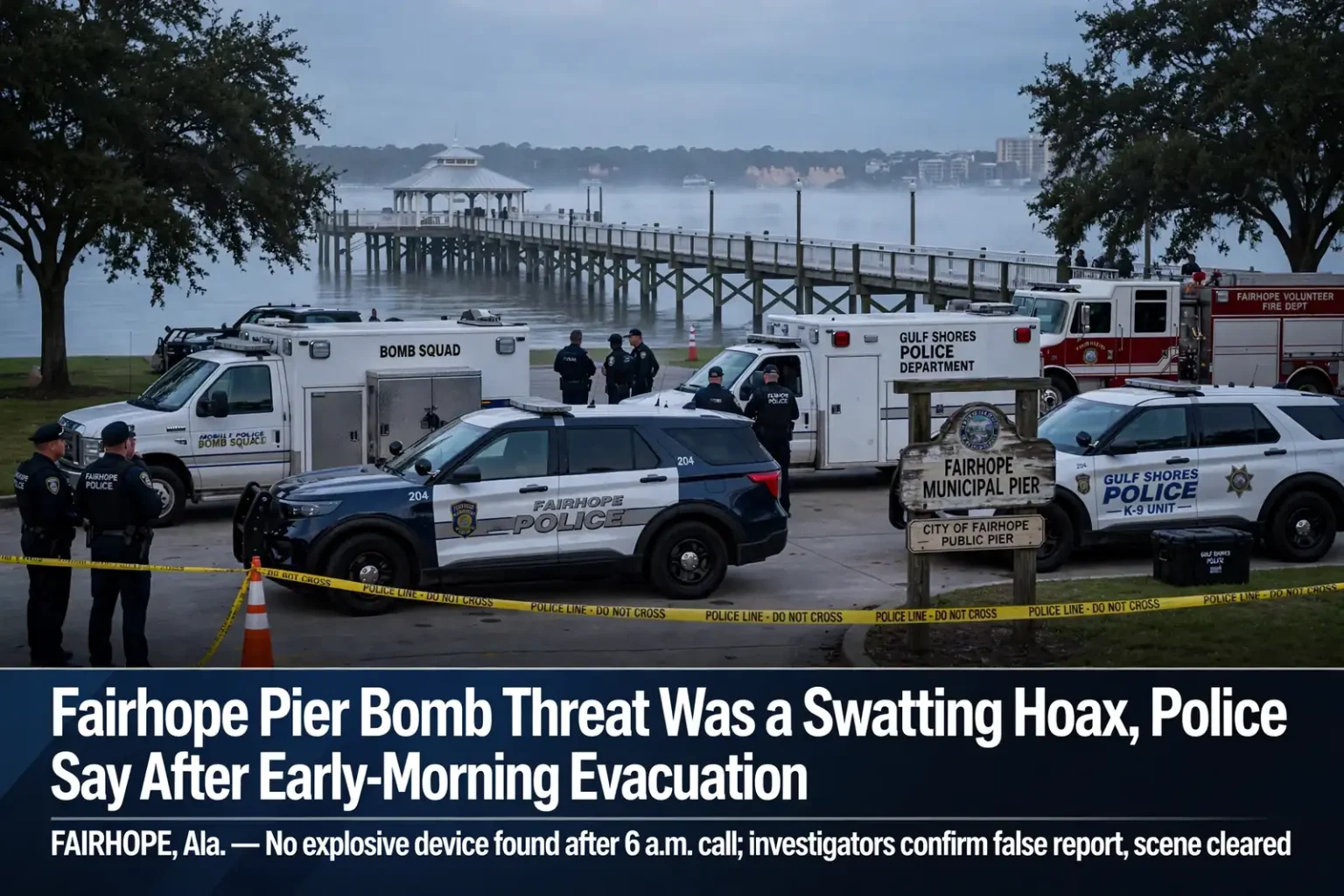
FAIRHOPE, Ala. — A Fairhope pier bomb threat that forced officers to evacuate the area around the city’s Municipal Pier early Friday, Oct. 16, turned out to be a hoax, and investigators say the call was a deliberate swatting attempt meant to draw a large, armed police response to one of the city’s best-known landmarks.
No explosive device was found, and police said there is no ongoing threat to the public. The investigation into who made the call remains open.
What happened
At about 6 a.m. Friday, the Fairhope Police Department’s dispatch center received a call on a 911 line from an unidentified person. The caller claimed a bomb had been placed in a vehicle near the Fairhope Municipal Pier area.
Fairhope police were the first to arrive. Officers cleared everyone from the area, secured a perimeter and began a sweep of the grounds. The Fairhope Volunteer Fire Department also responded.
Several outside agencies joined the response, including:
- The Gulf Shores Police Department’s bomb-detection K-9 unit
- The Mobile Police Department Bomb Squad
- Emergency medical services
After a thorough search of the premises, law enforcement officials found no evidence of any active danger. The scene was cleared, and normal operations at the pier resumed.
Investigators call it a swatting hoax
Investigators have confirmed the incident was a swatting call. Swatting is the practice of making a false report of a serious emergency, such as a bomb, a hostage situation or an active shooter, with the goal of sending a heavily armed police response to a specific place or person. The name comes from SWAT teams, the tactical police units that are often dispatched to such calls.
Swatting calls are often made using tools that hide the caller’s identity or location, which can make them difficult to trace. Even when no one is hurt, they tie up officers, firefighters, bomb technicians and medics who might otherwise be available for real emergencies, and they can frighten people who happen to be nearby when police arrive.
Officials said Fairhope has received numerous swatting calls in recent years. Police did not say whether Friday’s call is believed to be connected to any of those earlier incidents.
Why agencies respond in force
Even when a threat seems likely to be false, police and fire departments generally must treat every report of a bomb as real until they can rule it out. That is why Friday’s call brought in specialized help from two other cities.
Bomb-detection dogs are trained to recognize the odors of explosive materials and can search vehicles, open areas and structures quickly. Bomb squads, such as the Mobile Police Department’s unit, are staffed by specially trained officers who handle suspicious devices. Smaller departments across the region often rely on mutual aid from larger agencies for those resources, as Fairhope did on Friday.
Evacuating the area first and then sweeping it methodically is a standard approach. It keeps the public at a safe distance while officers and dogs search for anything suspicious, including vehicles parked near the location named by the caller.
A beloved spot on Mobile Bay
The Fairhope Municipal Pier stretches into Mobile Bay at the foot of Fairhope Avenue, below the bluff that rises above the city’s waterfront park. It is one of the most visited places on the Eastern Shore, drawing walkers, anglers, families and visitors who gather in the evenings to watch the sun set over the bay. The surrounding park, with its well-known rose garden and fountain, is a centerpiece of the city’s public bayfront.
Because the pier is busy early in the day with walkers and people fishing, a 6 a.m. threat there had the potential to disrupt many people’s routines. Officials did not report any injuries connected to the evacuation.
False reports are a crime
Making a false report of a bomb or other emergency is a crime under Alabama law, and swatting calls can also bring federal charges in some circumstances, particularly when they cross state lines or involve threats sent electronically. Penalties can be more severe when a hoax leads to injuries.
Bomb threats have disrupted other places in the region as well. South AL News previously reported on a bomb threat that temporarily emptied Baker High School in west Mobile.
How the public can help
Fairhope police said the investigation into the origin of Friday’s call remains active. Anyone with information about the call can contact the Fairhope Police Department.
Residents and visitors are encouraged to report suspicious items or activity to 911, and to follow officers’ instructions if they are asked to leave an area during an emergency response. Officials said that once Friday’s search was complete, normal operations resumed at the pier.