

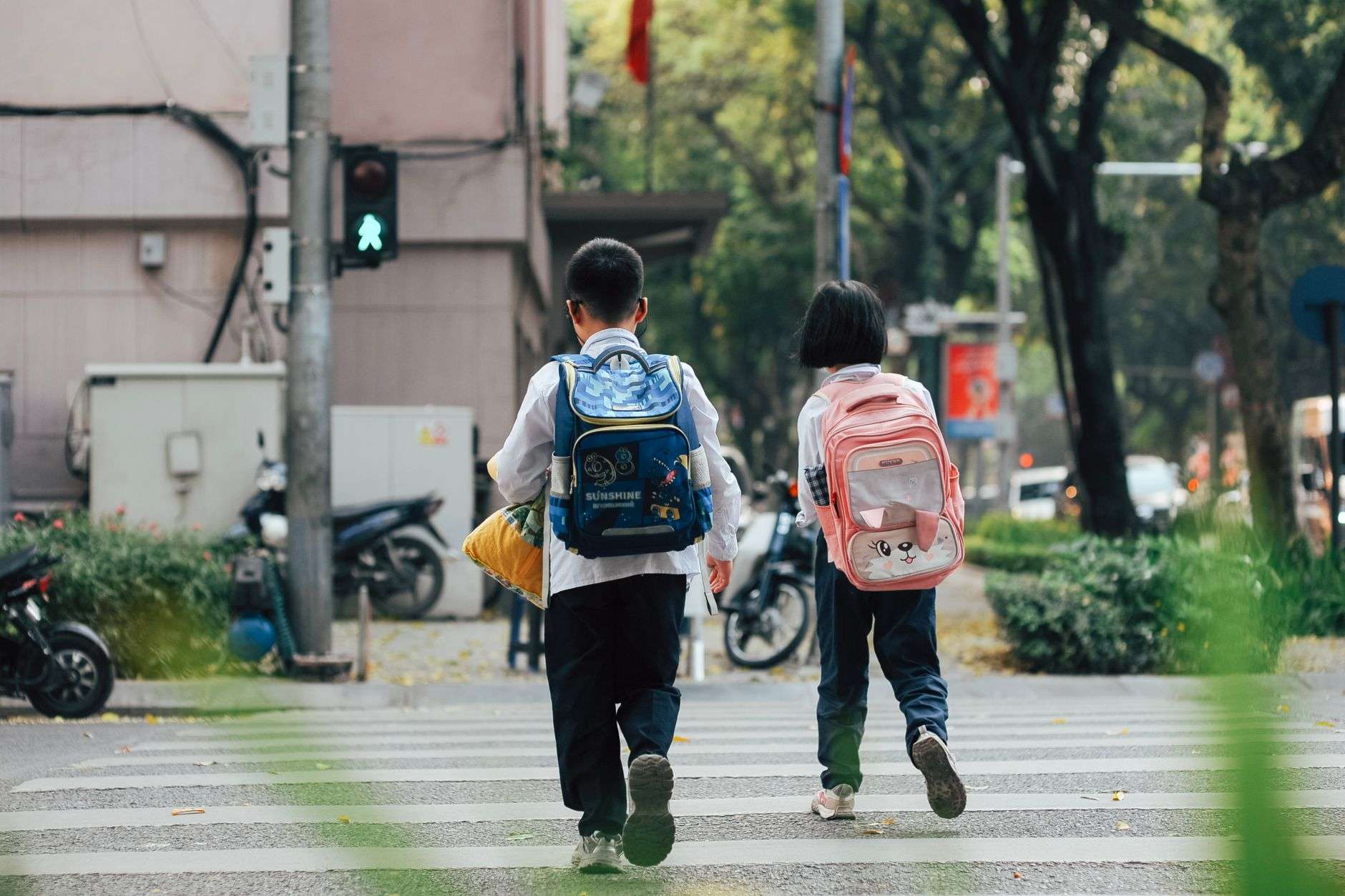
BALDWIN COUNTY, Ala. — The morning commute will look a little different at a number of Baldwin County schools on Wednesday, Oct. 7, when students, parents, teachers and neighbors trade the car line for sidewalks, bike lanes and scooters as part of National Walk and Roll to School Day.
The Baldwin County Safe Routes to School Coalition is leading the countywide effort, which joins thousands of schools across the country in the annual fall event. The day is built around three goals: encouraging healthy habits, promoting pedestrian safety and strengthening the connections between schools and the neighborhoods around them.
Walk and Roll to School Day at a Glance
- What: National Walk and Roll to School Day
- When: Wednesday, Oct. 7 (Fairhope East Elementary will hold its event Friday, Oct. 9)
- Who’s leading it locally: The Baldwin County Safe Routes to School Coalition
- How it works: Families, students and staff meet at designated spots no more than a mile from school and travel the rest of the way together
- Participating schools: Florence B. Mathis Elementary, Foley Elementary, Gulf Shores City Schools, Orange Beach Elementary, St. Patrick Catholic School, Fairhope West Elementary, Fairhope East Elementary, Daphne Elementary, Bay Minette Elementary and Summerdale School
- How to join: Contact your child’s school for meeting locations, times and details
How the Day Works
Each participating school is organizing its own Walk and Roll event, so the specifics will vary from campus to campus. In general, families, students and school staff will gather at designated meeting points no more than a mile from their school, then walk, bike, scoot or roll the rest of the way together as a group.
That group approach is a big part of the appeal. Traveling together, with adults along the route, makes the trip safer and turns an everyday commute into something closer to a neighborhood parade. Organizers say the goal is to transform the regular trip to school into a community celebration.
“Rolling” is meant to be inclusive. The term covers bicycles, scooters, skateboards, strollers and wheelchairs, so that students of all abilities, and younger siblings along for the ride, can take part.
Because meeting points, times and routes are being set by individual schools, families interested in participating should contact their local school directly. Organizers also encourage community members who don’t have children in school to take part by walking or rolling alongside students or by cheering them on along the way.
Schools Taking Part
The participating schools stretch from north Baldwin to the beaches:
- Florence B. Mathis Elementary (Foley)
- Foley Elementary (Foley)
- Gulf Shores City Schools
- Orange Beach Elementary
- St. Patrick Catholic School
- Fairhope West Elementary
- Fairhope East Elementary (event on Oct. 9)
- Daphne Elementary
- Bay Minette Elementary
- Summerdale School
The list includes schools in Baldwin County Public Schools, the separate Gulf Shores City Schools system and a Catholic school, a reflection of how the coalition’s effort crosses district lines.
A Tradition That Started in 1997
Walk to School Day began in 1997 as a simple one-day celebration and has since grown into a national tradition, according to the Safe Routes Partnership, a national nonprofit that supports and promotes the event. Each fall, thousands of schools in all 50 states, the District of Columbia and Puerto Rico take part. The 2026 national date is Wednesday, Oct. 7, and next year’s is set for Oct. 6, 2027.
Over time, the event has evolved in both name and purpose. Adding “roll” to the title acknowledges the many ways children get around, and organizers nationally now frame the day as part of a larger, year-round movement to make routes to school safe and accessible for every child.
A spring counterpart, Bike and Roll to School Day, has been held nationally each May since 2012.
Why Walking to School Matters
A generation or two ago, walking or biking to school was the norm. According to National Household Travel Survey data cited by the Safe Routes Partnership, 48% of children ages 5 to 14 walked or biked to school in 1969. By 2009, that figure had fallen to 13%, while the share arriving by private car climbed from 12% to 44%.
Distance explains part of the change, as newer schools are often built farther from neighborhoods. But even among students who lived within a mile of school, the share walking or biking dropped from 88% in 1969 to 38% in 2009, according to the same data. Traffic safety concerns, busy roads without sidewalks and family schedules all play a role.
Supporters of Safe Routes to School programs point to several benefits of reversing that trend:
- Health: The Centers for Disease Control and Prevention recommends that children and teens ages 6 to 17 get at least 60 minutes of physical activity every day. A walk or ride to school can cover a meaningful part of that.
- Less congestion: Fewer cars in drop-off lines can mean less traffic around campuses, which can make the area safer for everyone.
- Environment: Fewer car trips mean less vehicle exhaust near schools.
- Community connections: Walking together gives neighbors, parents and students a chance to meet and get to know one another.
Organizers of the Baldwin County event say it highlights the broader impact of choosing to walk or roll to school, with potential benefits for individual health, neighborhoods and the environment.
What Safe Routes to School Is
Safe Routes to School is both a concept and a funding stream. A dedicated federal Safe Routes to School program was created by Congress in 2005 to help communities build sidewalks, crosswalks and bike paths near schools and to pay for education and encouragement programs. Today, projects of that kind are typically funded through the federal Transportation Alternatives program, administered in Alabama by the Alabama Department of Transportation.
Local coalitions like Baldwin County’s bring together schools, local governments, health advocates and parents to identify barriers to safe walking and biking, push for improvements and organize events like Walk and Roll to School Day that get families out on the routes.
The need for safer routes is especially relevant in a fast-growing county. Baldwin County has been one of the fastest-growing counties in Alabama for years, and new subdivisions, heavier traffic and busier roads have made pedestrian safety an ongoing concern for families and city planners alike.
Beyond One Day: The Walking School Bus
National organizers describe Walk and Roll to School Day as a starting point rather than a one-time outing, and families who enjoy the experience have a well-established model for keeping it going.
A “walking school bus” is a group of children who walk to school together under the supervision of one or more adults. Like a real bus, it follows a set route with designated “stops” where children join along the way, and it runs on a regular schedule. A “bicycle train” works the same way for students who ride bikes.
The approach can be as informal as two families taking turns walking their children a few blocks, or as structured as a weekly program with sign-ups and rotating parent volunteers. Safe Routes to School advocates promote the model because it addresses one of the most common reasons parents give for driving their children: concern about letting young students walk alone near traffic.
Families who want to start one can begin by mapping the safest route to school, noting sidewalks, crosswalks and crossing guard locations, and by checking with the school about drop-off procedures for students who arrive on foot.
Safety Tips for Walkers and Rollers
Whether families join an organized group Oct. 7 or decide to make walking a regular habit, pedestrian safety advocates offer a few basic reminders:
- Use sidewalks where they exist. Where there are none, walk facing traffic as far from the road as possible.
- Cross at crosswalks or intersections, and follow the directions of crossing guards.
- Look left, right and left again before crossing, and keep watching for turning vehicles.
- Put phones and headphones away near traffic.
- Bike riders should wear a properly fitted helmet, ride with traffic and use hand signals.
- Younger children should walk with an adult until they can reliably judge traffic.
- Drivers should slow down in school zones, watch for children and be ready to stop.
How to Participate
Parents and guardians at participating schools should check with their school office, teachers or school communications for meeting locations, start times and any sign-up requirements. Fairhope East Elementary families should note that their school’s event is scheduled for Oct. 9 rather than Oct. 7.
For schools that aren’t on this year’s list, the national organizers encourage families and school leaders to consider joining in future years. And for everyone else, the ask is simple: slow down, watch for young walkers and rollers, and give them a wave or a cheer as they head to class.