64 Donors Turn Out for Baldwin EMC’s 21st Power of Giving Drive, Enough to Help Up to 192 Patients
Baldwin EMC's 21st annual Power of Giving drive drew 64 blood donors on Nov. 5 and collected supplies for the William F. Green Veterans Home in Bay Minette.
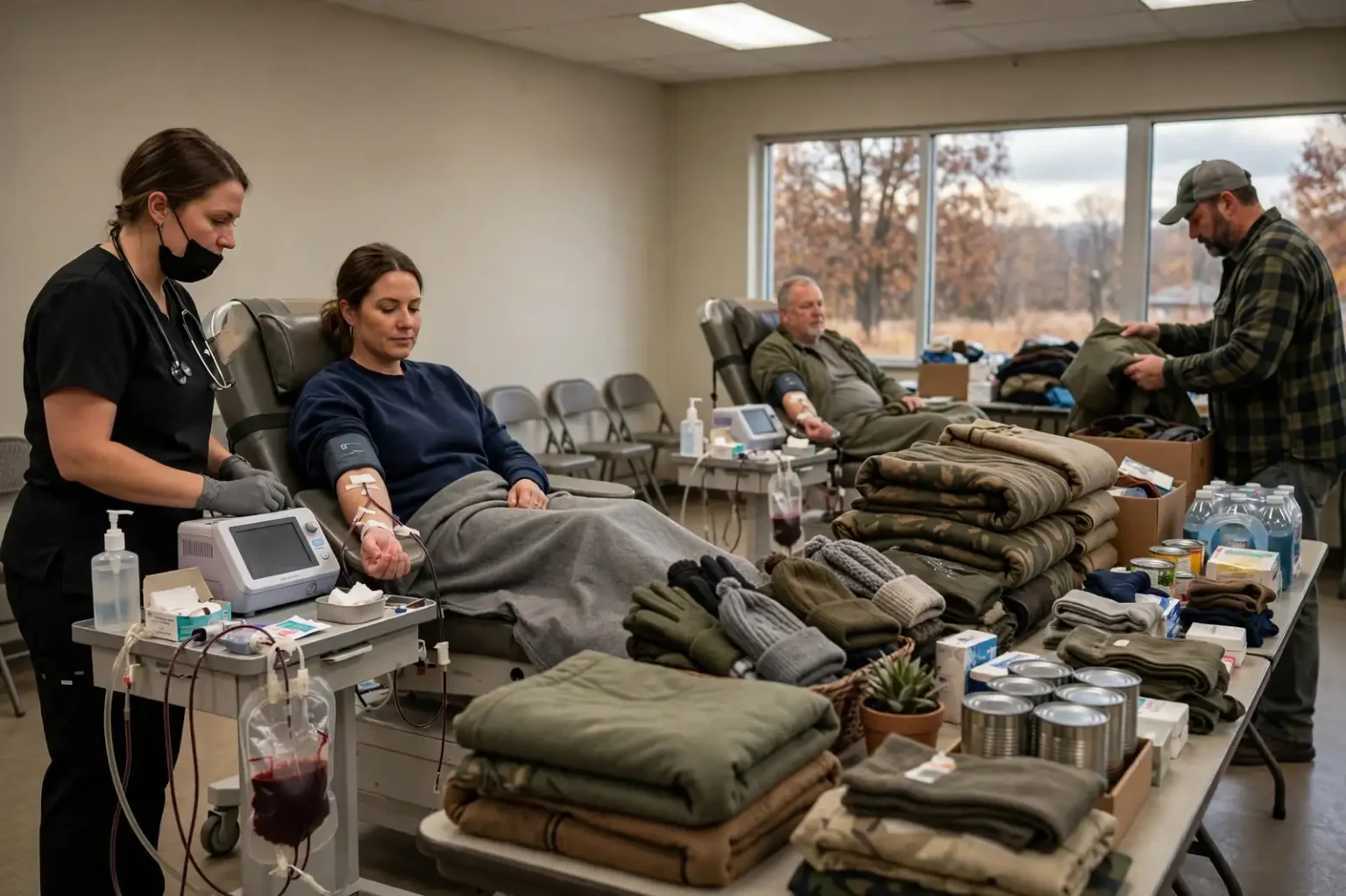
SUMMERDALE, Ala. — Sixty-four people gave blood at Baldwin EMC’s Power of Giving drive on Nov. 5, and the electric cooperative estimates their donations could help save as many as 192 lives. The 21st annual event, held in honor of Veterans Day, also gathered food, clothing and other necessities for residents of the William F. Green Veterans Home in Bay Minette.
The combined drive, formally known as the Power of Giving Blood and Veterans Supply Drive, has become a fixture on Baldwin County’s fall calendar, giving residents two ways to help in a single stop: supporting hospital patients who need transfusions and supporting veterans who live in long-term care.
By the numbers
- 64 blood donors took part.
- 9 of them made double red cell donations.
- 8 donated platelets.
- 192 lives could potentially be saved by the donations, according to the cooperative.
- 21 years the drive has been held.
The 192 figure works out to three lives for each of the 64 donors. That lines up with a widely used estimate in blood banking that one donation can help up to three patients, because collected blood can be separated into components, such as red cells, plasma and platelets, that go to different people.
A Baldwin EMC spokesperson said the community has turned the drive into a meaningful tradition over more than two decades, and credited this year’s donors with providing enough blood to potentially save 192 lives. The cooperative also thanked everyone who set aside time to give blood or supplies, saying the event shows how much a community can accomplish when people come together.
Three kinds of donations
Not every donor at the drive gave the same way. Blood centers offer several types of donation, and each meets a different need in hospitals.
Whole blood
Whole blood donation is the most common type. A donor gives about a pint of blood, which is later separated into its components in a lab. Healthy donors can usually give whole blood again after about eight weeks.
Double red cells
In a double red cell donation, an automated machine collects two units of red blood cells from one donor and returns the remaining plasma and platelets to the donor’s body. Because the donor gives twice the red cells of a standard donation, the waiting period before the next double red cell donation is longer, generally about 16 weeks. Red cells are used for patients who have lost blood through surgery, trauma or childbirth, and for people with conditions such as anemia.
Platelets
Platelets are tiny cell fragments that help blood clot. They are often needed by cancer patients undergoing chemotherapy, organ transplant recipients and people having major surgery. Platelet donation also uses an automated machine and takes longer than a whole blood donation.
Platelets have a short shelf life, only about five to seven days, so blood centers need a steady stream of platelet donors. Because the body replaces platelets quickly, eligible donors can give them far more often than whole blood, up to 24 times a year.
Supplies headed to Bay Minette veterans
Alongside the blood collection, residents donated food, clothing and other everyday items for the William F. Green Veterans Home in Bay Minette, the Baldwin County seat. The home is one of Alabama’s state veterans homes, which provide long-term care for veterans.
Pairing the drive with a supply collection ties it to Veterans Day, observed every Nov. 11. The holiday began as Armistice Day, marking the end of fighting in World War I on Nov. 11, 1918, and was renamed Veterans Day in 1954 to honor Americans who served in all of the nation’s wars.
A long-running community tradition
Baldwin EMC is a member-owned electric cooperative headquartered in Summerdale. Like other electric co-ops, it is owned by the people it serves, and community programs such as the Power of Giving drive are part of its local outreach.
The cooperative holds the event each year as a chance for residents to support lifesaving blood donation and honor local veterans at the same time. The drive was held with LifeSouth Community Blood Centers, the nonprofit blood bank that supplies many hospitals in the region.
How to give blood after the drive
Residents who missed the Nov. 5 event can still donate. The holiday season is often a difficult stretch for blood banks, as busy schedules, travel and seasonal illness keep regular donors away while hospital needs continue.
Blood centers in the area hold drives regularly at community sites, churches, schools and businesses, and many also operate fixed donor centers. A few general tips for donors:
- Check eligibility first. Donors typically must be in good health, at least 17 years old, weigh at least 110 pounds and bring a valid photo ID.
- Eat and hydrate. Have a healthy meal and drink plenty of water before donating.
- Ask about donation types. Blood center staff can explain whether you qualify for double red cell or platelet donation.
- Plan for rest. Allow time to sit for a few minutes with a snack and a drink afterward, and avoid strenuous activity the rest of the day.
Questions about medications, recent travel or past illness should go to the blood center before donating, since eligibility rules can vary by donor and by type of donation.