

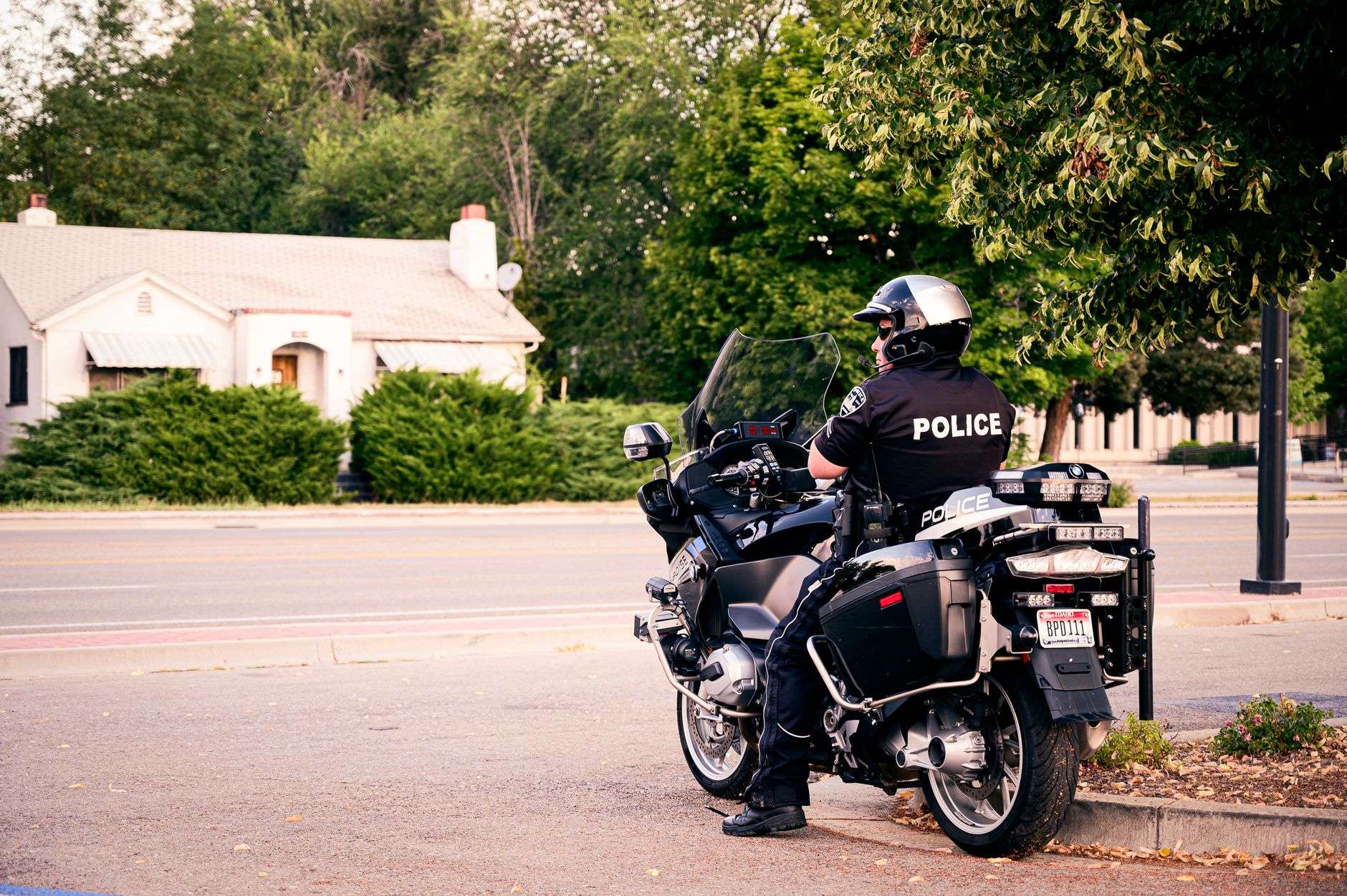
MOBILE, Ala. — A line of cones in the parking lot at Bel Air Mall is giving police motorcycle officers a chance to sharpen skills they say could one day help them safely navigate traffic, crowds and high-pressure situations.
Officers from multiple agencies gathered in Mobile this week for Battle of the Bay, a friendly motorcycle competition that organizers say is also hands-on training.
Competition as a Training Method
Ryan Blakely, one of the event’s co-organizers, said the challenge gives riders a way to improve while testing themselves against fellow officers.
“Motorcycle units are a formidable thing during Mardi Gras,” Blakely said. “Big events, they use [them] for crowd control and being able to move in tight spaces.”
He said the competition format makes that training more engaging.
“Doing it in a competition style is a pretty fun way to get better training and wanting to get better,” Blakely said.
That framing describes a well-established approach in police motor training. Slow-speed precision riding is a perishable skill — one that degrades without regular practice — and departments across the country use competitive rodeos to keep officers drilling on it. The scoring is typically based on time plus penalties for downed cones or a foot touching the ground, which rewards control rather than speed.
Officers From Across the Region, and One From Alaska
The event has drawn officers from around the region and beyond. Blakely said one rider traveled from Alaska, while others came from departments including Pascagoula Police.
For Officer Cody Crager, the trip from Pascagoula to Mobile was also an opportunity to train with agencies that may one day work alongside one another during a major event.
“The camaraderie here is great,” Crager said. “We have a good relationship with Mobile. We love being over here.”
Crager said the skills on display are not simply for competition.
“This is not just a competition, it’s training,” Crager said. “And the skills that you see out here are implemented on the street and can possibly save our lives.”
What the Course Actually Demands
On the course, riders navigate sharp turns and obstacles at slow speeds. Crager said the level of precision required can surprise people unfamiliar with motorcycle-unit training.
“We take a 900-pound motorcycle and we fit it into a roughly 18-foot 360 circle,” Crager said. “It’s all sharp turns, very meticulous.”
Those numbers are worth sitting with. A fully equipped police motorcycle — radio, emergency lighting, saddlebags, windshield, crash bars — is a substantially heavier machine than a stock bike. Turning one inside an 18-foot circle means operating at or near full steering lock at walking pace, a maneuver that depends entirely on coordinated clutch, throttle and rear brake control. At that speed the machine provides almost no gyroscopic stability. The rider is holding it up.
That control can be important in everyday situations, he said — whether an officer has to navigate around vehicles, people or a sudden hazard in the roadway.
“You’ve got to be able to maneuver around cars, people,” Crager said. “Somebody slams on brakes in front of you, you’ve got to know how to go around them. So it’s very important that we keep these skills sharp and controlled.”
Why Motorcycles at All
Blakely said motorcycles give officers an advantage during large gatherings because they can move into spaces that are too tight for larger police vehicles. Units can also work in formations when managing crowds.
“Because they’re so small, they’re maneuverable, we can get in tight places,” Blakely said. “And we can form up and do formation-type varieties be up close and personal where people can see the situation.”
Mobile’s experience with major crowds — particularly Mardi Gras — also makes it a valuable place for agencies to train, Blakely said.
Mobile’s Carnival season puts dozens of parades on city streets over several weeks, with crowds pressing against barricades along routes that run through the downtown grid. A patrol car that enters that environment is largely committed to the street it is on. A motorcycle is not.
The Skills Travel
That specialized experience is not staying within Mobile city limits. Blakely said members of the Mobile Police Department’s Mounted Unit are preparing to assist with crowd control at Ole Miss, where their familiarity with large crowds can be put to use.
The arrangement runs in both directions. Mobile lends officers to other departments for their peak events, and those departments send help back when Carnival season arrives — a reciprocal structure that costs participating agencies far less than contracting the same coverage.
Relationships Built Before They Are Needed
Crager said events like Battle of the Bay help agencies build connections before they are needed.
“It’s important that we’re all on the same page,” Crager said. “We can jump right in with each other. We know what we’re doing.”
He said that shared understanding is especially important when officers from different departments are working together in front of large crowds.
“We all come together and we kind of know what we’re doing,” Crager said.
That is the argument for a cone course in a mall parking lot. Mutual aid agreements put officers from different agencies shoulder to shoulder on short notice, often at the largest and most complicated events of the year. Whether those officers have ridden together before — and know how the others handle a formation, a wedge or a sudden push — is not something that can be arranged once the crowd has already arrived.