

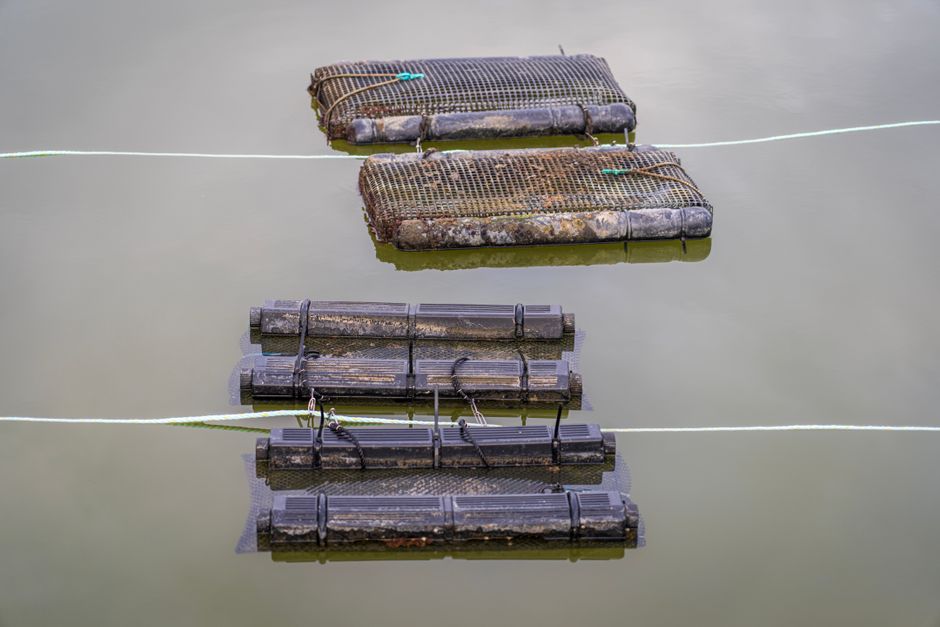
No two oyster farms taste the same. The flavor of an oyster is a map of where it grew — salinity, water depth, wave energy, the character of the bottom — and that is why oyster lovers can name their favorites by the water they came from. At Fort Morgan, on the narrow spit of land where Mobile Bay meets the Gulf, Admiral Shellfish Company has turned that geography into one of the finest raw oysters grown in Alabama.
Two Farmers, One Perfect Spot
The farm’s origin story is improbable. Anthony Ricciardone and Chris Head, working independently and without knowing each other, studied more than 50 miles of shoreline around Mobile Bay searching for the best place to grow oysters — and each settled on the same narrow spit near the bay’s entrance from the Gulf, beside State Historic Site land where Fort Morgan and the Dauphin Island ferry dock sit. When Ricciardone contacted Head about buying the property, Head had already purchased it himself. Neither would sell. “Why don’t we partner up?” Ricciardone proposed, and Admiral Shellfish Company was born.
They chose the spot for hard science reasons. Salinity from Gulf water moving in and out with the tide is ideal; water quality and depth suit oyster growing; the sandy bottom and the wide, open expanse of the bay create strong wave energy. Farming further up the bay, Ricciardone had found, produces oysters — just not the kind that end up on a James Beard restaurant’s menu.
Seven Years of Permits, Then a Crop
Getting from idea to harvest took seven years. Three of those years went to permitting and approvals through the Army Corps of Engineers, the Coast Guard, State Lands, the Alabama Marine Resources Department and the Alabama Department of Public Health. Four more years of growing and harvesting followed before the farm’s oysters reached the commercial market.
The farm’s shoreline equipment tells you how labor-intensive the crop is: mesh bags housing oysters through their growth, a sorter that separates oysters ready for market from those returned to the water to mature, and steel rods that stake the pontoons holding everything in place. Each crop is touched about once a month, and overlapping crops keep a sustainable harvest flowing to restaurants year-round. Harvested oysters go to one of two primary processors — Bon Secour Fisheries or Crimson Bay Oyster & Seafood — which supply restaurants, distributors and the public.
Why the Bay’s Mouth Grows a Better Oyster
The science explains the flavor. Fresh Gulf water ebbing and flowing with each tide gives Admiral Shellfish oysters their distinctive salty bite, and the bay’s width here — with Dauphin Island and Bayou La Batre to the west and Bon Secour and the Eastern Shore to the north — lets wave action tumble the oysters naturally. That tumbling tells the oyster to put its energy into growing deeper rather than longer, producing the deep, meaty cup the farm is known for.
The company buys its oyster spat — seed — from local nurseries rather than spawning its own, and works closely with researchers at the Auburn University Shellfish Lab and the University of Southern Mississippi to refine methods and test new ideas. Growth is monitored the way a row-crop farmer watches a field: sorting begins about two weeks after planting, roughly 10 percent of a crop is harvested at six months, and about 15 percent comes out each month thereafter until the crop is complete. Plant 200,000 tiny oysters in a few floating cages and, by market size, they will cover an acre of water surface.
Weather writes the final chapter. Too much freshwater from heavy rains stresses oysters; you can read the seasons in an oyster’s shell — bands of rapid growth and retracted growth recording cold snaps, salinity surges and calm stretches. Every harvest is tagged and refrigerated on strict Alabama Department of Public Health timetables, which vary by month, before it reaches a processor.
A Crop That Gives Back
Oyster farming is unusual among crops in that it returns more to the environment than it takes. The oysters filter and clean the water as they grow, some breed and add to wild stocks, and the farm requires no feed, fertilizer or fresh water. Wild-caught oyster harvests have declined for decades, and farm-raised oysters have filled the gap — the same species Gulf crews have harvested for centuries, only cultivated.
Admiral Shellfish’s goal is simple: grow the best oysters available and sell them to select restaurants. The farm even created a special oyster — the King Ransom — with Jesse’s on the Bay up the road. For the two partners, both with science backgrounds, the work is a continuing education: new hatcheries, new equipment, new methods, and always more to learn about the trade.
The next time a raw bar menu lists an oyster from Fort Morgan, you’ll know why it tastes that way — and how much patient work rides on every tide.