MAWSS: Faulty Air Release Valve Sends 56,250 Gallons of Wastewater Into Rabbit Creek
A defective air release valve at 5480 Rangeline Road spilled about 56,250 gallons of wastewater into Rabbit Creek on Nov. 6, according to MAWSS, which says the valve has been repaired.
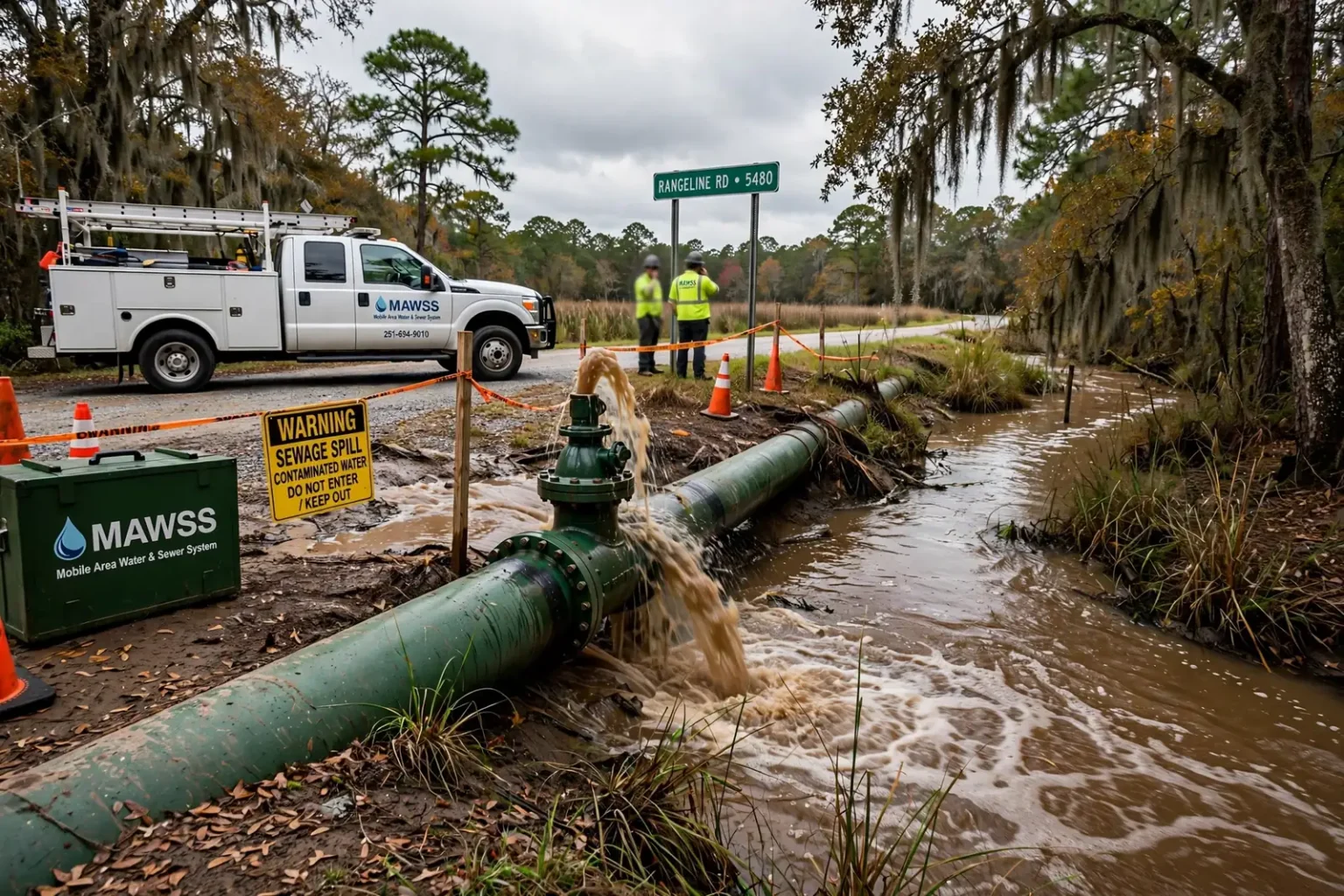
MOBILE, Ala. — A defective air release valve caused about 56,250 gallons of wastewater to spill into Rabbit Creek on Friday, Nov. 6, according to the Mobile Area Water and Sewer System.
The overflow happened at 5480 Rangeline Road and was reported by a MAWSS employee, the utility said. Crews responded, repaired the faulty valve and are taking steps to prevent further overflows at the site.
MAWSS did not say how long the overflow lasted or whether any water quality testing or advisory would follow.
What happened
- When: Friday, Nov. 6, 2026
- Where: 5480 Rangeline Road, in Mobile County
- Amount: About 56,250 gallons of wastewater
- Receiving water: Rabbit Creek
- Cause: A defective air release valve, according to MAWSS
- Status: The valve was repaired, and the utility says it is working to prevent a repeat
What an air release valve does
Air release valves are installed at high points along sewer pipelines, especially pressurized lines known as force mains that carry wastewater from pump stations. As sewage moves through those pipes, air and gases can collect at high points and reduce flow or put stress on the line. The valves are designed to let that air escape automatically while keeping wastewater inside the pipe.
When an air release valve fails, wastewater under pressure can escape through it. Because force mains are pressurized, a failure can release a significant volume before it is found and repaired.
About Rabbit Creek
Rabbit Creek is a spring-fed tributary of Dog River in south Mobile County. It flows into the western side of the river, which in turn empties into Mobile Bay. The creek is popular with anglers, who fish it for bass, bream and redfish.
The creek is part of the Dog River watershed, a roughly 95-square-mile urban watershed that drains much of the city of Mobile into Dog River and Mobile Bay. Conservation groups have worked to protect the creek; Mobile Baykeeper has reported that more than 100 acres of Rabbit Creek wetlands are now permanently protected.
Health precautions after a sewage spill
MAWSS’s announcement did not include specific health guidance for this overflow. In past overflows, Mobile County Health Officer Dr. Kevin Michaels has urged residents to take these general precautions near affected waters, as South AL News reported in October:
- Avoid contact with affected water, soil and any visible sewage.
- Keep children and pets away from ditches, creeks and standing water that may be contaminated.
- Do not swim, wade or fish in water that looks or smells contaminated.
- If contact happens, wash skin and clothing thoroughly with soap and clean water as soon as possible.
Untreated sewage can carry bacteria, viruses and parasites that cause stomach illness and skin infections. Anyone who becomes sick after contact with water that may be contaminated should contact a health care provider.
A busy stretch for sewer overflows
The Rabbit Creek spill is one of several sewer overflows reported in south Alabama in recent weeks. MAWSS investigated an intermittent overflow into Halls Mill Creek near the Cypress Shores subdivision in October. On Nov. 3, Saraland reported a 900-gallon overflow that reached Norton Creek, and the Bayou La Batre Utilities Board has reported overflows in Coden and on Shell Belt Road.
Who oversees overflows
MAWSS is the public water and sewer utility for the city of Mobile and surrounding areas. Utilities in Alabama report sanitary sewer overflows to the Alabama Department of Environmental Management, which regulates wastewater systems under state and federal clean water rules.
The utility is also weighing changes to how it pays for its sewer system. MAWSS has proposed a sewer rate increase that would add about $3.41 a month to a typical Mobile household bill starting in 2027, with a public hearing set for Nov. 18 and a board vote scheduled for Dec. 7.
How to report a problem
Residents who see sewage leaking from a manhole, pipe or valve can report it to MAWSS. Prompt reports help crews find and stop overflows sooner and limit how much wastewater reaches local creeks.