Atmore Nursing Center Holds ‘Baby Shower’ as Therapy Dolls Arrive for Residents With Dementia
Atmore Nursing Center received 10 therapy dolls through The Grand Baby Project and a Wind Creek Casino donation, giving residents with dementia a new source of comfort, memories and calm.
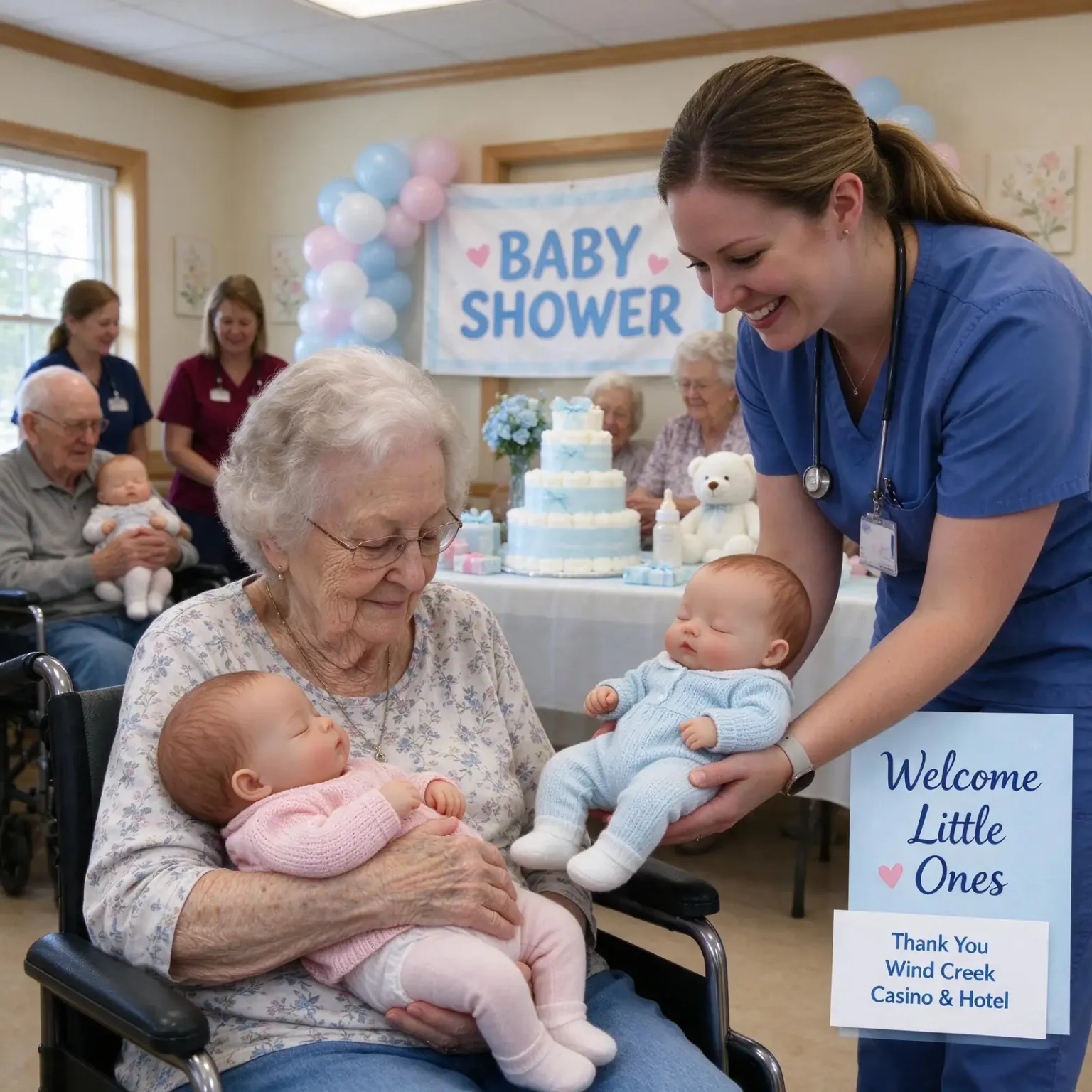
ATMORE, Ala. — The guests at a baby shower in Atmore on Thursday were not expecting parents. They were residents living with dementia at Atmore Nursing Center, and the “babies” they welcomed were lifelike therapy dolls meant to bring comfort, calm and a sense of purpose to their days.
The nursing center received 10 therapy dolls through The Grand Baby Project, a nonprofit dementia doll therapy program, in a partnership with Crowne Health Care, the family-owned company that operates the facility. A donation from Wind Creek Casino paid for the dolls.
Center staff and partners presented the dolls to residents at the surprise shower on Thursday, Nov. 5.
‘Something meaningful to look forward to’
Atmore Nursing Center Administrator Morgan Smith said the program fits the center’s goal of making each resident’s day better.
“We’re always looking to do anything to enhance their quality of life and give them something meaningful to look forward to in their day, and we know that this is going to be a project to fill all of those needs,” Smith said.
The dolls will not simply be handed out and left on a shelf. Residents will take part in organized doll therapy sessions two or three times a week, with each session lasting about 45 minutes per resident.
Unlocking memories and easing agitation
Hospice liaisons from ACG Hospice who attended the event said they have seen the dolls stir long-buried memories in people with dementia, some reaching back to childhood.
“The importance of the dolls is the core memories that it unlocks for them from as far back as childhood. And we have seen that when we have brought the dolls in, it unlocks those memories that they can share with us, and not only the memories, but it also helps calm agitation,” ACG Hospice Liaison Stacey Till said.
Agitation, restlessness and anxiety are common and often distressing symptoms of dementia, both for the people experiencing them and for the family members and caregivers trying to help. Caregivers frequently look for non-drug approaches that can soothe residents without adding medications.
ACG Hospice Liaison Taylor Greene said the calming effect does not end when a session does.
“Several hours after the therapy is done, they still have carryover from the therapeutic benefits of these dolls,” Greene said. “It has been wonderful to see the dolls are able to elicit memories, bring back purpose for these residents, and it’s just something [I’m] really, really grateful that we’re able to be a part of.”
What is The Grand Baby Project?
The Grand Baby Project describes itself as the only dementia doll therapy certification program in the country. The nonprofit was founded in Houston by Tonja Moon and trains caregivers, senior living staff and family members to use doll therapy with people living with Alzheimer’s disease and other forms of dementia.
According to the organization, its mission is “to support families, caregivers and memory care communities through dementia doll therapy and training to bring dignity, joy and purpose back into daily care.” Along with dolls, it offers caregiver education and an engagement workbook, and it has built a network of certified dementia doll therapy practitioners and ambassadors at senior living communities around the country. Some communities, like Atmore’s, introduce the dolls with a baby shower.
“Dementia does not erase attachment, identity, or the need for meaning,” Moon writes on the organization’s website.
How doll therapy works
Doll therapy is a non-drug approach used in some dementia care settings. Residents are offered a realistic baby doll to hold, rock, dress, feed or simply keep nearby. For many older adults, especially those who spent years raising children or grandchildren, caring for a baby is a deeply familiar role. Holding a doll can bring back that sense of being needed and give a person a calm, structured activity to focus on.
Supporters of the approach say it can reduce anxiety and restlessness, encourage conversation and help residents connect with staff and family members. Organized, scheduled sessions like the ones planned at Atmore Nursing Center also give caregivers a chance to watch how each resident responds and adjust the approach to the individual.
Dementia care professionals generally stress that doll therapy should be offered, not forced, and that it works best when staff are trained to introduce the dolls respectfully and let each person decide how to engage. That kind of training is the focus of The Grand Baby Project’s certification program.
About Atmore Nursing Center
Atmore Nursing Center is a 100-bed skilled nursing facility at 715 E. Laurel St. in Atmore. It is operated by Crowne Health Care, a family-owned Alabama company whose statewide network includes 17 skilled nursing facilities, five assisted living facilities and one independent living facility.
The center offers skilled nursing and rehabilitation, physical, occupational and speech therapy, and a dedicated memory care unit, Magnolia Memory Care, for residents with Alzheimer’s disease and other forms of dementia. The facility is Medicare and Medicaid certified.
Wind Creek’s role
The dolls were funded through a donation from Wind Creek Casino in Atmore, which is owned by the Poarch Band of Creek Indians, whose reservation lies just outside the city. Wind Creek has been a visible community partner in Atmore this fall. In October, it opened a relief drive to help residents recovering from Hurricane Isaias, as South AL News reported.
A growing need
The need for dementia care is growing in Alabama and across the nation. The Alzheimer’s Association estimates that 7.4 million Americans age 65 and older are living with Alzheimer’s disease in 2026, about 1 in 9 people in that age group. Without a medical breakthrough, the association projects that number could reach 13.8 million by 2060.
For families in Escambia County and elsewhere whose loved ones live in nursing homes and memory care units, programs that make daily life calmer and more meaningful for those residents can also ease the burden on staff and give visiting family members new ways to connect with a loved one.
Resources for families
Families caring for someone with dementia can find help and information from several sources:
- The Alzheimer’s Association operates a free 24/7 Helpline at 1-800-272-3900 staffed by specialists who can answer questions about dementia, caregiving and local resources.
- The Grand Baby Project offers information on dementia doll therapy for home caregivers and senior living communities on its website.
- Atmore Nursing Center can be reached at (251) 368-9121 for information about its memory care services.
- In Baldwin County, the Fairhope Public Library will show the dementia documentary “Alive Inside,” which explores how music can reach people living with memory loss, in a free screening on Dec. 4. Read more about the screening.