

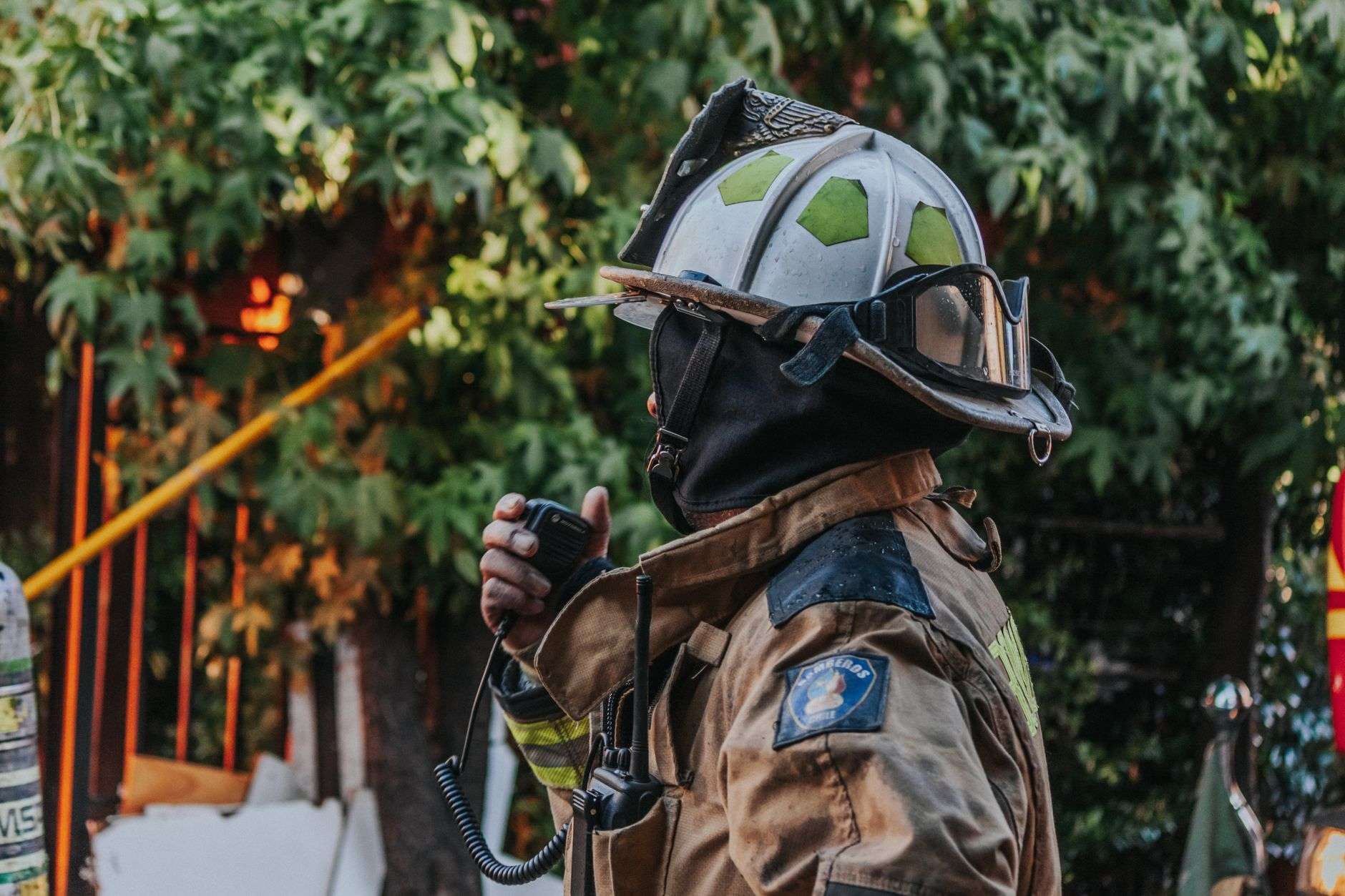
BELFOREST, Ala. — Belforest Volunteer Fire Department Battalion Chief Michael A. Aaron has earned the Chief Fire Officer designation from the Commission on Professional Credentialing, an entity of the Center for Public Safety Excellence.
The commission conferred the designation Sept. 10 following a professional credentialing and peer-review process.
What the Designation Requires
The Chief Fire Officer designation is voluntary and recognizes fire service leaders who demonstrate excellence across a defined set of areas: experience, education, professional development, community involvement and technical competence.
The process is not an examination. It is a portfolio review in which a candidate documents accomplishments across each area and submits the package to peer review by other credentialed fire officers.
The designation is valid for three years and requires continued professional growth, professional contributions, association membership and community involvement, along with adherence to a professional code of conduct.
That renewal requirement is the structural feature that distinguishes a credential from a certificate. A designation that expires forces a holder to keep accumulating development rather than resting on a one-time achievement.
Thirty Years, Starting at 14
Aaron began his fire service career in 1994 as a junior firefighter and has served for more than 30 years across volunteer, combination, municipal and federal fire departments.
He currently oversees fire operations, training, officer development and emergency incident command with the Belforest Volunteer Fire Department.
The range of department types in that history is unusual and useful. Volunteer departments, combination departments that mix volunteer and paid staff, municipal career departments and federal fire departments each operate under different staffing models, funding structures and command expectations. An officer who has worked in all four brings a comparative understanding that a single-department career does not produce.
Two Degrees, Both at 4.0
In 2026, Aaron earned an Associate of Science in Fire Science and a Bachelor of Science in Fire Department Administration from Columbia Southern University. He completed both with a 4.0 GPA and graduated summa cum laude with his bachelor’s degree.
Completing both degrees in the same year, at that standard, while serving as a battalion chief, is a demanding combination. Fire service education is typically pursued part-time and online precisely because it has to fit around shift work and call volume.
Still Adding Certifications
Aaron is continuing his professional development by pursuing NFPA Certified Fire Protection Specialist and Florida Firesafety Inspector III certifications. He also holds an Alabama Fire Investigator certification and is completing coursework for Florida Fire Investigator certification.
The list spans two distinct professional tracks.
Fire protection and inspection credentials are preventive. They cover code compliance, sprinkler and alarm systems, occupancy requirements and plan review — the work that keeps fires from starting or from spreading once they do.
Fire investigation credentials are retrospective. They cover origin-and-cause determination, evidence preservation and the analysis that distinguishes an accidental fire from an incendiary one. Investigation findings can become evidence in criminal prosecutions and insurance proceedings, which is why the certification standards are rigorous.
Holding credentials on both sides — prevention and investigation — alongside operational command responsibility is a broad professional footprint for a volunteer department officer.
What He Says About It
Aaron framed the designation as a marker rather than a destination.
“I started in the volunteer fire service when I was 14 years old, and more than 30 years later I still have the same desire to learn and become better at what I do,” he said. “Earning the Chief Fire Officer designation is something I am very proud of, but it also reminds me that there is always more to learn. One of my biggest responsibilities now is to take the experience and knowledge I have gained throughout my career and pass it on to the next generation of firefighters and officers.”
The succession point he raises is a real operational concern in the volunteer fire service. Volunteer departments across the country face declining membership and an aging roster, and the officers who hold decades of institutional knowledge are the ones responsible for transferring it before they step back.
Belforest and the Volunteer Model
Belforest is an unincorporated community in Baldwin County, between Daphne and Fairhope on the Eastern Shore. Like most of the county’s unincorporated areas, it is served by a volunteer fire department.
Baldwin County’s rapid growth has changed what those departments respond to. Areas that were rural a generation ago now contain subdivisions, commercial development and substantially more traffic, which means higher call volumes and a wider range of incident types — structure fires, vehicle crashes, medical calls and hazardous materials responses.
Meeting that demand with a volunteer roster requires the training and officer development functions Aaron oversees. A volunteer department that responds to the call volume of a suburban area needs its people prepared to the same standard as a career department, achieved on evenings and weekends rather than on duty time.
Why Credentialing Matters in the Volunteer Service
Professional credentialing in the fire service is sometimes viewed as a career-department concern. Aaron’s designation argues otherwise.
A fire does not burn differently because the department fighting it is volunteer. The commander’s decisions — size-up, tactical assignment, resource allocation, when to go interior and when to go defensive — carry identical consequences. A credential that documents competence in those areas is, if anything, more valuable in a department where the officer’s authority rests on demonstrated capability rather than on rank in a paid hierarchy.